Custom Pet Brushes from China: 7 Proven Steps to Low MOQ Success
Launching a private label pet brush takes more than finding a factory. To avoid dead stock and angry customers, brands must control material safety, custom packaging, and low MOQ. This guide breaks down how to strategically source custom pet brushes from China and turn your idea into a high-margin brand asset.
1. Choosing the Right Pet Brushes for Your Target Market
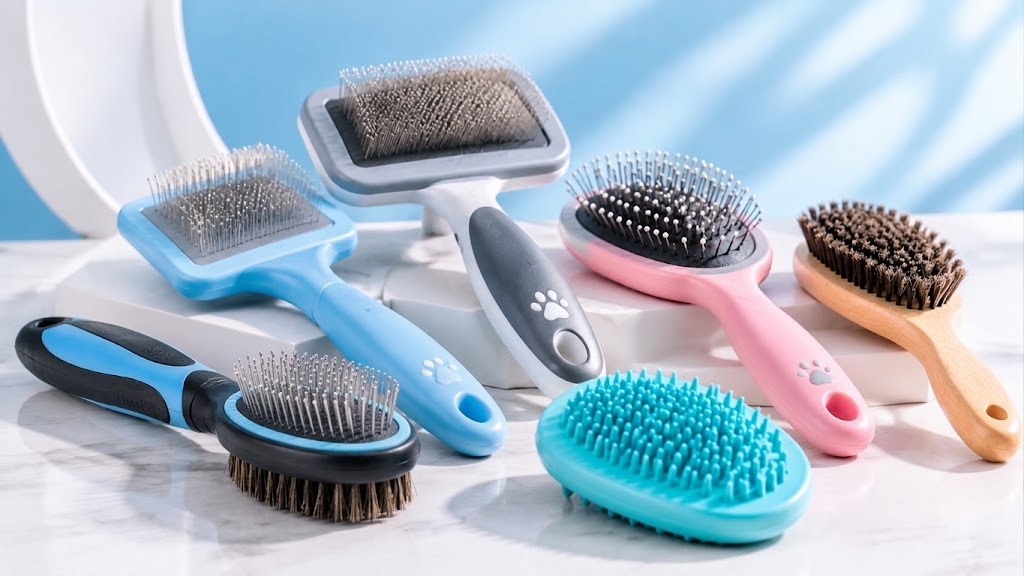
Before contacting a pet grooming brush supplier, define your target customers and the grooming problems they need to solve. Different coat types and routines call for different tools — a long-haired dog owner and a short-haired cat owner are buying two different jobs. Resources like the American Kennel Club can help you map breeds and coat types to your market.
| Brush Type | Pet Brush Images | Common Use | Key Considerations |
|---|---|---|---|
| Slicker Brush |  |
Removing loose hair and tangles | Pin flexibility, cushion and tip finish |
| Self-Cleaning Slicker Brush |  |
Everyday grooming and easier hair removal | Button mechanism and cleaning performance |
| Pin Brush |  |
Grooming longer coats | Pin length, spacing and smooth tips |
| Bristle Brush |  |
Smoothing short coats | Bristle softness and handle grip |
| Rubber Curry Brush |  |
Short-coat grooming and bathing | Material flexibility and grip |
| Deshedding Brush |  |
Removing loose undercoat | Blade design, comfort and safe use |
For example, long-haired pets may need slicker or pin brushes, while rubber curry brushes can suit short-haired breeds. Double-coated pets may need a deshedding tool. Build your range around customer needs rather than simply copying popular listings.
A balanced range can include basic everyday tools, core products with useful features, and premium options with ergonomic designs or upgraded materials. Starting with a focused selection makes product positioning and inventory management easier. You can select an existing design, improve selected features, or develop a new product when demand justifies it. See JackHoo’s product sourcing and development services.
2. Materials, Product Design & Customization Options
Materials and product structure influence durability, comfort, appearance, and cost. Identify the components that matter before requesting quotations.
| Component | Common Materials | What Buyers Should Consider |
|---|---|---|
| Handle | ABS, PP, TPR, TPE or wood | Strength, grip, appearance and cost |
| Brush pins | Stainless steel or plated steel | Corrosion resistance, flexibility and tip finish |
| Brush pad | Rubber or flexible materials | Cushion performance and pin retention |
ABS and PP are common handle materials; TPR and TPE can provide a softer grip, while wood offers a different appearance. For metal components, specify the required grade where relevant and request supporting documents. Compare finished samples, because a material name alone does not confirm product performance.

Private label logo options
Private label pet brushes can use several logo methods:
- Silk-screen printing — suitable for simple logos on compatible surfaces.
- Laser engraving — creates a durable mark on suitable materials.
- Hot stamping — adds a metallic or decorative finish.
- Molded logos — integrates the brand identity into the product structure.
3. Custom Packaging for Different Sales Channels
Packaging protects the product and communicates brand positioning. Choose it according to the sales channel, shipping method, and target cost.
| Sales Channel | Packaging Focus |
|---|---|
| Amazon and other marketplaces | Product protection, shipping weight, dimensions and barcode placement |
| Independent websites and DTC brands | Branded boxes, inserts and a consistent unboxing experience |
| Retail stores and wholesalers | Hanging cards, display boxes and clear product information |
Common options include printed boxes, kraft packaging, hanging cards, blister packs, and protective inserts. Elaborate packaging may improve presentation but also increase material, packing, and shipping costs.

Before production, confirm package dimensions, artwork, colors, barcode details, product placement, and protection requirements. Approve a packaging sample where possible. Also consider whether the package can withstand normal handling and transit without excessive material. If sustainability is part of your positioning, read how eco-packaging & ESG are reshaping China sourcing.
4. Low MOQ & Cost Management for Custom Pet Brushes
Minimum order quantity matters to new and growing pet brands. Suppliers may accept smaller orders for existing designs but require higher quantities for new molds, special colors, or custom packaging because each involves separate setup costs.
When requesting a quotation, ask whether the MOQ applies separately to the brush model, each color, logo application, packaging, special materials, and new molds. A supplier might accept 500 pieces of an existing design but require more for custom colors or printed boxes. Ask for a written breakdown instead of assuming one MOQ covers every item.
Practical ways to manage low MOQ orders
- Start with existing designs. An existing structure can reduce tooling costs and shorten development time. Customize selected colors, a logo, or packaging before investing in a new mold.
- Separate product and packaging decisions. If custom packaging has a higher MOQ, ask whether it can be ordered separately or shared across compatible products.
- Prioritize meaningful improvements. Focus on details that affect customer experience, such as handle comfort, pin finish, cushion flexibility, or the reliability of a self-cleaning mechanism.
- Plan for repeat orders. A trial order helps test demand. Once sales are more predictable, discuss volume pricing and consistent materials, colors, and components for future batches.
Compare the full cost
The total cost may include manufacturing, logo and color customization, packaging, tooling, samples, testing, transportation, and import charges. Compare quotations using the same specifications and delivery terms. Clarify exclusions and sample charges so you can understand the likely landed cost, not just the unit price.
5. Samples, Quality Control & Production Management
A sample lets buyers assess dimensions, materials, appearance, comfort, and function before placing a bulk order. The approved specifications must then be followed during mass production.
Record product dimensions, materials, pin length and finish, handle shape and color, logo details, packaging, and functional requirements. A slicker brush should be checked for pin retention, cushion flexibility, and smooth tips. A self-cleaning brush also needs a reliable button and cleaning mechanism.
| Inspection Area | What to Check |
|---|---|
| Appearance | Scratches, surface defects and color consistency |
| Brush pins | Alignment, sharp edges, bending and retention |
| Handle | Structural strength, grip and assembly |
| Function | Button operation and hair-removal performance |
| Materials | Consistency with agreed specifications |
| Packaging | Printing, dimensions and product protection |

Quality checks should reflect each product’s risks. Request material documents or suitable third-party testing where relevant, and agree on methods and acceptance limits in advance. Compare production goods with the approved sample. Suppliers should communicate and obtain approval before changing materials, components, or production processes.
6. Choosing the Right China Sourcing Partner
Finding a factory is only one part of sourcing custom pet brushes. Buyers also need to coordinate product development, quotations, customization, samples, production, packaging, and shipment.
A suitable China sourcing partner should understand your target market, identify capable suppliers, compare quotations using consistent specifications, coordinate samples, and follow up on agreed requirements. Ask how it reports progress, handles specification changes, and responds when a supplier cannot meet an agreed requirement.

How JackHoo Sourcing supports the process
JackHoo Sourcing connects overseas brands with suitable Chinese suppliers and coordinates purchasing activities. With more than 15 years of China sourcing experience, its services include product sourcing and development, product optimization, supplier coordination, China trademark registration, Amazon support, quality control arrangements, and shipping.
For custom pet brushes, JackHoo can help compare designs, discuss product improvements, coordinate logo and packaging customization, and follow up on samples and production requirements. This helps brands keep China-side purchasing organized while focusing on their products and customers.
FAQs
Can I order custom pet brushes with a low MOQ?
It depends on the product and customization. Existing designs with logo printing may be available at lower quantities than products requiring new molds, special materials, or custom packaging. Confirm each MOQ separately.
Can I add my own logo to an existing pet brush design?
Yes. Depending on the material and surface, options may include silk-screen printing, laser engraving, hot stamping, or molded logos. Confirm the available method and approve a sample before bulk production.
How long does it take to develop custom pet brushes?
Lead time depends on the design, artwork, packaging, sample revisions, material availability, and production schedule. Request a project-specific timeline before ordering.
How do I make sure mass production matches my approved sample?
Record a clear approved-sample specification covering materials, dimensions, pin finish, logo details and packaging. Compare production goods against it, and require written approval before any material or process change.
Conclusion
Sourcing custom pet brushes from China involves more than comparing unit prices. Product selection, materials, logo methods, packaging, MOQs, and production follow-up all shape the final result. Planning these decisions together can help brands control costs and build a consistent private label range.
Low MOQ gets your brush into the market. Consistent quality is what keeps it there.
Plan Your Private Label Pet Brush Range
Tell us your target market and grooming niche — we’ll map the right brush types, materials, logo method, packaging and low-MOQ route for your first order.
Contact JackHoo Sourcing →