Sourcing Decorative Storage Baskets: Rattan, Woven and Mixed Materials
China Sourcing | Home Decor | Buyer Guide
Decorative storage baskets may look simple, but sourcing them consistently can be challenging. Differences in weaving, moisture levels, dimensions and packaging can affect product quality, shipping costs and customer satisfaction.
This guide covers the key materials, quality standards, customization options, pricing factors and export requirements buyers should understand before sourcing decorative storage baskets from China.
01. Why Sourcing Woven Storage Baskets Requires More Attention
Decorative storage baskets are widely used in home organization, retail displays and interior decoration. For brands and wholesalers, they offer opportunities to build coordinated product collections across different sizes, colors and materials.
However, many woven baskets are handmade or semi-handmade. Even when suppliers use the same material and design, finished products may differ in shape, weaving density, color and dimensions.
Common sourcing problems include:
- Baskets arriving deformed after transportation.
- Inconsistent dimensions within the same product collection.
- Visible differences between approved samples and bulk production.
- Mold or unusual odors caused by excess moisture.
- Unexpectedly high shipping costs due to inefficient packaging.
A successful sourcing process should cover more than finding a supplier with an attractive catalog. Buyers need to evaluate materials, define quality standards, confirm customization details and check export requirements before placing an order.
02. Common Materials Used in Decorative Storage Baskets
Material selection affects appearance, durability, production cost and the type of quality checks required. Before requesting quotations, buyers should identify the material that best fits their product positioning and target market.
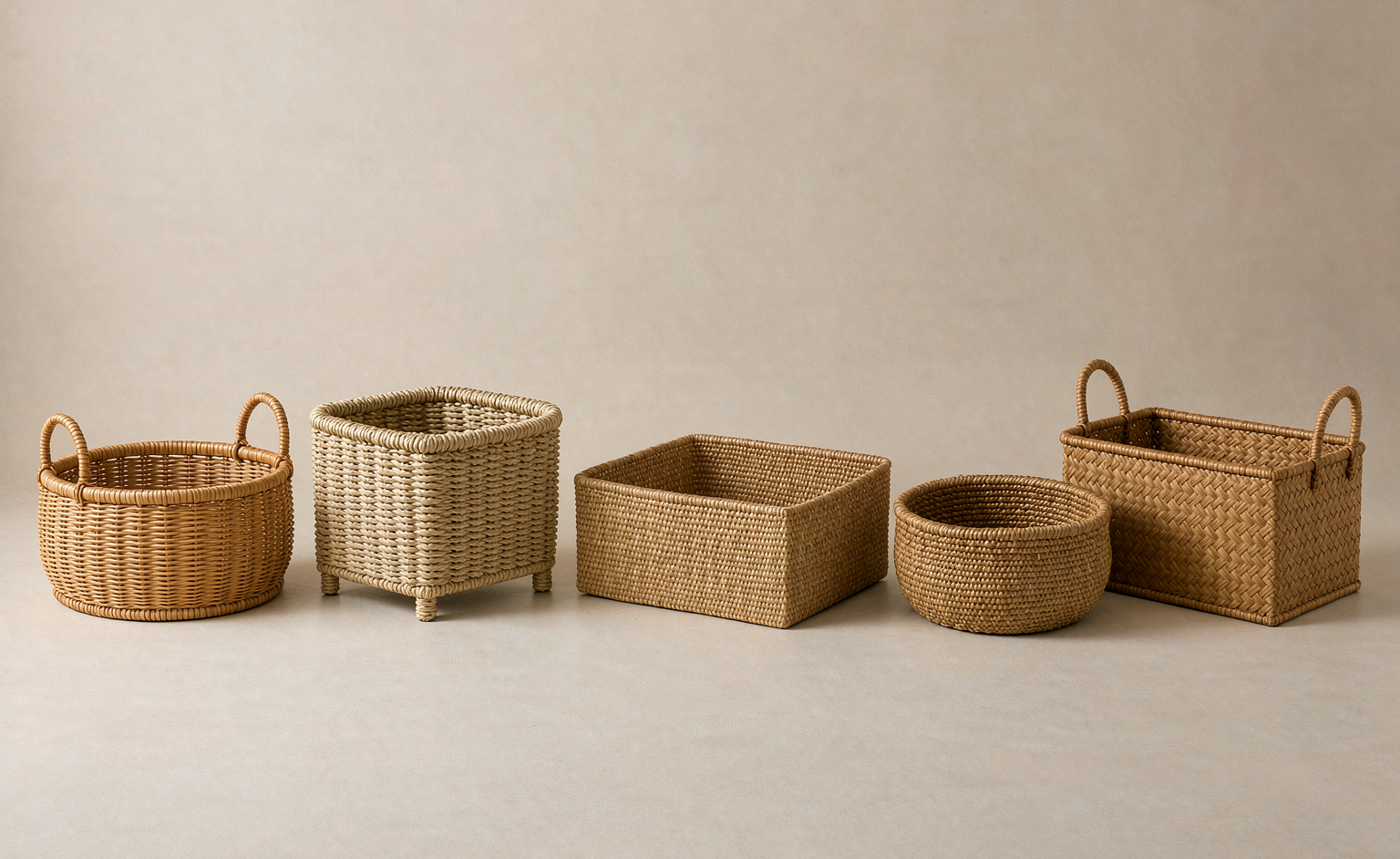
Rattan
Rattan is commonly used for decorative baskets with a structured, natural appearance. It can be suitable for premium home decor collections and products that require a more defined shape.
Buyer considerations: Check surface smoothness, splitting, weaving consistency and structural stability. Natural color variations should be discussed and approved before production.
Seagrass and Water Hyacinth
These natural fibers are popular for rustic, coastal and eco-inspired home decor. Their texture and natural appearance can help create distinctive product collections.
Buyer considerations: Pay attention to moisture, odor, mold, fiber cleanliness and consistency. Natural materials may vary in color and thickness.
Cotton Rope and Paper Rope
Cotton rope baskets are often used for soft storage, nursery organization and lightweight household products. Paper rope can offer a woven appearance with different cost and weight characteristics.
Buyer considerations: Check stitching, rope tension, handle attachment and resistance to deformation during normal use.
Mixed Materials
Some designs combine woven fibers with metal frames, wooden handles, fabric linings or other decorative components. These combinations can create more differentiated products.
Buyer considerations: Inspect the connection points between materials, coating quality, sharp edges and the stability of the overall structure.
Practical sourcing tip: Do not evaluate a material by appearance alone. Request samples and check how the basket performs after handling, stacking and normal storage use.
03. Choose Products Based on Your Target Market
Before contacting factories, decide how the baskets will be positioned in your market. A mass-market storage product and a premium decorative basket may use similar materials but require different finishing standards, packaging and pricing.
| Market Position | Typical Product Direction | Key Buying Focus |
|---|---|---|
| Mass-market retail | Simple shapes, standard sizes and practical storage designs | Cost control, stable supply and consistent dimensions |
| Mid-range home decor | Coordinated colors, multiple sizes and decorative handles | Appearance, finish quality and collection consistency |
| Premium home decor | Distinctive weaving, mixed materials and custom details | Craftsmanship, material selection and packaging presentation |
If you plan to sell a collection rather than a single item, confirm that the supplier can maintain a consistent appearance across different basket sizes and product variations.
04. Quality Issues Buyers Should Check Before Bulk Production
Quality requirements should be discussed before production begins. For woven baskets, a general description such as “good quality” is not specific enough for a factory to follow consistently.
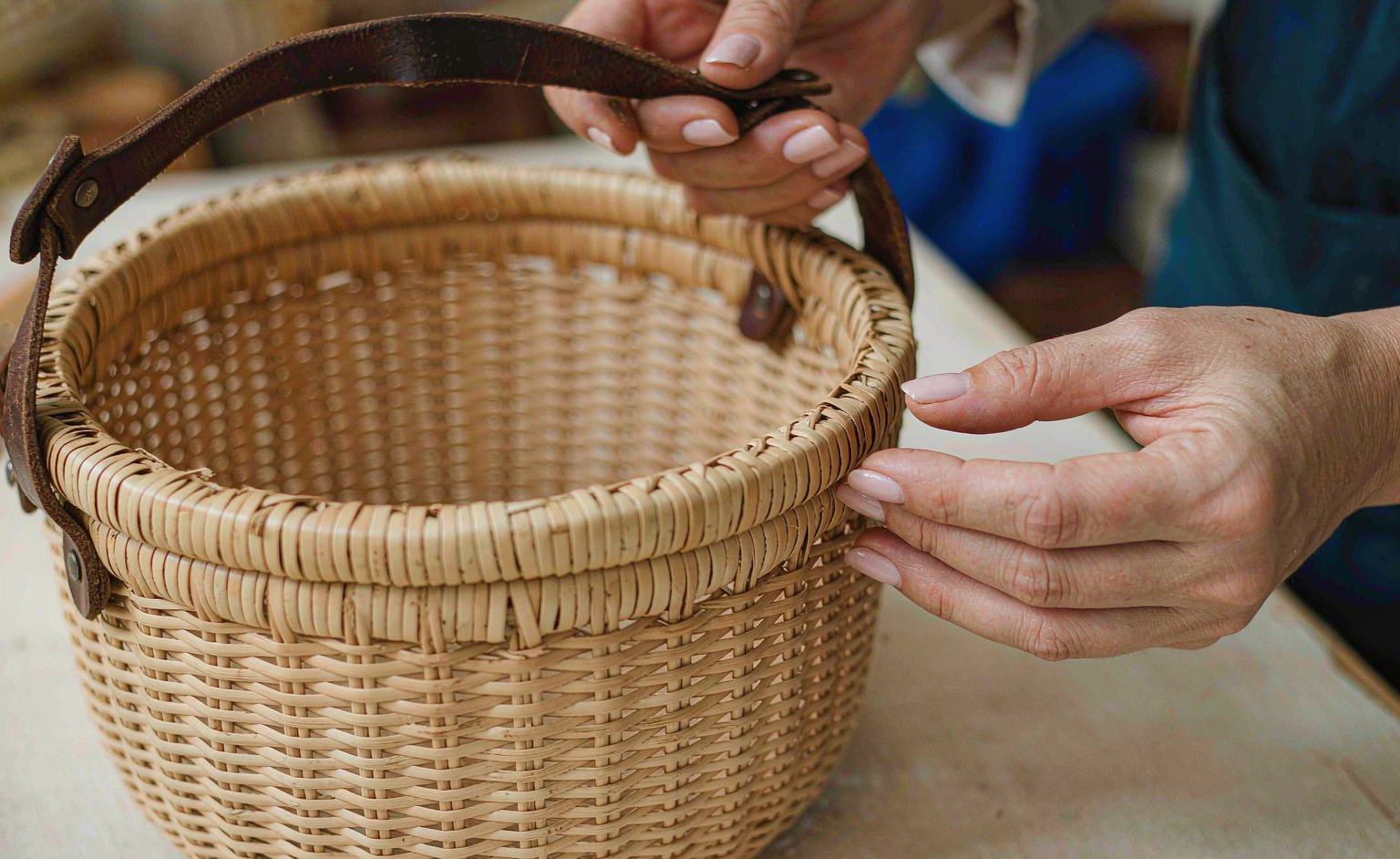
Dimensions and Shape
Handmade baskets may have slight dimensional variations. Specify the acceptable tolerance for height, opening diameter, base size and other important measurements. Also confirm whether the basket should stand upright without support.
Weaving and Surface Quality
Check for loose weaving, broken fibers, sharp ends, uneven gaps and visible defects. If the basket includes a lining, inspect stitching, attachment and fabric consistency.
Moisture, Odor and Mold
Natural fibers can be affected by storage and environmental conditions. Discuss material storage, drying and packing procedures with the supplier. Check for unusual odor, visible mold and signs of excess moisture before shipment.
Handles and Structural Strength
Handles, joints and supporting frames should be checked for secure attachment. If the basket is designed to carry household items, agree on a practical load test based on its intended use.
Sample-to-Bulk Consistency
Keep an approved reference sample and written specifications. Confirm that the bulk order follows the agreed material, dimensions, color, weaving pattern and finishing requirements.
JACKHOO SOURCING: For projects involving multiple basket designs or materials, JACKHOO SOURCING can help coordinate supplier communication, sample checks and pre-shipment quality inspections in China.
05. Customization Options for Private Label and Retail Collections
Customization allows brands to create a recognizable product range instead of relying entirely on standard supplier designs. However, every additional requirement should be confirmed with the factory before mass production.
Size and Shape
Common options include round, oval, rectangular and square baskets. Buyers can develop different sizes for coordinated storage sets.
Color and Weaving Pattern
Discuss natural finishes, dyed fibers, two-tone designs and specific weaving patterns. Request a physical color reference where color consistency is important.
Handles and Accessories
Options may include wooden handles, fabric handles, metal frames, removable liners and decorative labels.
Branding and Packaging
Custom labels, hangtags, printed sleeves, inserts and retail-ready packaging can help align the product with your brand identity.
Before approving customization: Confirm material samples, color references, dimensions, packaging artwork, tooling costs (if applicable) and any additional production time. Changes made after sample approval may affect both cost and delivery schedules.
06. Understanding MOQ and the Cost of Woven Baskets
There is no single standard MOQ for decorative storage baskets. Minimum order quantities vary depending on the material, production method, design complexity, customization requirements and supplier capacity.
Standard designs may have more flexible order quantities, while custom colors, special dimensions, private labels or mixed-material structures may require higher minimums.
| Cost Component | What Buyers Should Confirm |
|---|---|
| Material cost | Fiber type, material grade, thickness and sourcing availability. |
| Labor and weaving | Handmade complexity, weaving density and finishing requirements. |
| Customization | Custom sizes, colors, labels, accessories and development costs. |
| Packaging | Individual protection, retail packaging, cartons and pallet requirements. |
| Inspection and testing | Agreed inspection scope and any destination-market testing requirements. |
| Shipping | Carton dimensions, gross weight, volume and shipping terms. |
When comparing quotations, make sure suppliers are pricing the same specifications. A lower unit price may not include custom packaging, inspection, labeling or other requirements.
Buyers should also compare the total landed cost, not only the factory price. Freight, customs duties, taxes, insurance and destination handling charges can change the final cost significantly.
07. Packaging and Shipping Considerations
Decorative baskets are often lightweight but can take up considerable shipping volume. Their shape and structure make packaging planning especially important.
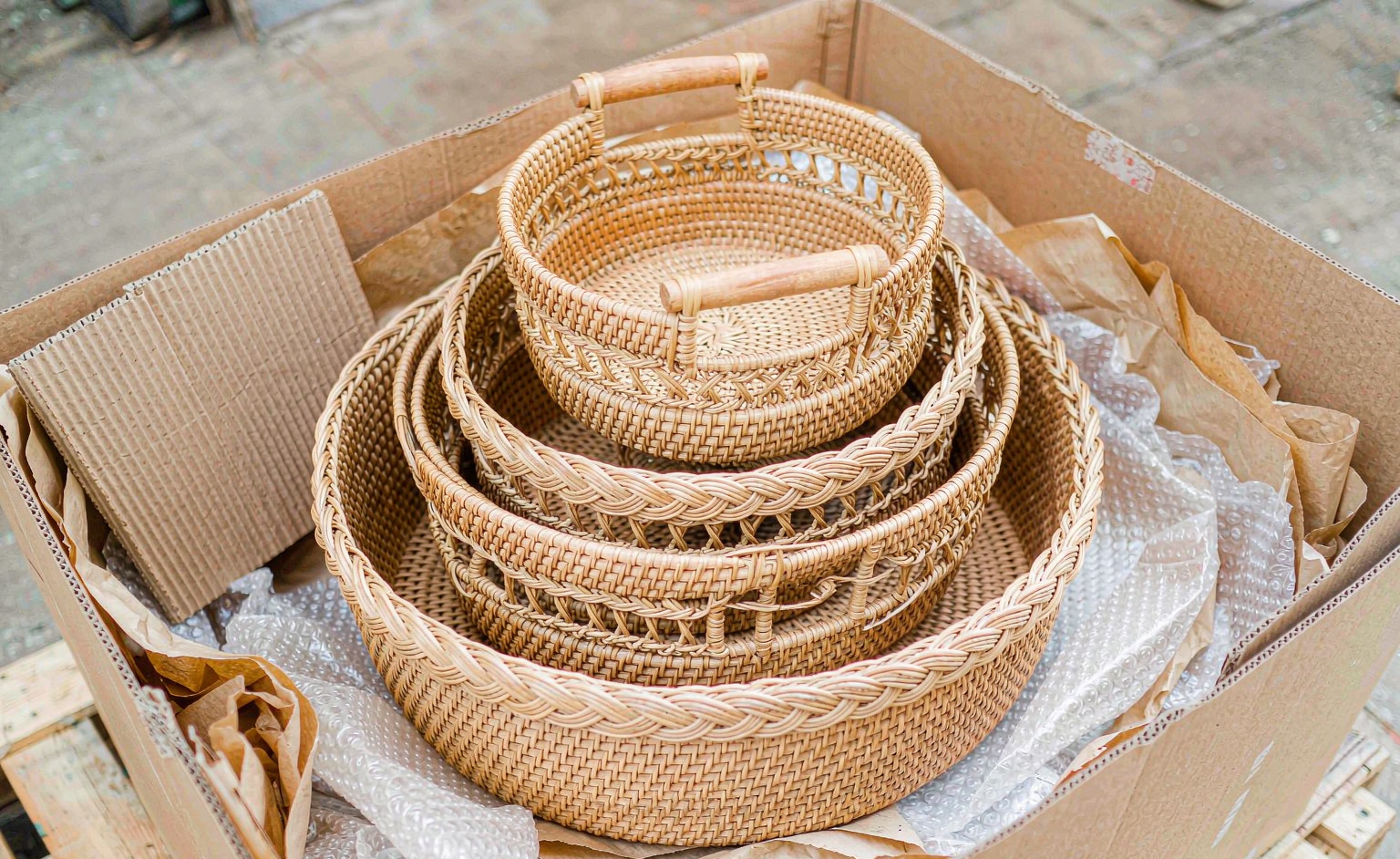
Nesting and Carton Planning
Where the design allows, baskets can be nested to reduce carton volume. However, buyers should confirm that nesting will not damage the shape, finish or handles of the products.
Protection During Transportation
Use suitable inner protection to prevent rubbing, deformation and damage to delicate woven edges. Packaging should be tested against the expected handling and transportation conditions.
Moisture Management
Natural-fiber products should be sufficiently dry before packing. Discuss warehouse conditions, ventilation and moisture protection with the supplier. Any desiccants or moisture-control materials should be selected based on the product and shipping environment.
Shipping Volume and Carton Details
Request carton dimensions, quantity per carton, gross weight and total shipment volume before confirming freight. For bulky baskets, carton optimization can have a meaningful effect on shipping costs.
08. China Export Requirements and Certifications for Woven Baskets
Decorative baskets made from rattan, seagrass, water hyacinth and other natural materials may be subject to different import and export requirements. The applicable rules depend on the material, degree of processing, product classification and destination country.
Buyers should confirm the requirements before production and shipment rather than assuming that every natural-fiber basket needs the same certificate.
8.1 Phytosanitary Certificates and Plant Material Requirements
A phytosanitary certificate may be required for certain products containing plant materials, depending on the importing country’s regulations and the condition or processing of the material.
Requirements can differ between raw plant materials, processed fibers and finished woven products. Buyers should provide the supplier or customs broker with the exact material description and product details so the relevant authority can confirm whether a certificate or inspection is necessary.
8.2 Fumigation, Heat Treatment and ISPM 15
Fumigation or other treatment requirements depend on the product, material and destination-market rules. It should not be assumed that every finished woven basket must be fumigated.
ISPM 15 is particularly relevant to regulated solid-wood packaging materials used in international trade, such as wooden pallets, crates and dunnage. It does not automatically apply to the basket itself simply because the basket is made from natural fibers.
If wooden packaging is used, confirm whether it falls within ISPM 15 requirements and ensure that applicable treatment and marking rules are followed.
8.3 US Market: USDA APHIS and Lacey Act
For imports into the United States, plant-based products may need to be reviewed under USDA APHIS requirements. Whether a permit, inspection or other documentation is needed depends on the plant material, processing and applicable import conditions.
The Lacey Act declaration may also apply to certain plant products, depending on the product’s tariff classification and entry requirements. Not every finished decorative basket is automatically subject to the same declaration requirements.
Before shipment, US importers should verify the product’s classification and declaration obligations with their customs broker and the relevant authorities.
8.4 EU Market: GPSR, REACH and CE Marking
The EU General Product Safety Regulation (GPSR), applicable since 13 December 2024, establishes product safety and traceability obligations for consumer products within its scope. Relevant businesses should review requirements concerning product identification, responsible economic operators, safety information and technical documentation.
REACH may be relevant to dyes, coatings, adhesives, metal parts, textile components or other substances used in the product. There is no universal REACH certificate that automatically covers every decorative basket; compliance should be assessed according to the materials and applicable restrictions.
Ordinary decorative storage baskets do not automatically require CE marking. CE marking applies only to product categories covered by specific EU harmonization legislation. Do not add a CE mark unless the product is legally required and eligible to carry it.
8.5 Common Documents for Exporting from China
Depending on the shipment and destination, the following documents may be involved:
| Document | Purpose | When It May Be Needed |
|---|---|---|
| Commercial Invoice | Shows transaction value, seller, buyer and product details. | Commonly required for customs clearance. |
| Packing List | Lists carton quantities, weights and package dimensions. | Commonly used for export and import clearance. |
| Sales Contract | Records agreed commercial terms between buyer and seller. | Depending on the transaction and customs requirements. |
| Export Customs Declaration | Records the goods declared for export from China. | Required as part of the applicable export procedure. |
| Bill of Lading | Transport document issued for sea freight. | For ocean shipments. |
| Certificate of Origin | Confirms the declared country of origin. | When required by the destination, buyer or trade arrangement. |
| Phytosanitary or Treatment Documents | Provide evidence of applicable plant-health or treatment procedures. | Only when required for the specific product and destination. |
Important: HS code classification and import requirements should be confirmed using the product’s actual material, construction, processing and destination. The information above is a sourcing guide, not a universal compliance checklist. Always verify current requirements with the relevant customs broker or official authority before shipment.
09. How to Find a Reliable Decorative Basket Supplier in China
Finding a supplier is only the first step. Buyers should evaluate whether the factory can consistently deliver the required materials, craftsmanship, customization and order quantities.
Check Relevant Manufacturing Experience
Ask whether the supplier has experience producing the specific basket materials and construction methods you need. A supplier experienced in cotton rope baskets may not have the same capabilities as one specializing in rattan or seagrass products.
Review Samples and Production Capability
Request samples of comparable products, not only the supplier’s best-looking catalog items. If possible, review the production process, material storage, finishing standards and packing arrangements.
Confirm Communication and Order Management
Reliable suppliers should be able to explain material specifications, MOQ, lead times, customization limitations and quality-control procedures clearly. Confirm who will be responsible for checking the products before shipment.
Compare More Than the Unit Price
Compare suppliers based on product consistency, communication, production capacity, packaging and total landed cost. A quotation that appears cheaper at the beginning may not be the most economical option once additional requirements are included.
JACKHOO SOURCING: With access to a broad network of manufacturers in China, JACKHOO SOURCING can support buyers with supplier coordination, product development and purchasing arrangements for home decor collections.
10. Final Checklist Before Placing Your Basket Order
- Confirm the material type and product specifications.
- Approve samples and document important dimensions and tolerances.
- Check weaving quality, handles, edges and structural stability.
- Discuss moisture control and suitable storage conditions.
- Confirm customization details, colors, labels and packaging artwork.
- Agree on MOQ, unit price, lead time and payment terms.
- Review carton dimensions, nesting method and shipping volume.
- Confirm HS code and destination-market import requirements.
- Arrange applicable inspections and required export documents.
Conclusion: Build a More Reliable Decorative Basket Collection
Sourcing decorative storage baskets from China involves more than selecting attractive designs. Material consistency, weaving quality, customization, packaging and export compliance all influence the final purchasing result.
By confirming specifications early, reviewing samples carefully and checking destination-market requirements before shipment, buyers can reduce avoidable sourcing risks and build more consistent home decor collections.
Need Help Sourcing Decorative Storage Baskets from China?
From supplier coordination and product customization to quality inspection and shipping arrangements, get support for your next home decor sourcing project.
Export and import requirements may change and vary by product material, processing, tariff classification and destination. Buyers should verify applicable requirements with customs brokers and official authorities before shipment.