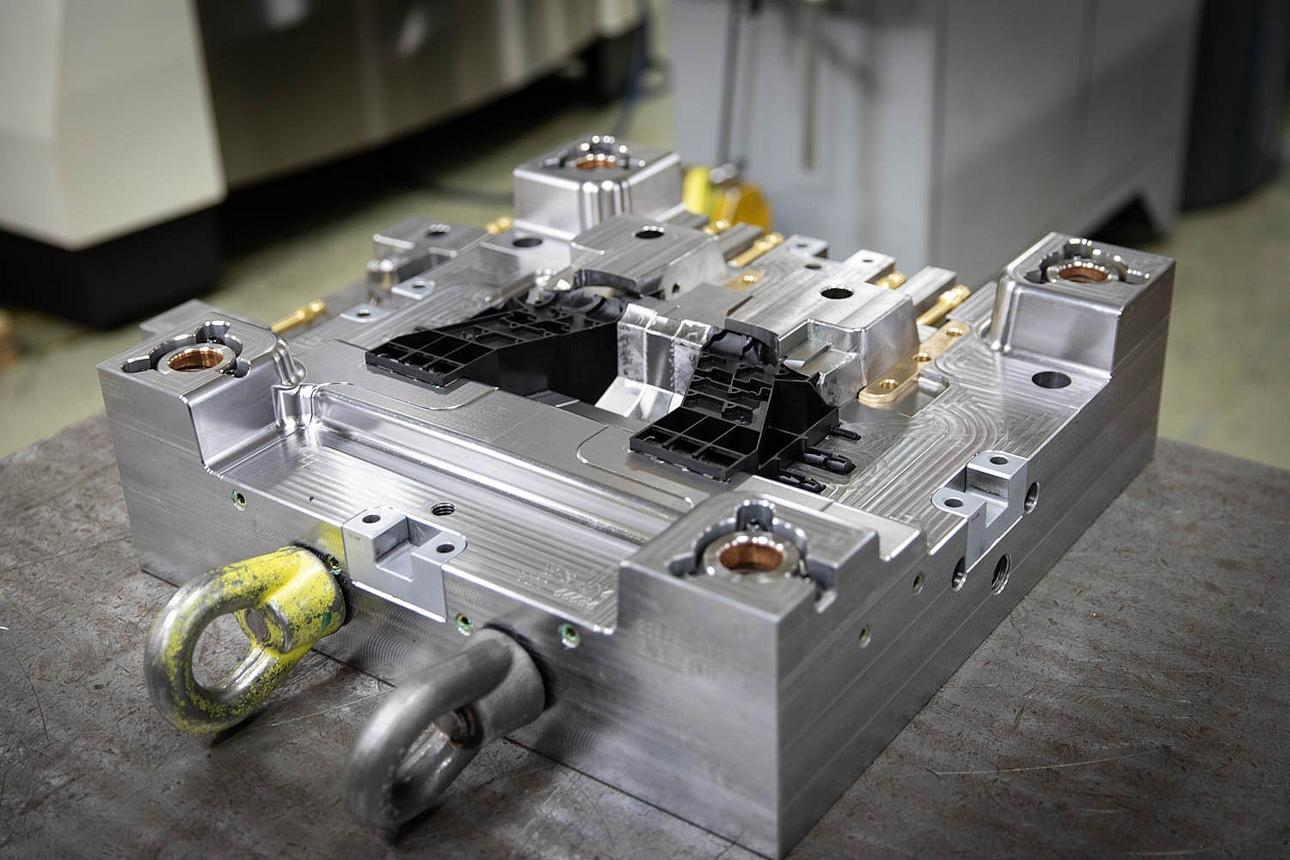
Launching a new plastic product comes with a quiet but costly decision: do you invest in a steel production mold up front, or start with a lower-cost soft tool that lets you test the market first? Getting the tooling choice wrong can tie up cash — or stall a product that was ready to sell.
- 1. What is soft mold tooling in injection molding?
- 2. Why soft tooling makes sense for your first 500–1,000 units
- 3. When should you choose soft tooling (and when steel)?
- 4. What affects soft mold & injection molding costs
- 5. Soft tooling as bridge tooling: the 6-step path
- 6. How to choose the right China injection molding partner
- FAQs: silicone molds, 500–1,000 units, cost & mass production
1. What Is Soft Mold Tooling in Injection Molding?
Soft tooling is a lower-cost tooling approach used for prototypes or limited production runs before investing in a more durable production mold. In plastic injection molding, it often involves simpler mold structures or more economical tooling materials — such as aluminum — depending on the product requirements.
Importantly, soft tooling does not necessarily mean a silicone mold. Silicone molds are commonly used in casting processes, while injection molding soft tooling generally refers to lower-cost, shorter-life tooling built for the injection process.
Soft Tooling vs. Production Tooling
| Comparison | Soft Tooling | Production Tooling |
|---|---|---|
| Initial Cost | Generally lower | Generally higher |
| Mold Material | Often aluminum or other economical options | Commonly steel |
| Tool Life | Usually shorter | Usually longer |
| Production Volume | Prototypes and limited runs | Repeated, larger-scale orders |
| Best Use | Market testing and initial production | Long-term manufacturing |

The injection molding process remains similar: plastic is heated, injected into the mold, cooled, and removed. The main difference is the tooling structure, material, and expected service life.
2. Why Soft Tooling Makes Sense for Your First 500–1,000 Units
For a new product, the first order often involves uncertainty. You may have approved the design, but actual customer demand and feedback are still unknown. Investing heavily in production tooling before validating the market can create unnecessary financial pressure.
Reduce Initial Investment
A production mold can represent a substantial part of a project’s initial cost. For an order of only 500–1,000 units, this expense may significantly increase the effective cost per product.
Soft tooling may provide a more economical starting point when the product design and production requirements are suitable. However, buyers should compare the complete project cost — a lower-cost mold may have a higher unit production cost or shorter service life.
Test Before Scaling Up

A limited production run allows brands to:
- Evaluate customer demand.
- Collect feedback on product appearance and function.
- Identify design improvements.
- Test packaging and sales channels.
- Review production and delivery arrangements.
This is particularly useful for startups, new product launches, and crowdfunding projects. Instead of immediately committing to a large production quantity, buyers can use the first order to make better-informed decisions about future investment.
3. When Should You Choose Soft Tooling?
Soft tooling is worth considering when your initial order is limited, your design may change, or your sales forecast is still uncertain.
You Are Launching a New Product
If a product has not been tested in the market, a limited production run can reduce the risk of holding excessive inventory.
Your First Order Is Relatively Small
For an initial order of around 500–1,000 units, ask suppliers whether soft tooling or another bridge tooling solution is available. This is an example, not a universal quantity threshold — product size, geometry, material, mold complexity, and supplier capabilities all affect suitability.
Your Design May Need Changes
Customer feedback may reveal that a housing needs reinforcement, a connection point needs improvement, or a component requires a different structure. Using a lower-cost tool first may provide more flexibility before investing in long-term production tooling. However, complex design changes can still require significant tooling work.
When Is a Production Mold Better?
A production mold may be more suitable when:
- Your product design is stable.
- You expect repeated or high-volume orders.
- Dimensional consistency is critical.
- The product requires complex features or tight tolerances.
- Long-term production savings justify the initial investment.
If demand is already predictable, investing in production tooling from the beginning may offer better long-term value.
Plan Your First Injection Molding Order in China
Soft mold or steel mold — we’ll match the tooling to your volume and budget, then coordinate samples and production.
4. What Affects Soft Mold and Injection Molding Costs?
Soft tooling is not automatically inexpensive. Its cost depends on the product’s engineering and manufacturing requirements. Before requesting a quotation from a China injection molding factory, prepare your drawings, 3D files, material requirements, and expected order quantity.
Key Cost Factors
- Product Size and Geometry. Larger parts generally require larger molds. Complex structures, undercuts, and sliders can increase tooling costs.
- Mold Material. Aluminum tooling may suit certain prototype and bridge tooling projects. Steel tooling is often considered for longer production life and demanding manufacturing conditions.
- Number of Cavities. A single-cavity mold produces one part per cycle. Multi-cavity molds can produce several parts per cycle, potentially improving efficiency but increasing mold complexity and upfront cost.
- Plastic Material. ABS, PP, PC, and other plastics have different processing requirements. Material selection can affect mold design, processing conditions, and production costs.
- Surface Finish and Tolerances. Polished or textured surfaces and tight dimensional tolerances may require additional engineering and machining.
Compare the Complete Cost
When comparing quotations, ask suppliers to separate:
- Mold design and manufacturing
- Sample and trial costs
- Injection molding cost per unit
- Plastic material costs
- Expected mold life and maintenance
- Potential modification costs
5. Soft Tooling as Bridge Tooling: From Testing to Mass Production
Soft tooling can serve as bridge tooling, connecting product development with long-term manufacturing. It allows a brand to produce an initial quantity, review market feedback, and decide whether a more durable production mold is necessary.
A Typical Bridge Tooling Process
- Confirm the Design. Prepare product drawings, dimensions, 3D files, material requirements, and functional specifications.
- Compare Tooling Options. Ask suppliers to compare soft tooling and production tooling based on cost, lead time, expected tool life, and production volume.
- Test Molded Samples. Review appearance, dimensions, assembly, and functionality. Confirm necessary revisions before production.
- Complete the First Run. Use approved specifications to manufacture the initial order. Confirm materials, colors, appearance, and other agreed requirements.
- Review Market Feedback. Evaluate sales performance, customer feedback, and potential product improvements.
- Decide Whether to Upgrade. If demand becomes stable, consider investing in production tooling for repeat orders and larger volumes.


6. How to Choose the Right China Injection Molding Partner
Choosing the right supplier is just as important as selecting the tooling method. Buyers should understand what a quotation includes and how the supplier manages samples, production, and tooling ownership.
Questions to Ask Before Ordering
| Question | What it protects you from |
|---|---|
| What mold material will be used? | Material affects tool life, unit cost, and surface finish — aluminum vs steel is not interchangeable. |
| What is the expected mold life? | Tells you whether the tooling suits your volume before you commit. |
| How many units can the mold produce per cycle? | Single vs multi-cavity changes lead time, efficiency, and upfront cost. |
| What is included in the tooling quotation? | Avoids surprise add-on charges after the order is placed. |
| Are sample revisions included? | Reduces rework cost during design development. |
| What tolerances can the supplier achieve? | Confirms the tool can actually meet your spec. |
| Who owns the mold after payment? | Protects your asset and your freedom to switch suppliers. |
| Can the mold be maintained, modified, or transferred? | Affects reuse, future changes, and supplier flexibility. |
| What would be required for future production tooling? | Plans your upgrade path before demand arrives. |
These questions help buyers compare suppliers beyond the initial price.
How JackHoo Sourcing Fits into the Process
JackHoo Sourcing works as a China sourcing partner, connecting overseas brands with suitable Chinese suppliers and coordinating purchasing requirements. With more than 15 years of China sourcing experience, JackHoo can coordinate supplier communication, compare quotations based on agreed specifications, follow up on samples, and communicate tooling and production requirements.
For a first injection molding project, this may include discussing whether an existing design, soft tooling, or production tooling is more suitable for the buyer’s expected quantity and product requirements.
FAQs: Silicone Molds, 500–1,000 Units, Cost & Mass Production
Is soft tooling the same as a silicone mold?
No. Injection molding soft tooling generally refers to lower-cost tooling, often using aluminum or other economical materials. Silicone molds are commonly associated with different casting processes.
Can soft tooling be used for 500–1,000 units?
It may be suitable for some projects, but there is no universal quantity threshold. Product geometry, material, mold design, and required tolerances all matter.
Is soft tooling always cheaper?
Its initial tooling cost is generally lower, but the total project cost may not be. Buyers should compare tooling, unit costs, tool life, and maintenance.
Can I use a soft mold for mass production later?
A soft tool may support limited production but may not be suitable for long-term, high-volume manufacturing. A separate production mold may eventually be necessary.