Ceramic Decorative Vases: A Complete Sourcing Guide for Home Decor Brands
Explore ceramic vase styles, materials, surface finishes, manufacturing methods, quality inspection, and packaging considerations for international buyers sourcing from China.
Popular Styles: What’s Trending in Home Decor?
Understanding different vase styles helps buyers develop collections that appeal to their target customers and fit their existing product ranges.
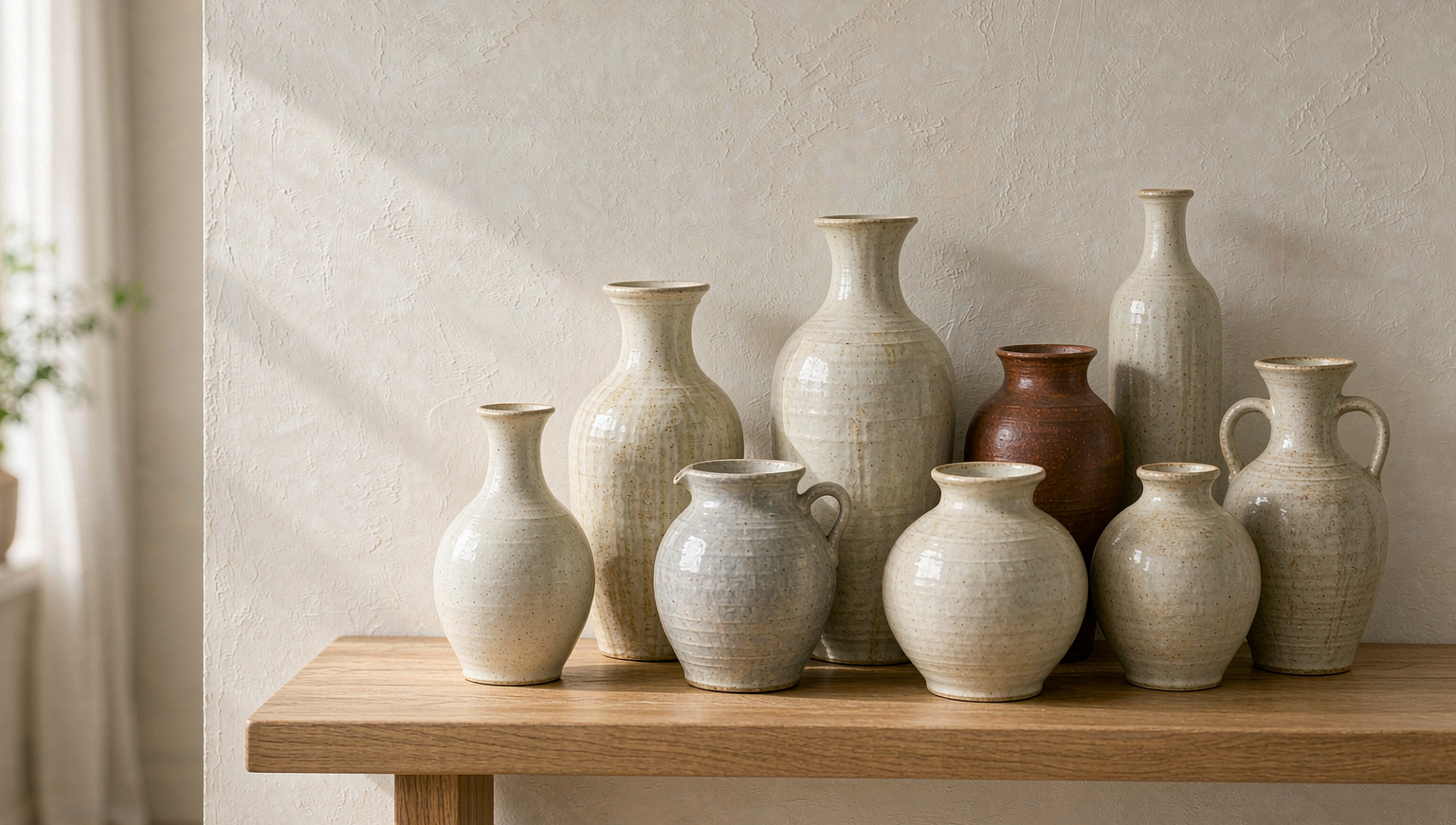
Minimalist vases feature simple shapes, clean lines, and neutral colors such as white, beige, cream, and gray. They are particularly suitable for Scandinavian, modern, and contemporary interiors.
For brands developing coordinated collections, offering several sizes with a consistent design can create more flexible product combinations.
Sculptural vases focus on distinctive shapes rather than traditional functionality. Asymmetrical openings, abstract silhouettes, geometric forms, and irregular curves are common design features.
These products are often displayed as standalone decorative objects and can help brands establish a more recognizable visual identity.
Textured vases use carved patterns, raised lines, rough surfaces, or handmade-looking details to create visual and tactile interest.
They are often associated with rustic, organic, and natural interior styles. Different textures can also help differentiate products with similar shapes.
Glazed vases offer a wide range of surface effects, from high-gloss and matte finishes to speckled and reactive glazes.
The main sourcing consideration is whether the manufacturer can reproduce the selected finish consistently. Buyers should evaluate not only the appearance of the sample but also the manufacturer’s ability to maintain the desired effect during mass production.
Ceramic Materials: Earthenware vs. Stoneware vs. Porcelain
The material used to manufacture a vase affects its weight, durability, appearance, production cost, and market positioning.
| Material | Main Characteristics | Common Applications |
|---|---|---|
| Earthenware | Generally lower-fired, relatively porous, and flexible in decorative design | Colorful decorative accessories |
| Stoneware | Denser, generally less porous, and suitable for various finishes | Everyday decorative vases and mid-range collections |
| Porcelain | Fine texture, smooth surface, and refined appearance | Premium decorative pieces and delicate designs |
Earthenware
Earthenware is generally fired at lower temperatures than stoneware and porcelain. It supports a wide range of shapes, colors, and decorative finishes.
It is commonly used for decorative products where visual design is a priority. However, buyers should pay attention to its porosity. If the vase is intended to hold water, the interior may require suitable glazing or additional treatment.
Stoneware
Stoneware is fired at higher temperatures and is generally denser and less porous than earthenware.
It offers a practical balance between durability, appearance, and production flexibility, making it a common choice for decorative vase collections.
Porcelain
Porcelain is known for its fine texture and smooth, refined appearance. It is often used for delicate or premium decorative products.
However, buyers should also consider its fragility, production requirements, and the need for protective packaging.
How Should Buyers Choose?
The most expensive material is not necessarily the best choice.
The right material depends on the product design, target selling price, desired finish, weight requirements, and intended use. Buyers should request physical samples to compare the actual weight, surface quality, and overall appearance before confirming an order.
Glazes and Surface Finishes: The Color Consistency Challenge
The glaze plays a major role in determining the final appearance of a ceramic vase. Even when two products have identical shapes and materials, different surface treatments can create completely different visual effects.
Common finishes include:
- Glossy Glaze: Creates a smooth, reflective surface and is often used for colorful decorative products.
- Matte Finish: Offers a softer appearance that works well with minimalist and contemporary designs.
- Reactive Glaze: Produces natural variations in color and texture during firing, giving each piece a distinctive appearance.
- Speckled Finish: Adds small contrasting marks for a natural or handcrafted look.
- Textured Finish: Uses raised patterns, carved details, or uneven surfaces to create additional visual depth.
Glaze results can vary depending on raw materials, application methods, firing temperatures, and production conditions.
Buyers should provide Pantone references or physical color samples as a starting point. Since glaze colors can change during firing, a physical production sample should always be approved before mass production.
For reactive or handcrafted finishes, some variation may be part of the intended design. Buyers should define acceptable limits of variation in writing to avoid disagreements during final inspection.
Handmade vs. Mold-Based Production
The production method affects the appearance, cost, lead time, and consistency of ceramic vases.
| Factor | Handmade Production | Mold-Based Production |
|---|---|---|
| Appearance | Individual variations may be visible | More consistent shapes |
| Production | Often more time-consuming | Suitable for repeat production |
| Customization | Suitable for artisanal details | Suitable for customized shapes and sizes |
| Consistency | Requires careful manual control | Easier to maintain dimensional consistency |
| Best For | Small and artisanal collections | Retail collections and larger orders |
Handmade Production
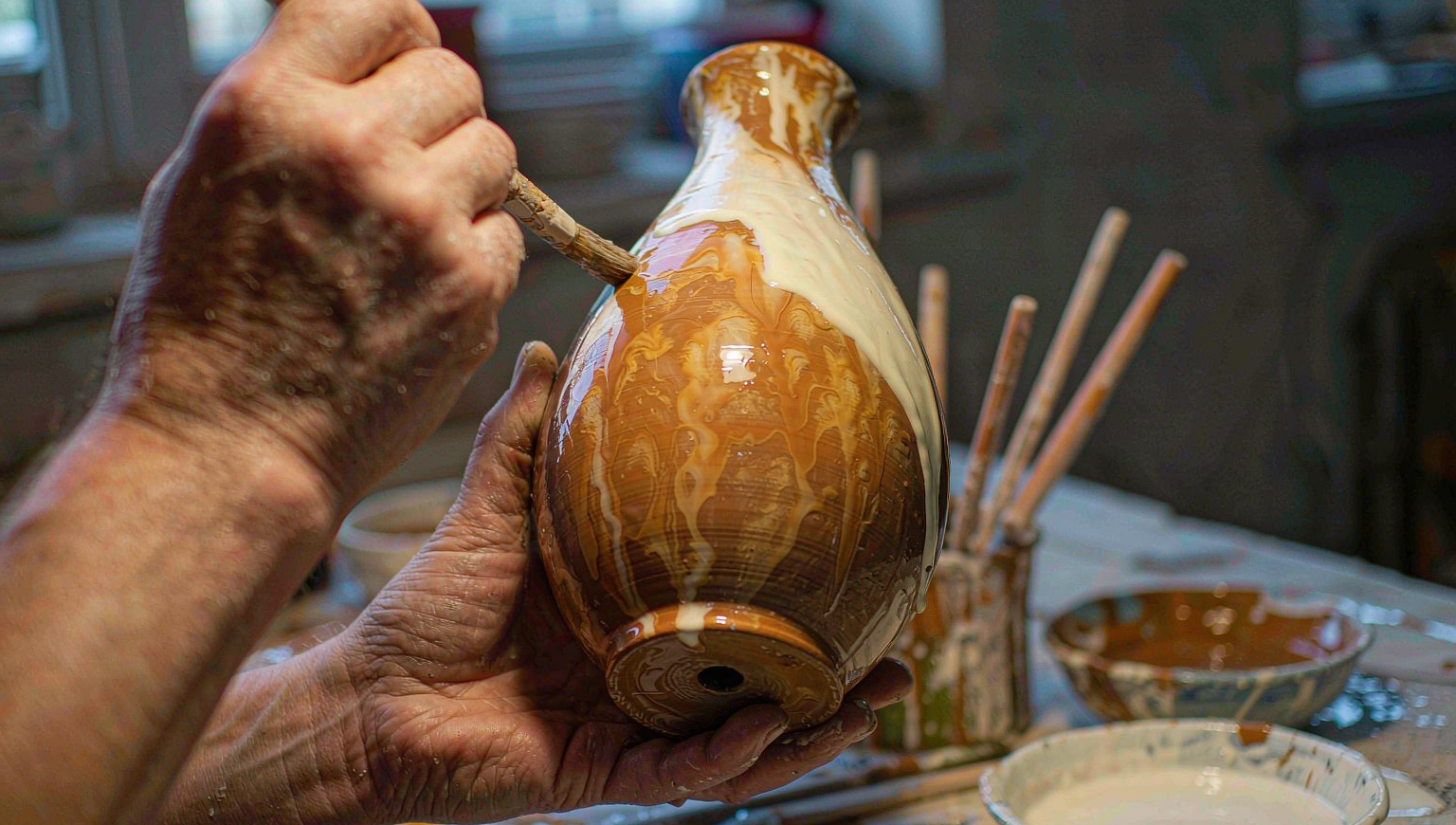
Handmade ceramic vases may involve hand-building, wheel throwing, and manual surface decoration.
Each piece can have subtle differences in shape, texture, and finish. These variations may be desirable for brands looking for an artisanal appearance.
However, handmade production can be more time-consuming, and maintaining consistent dimensions across large orders may require additional quality control.
Mold-Based Production
Mold-based manufacturing is commonly used when buyers need consistent shapes and repeatable production.
Once a mold has been developed, manufacturers can reproduce the same basic design across multiple units. Custom molds also allow brands to develop distinctive shapes rather than relying entirely on existing designs.
Buyers should confirm mold development costs, production lead times, and minimum order quantities before proceeding.
A Hybrid Approach
Some ceramic products combine both methods. Manufacturers may use molds to produce the main structure and apply manual finishing to create decorative details.
This approach can balance shape consistency with a more handcrafted appearance.
Quality Inspection: What Buyers Must Check
Ceramic products require careful quality control because defects can affect both appearance and functionality.
Before production, buyers should establish clear product specifications and defect classifications with their suppliers. For pre-shipment inspections, they can also agree on an appropriate AQL (Acceptable Quality Limit) sampling plan based on order requirements.
Surface Defects
Check for visible cracks, chips, pinholes, glaze defects, unwanted marks, and uneven coloring.
For textured or reactive-glaze products, distinguish between intentional design characteristics and unacceptable defects.
Dimensions and Shape
Confirm the vase height, width, opening diameter, and overall proportions against the approved sample or product specification.
For products sold as matching sets, dimensional consistency is particularly important.
Base Stability
Place the vase on a flat surface and check whether it stands securely without excessive wobbling.
This is especially important for tall or irregularly shaped designs.
Glaze and Finish Consistency
Compare finished products with the approved sample. Check the color, gloss level, texture, and overall surface quality.
If natural variations are part of the design, acceptable limits should be documented before production.
Water Resistance
Not every decorative ceramic vase is suitable for holding water.
If the product is intended for fresh flowers, buyers should confirm whether the interior is properly glazed and whether the finished vase has passed a water leakage test.
This requirement should be included in the product specification rather than assumed from the product’s appearance.
Packaging and International Shipping
Ceramic products are fragile, making packaging a critical part of product development rather than an afterthought.
Common protective solutions include:
- Custom foam inserts or molded pulp.
- Individual protective wrapping.
- Honeycomb paper and other protective paper materials.
- Dividers for multiple products in one carton.
- Reinforced outer cartons.
- Palletization for larger shipments.
The packaging design should match the vase’s shape, weight, and fragility.
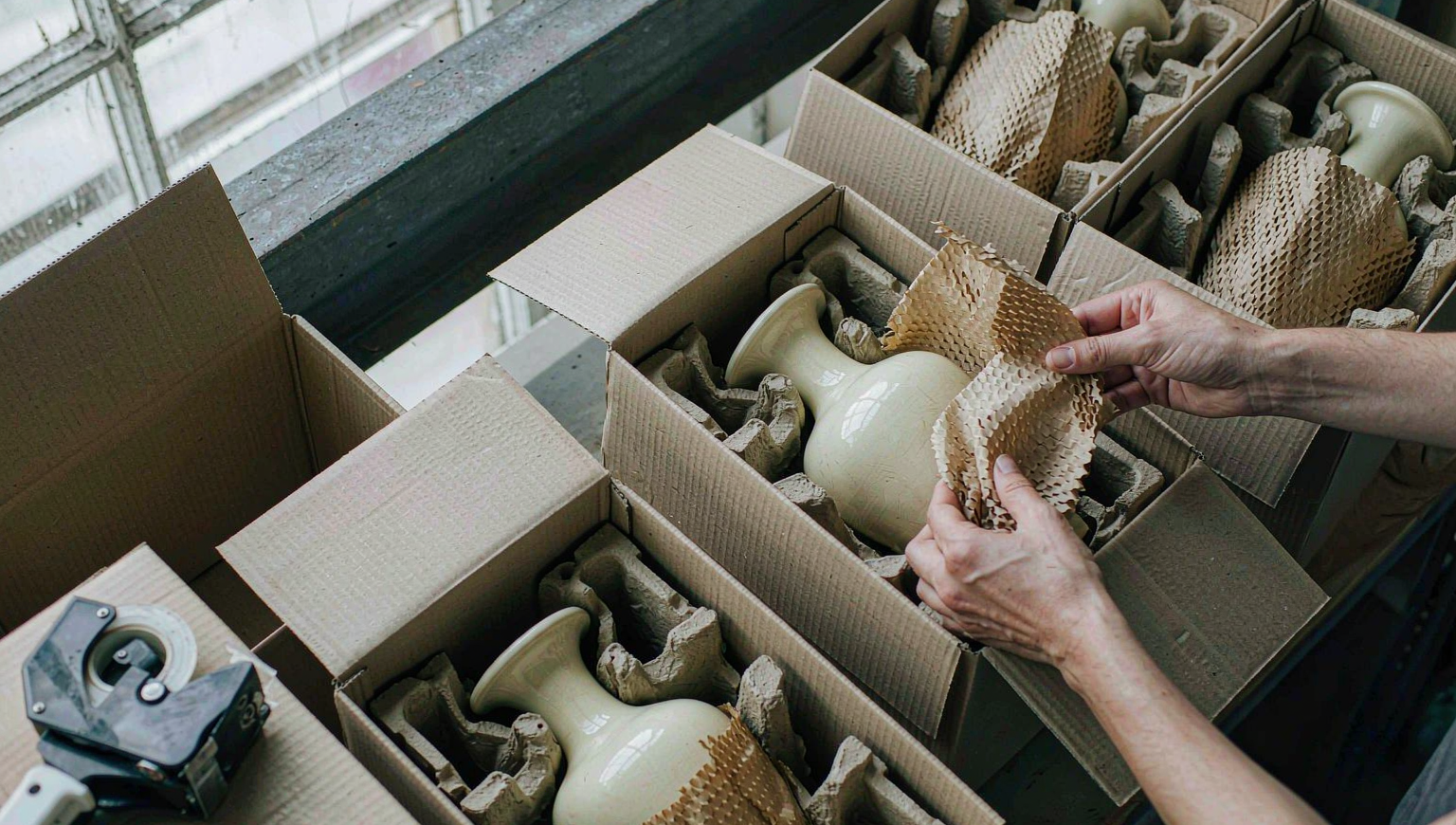
For example, tall and narrow vases may require additional protection around the neck, while wide or irregularly shaped products need suitable cushioning to prevent movement inside the carton.
Buyers should also consider carton dimensions and packing efficiency. Oversized packaging can increase shipping volume, while insufficient protection can increase the risk of breakage.
Depending on the packaging design and shipping method, buyers may consider suitable drop tests, vibration tests, or trial shipments to evaluate packaging protection.
Reviewing the packing specifications and inspecting finished cartons before shipment can help identify potential problems before larger orders are dispatched.
Conclusion
Ceramic decorative vases offer home decor brands a wide range of product opportunities through different shapes, materials, colors, and surface finishes.
However, successful sourcing involves more than selecting attractive designs. Buyers need to evaluate material suitability, manufacturing methods, glaze consistency, quality standards, and packaging protection before placing bulk orders.
Clear product specifications, approved samples, and agreed inspection requirements can help establish expectations between buyers and manufacturers, making production and quality management more predictable.
For businesses exploring ceramic vase sourcing in China, JACKHOO SOURCING is also an option for supplier coordination and product sourcing support.
Have a ceramic vase project in mind? Discuss your sourcing requirements with our team.
Contact JACKHOO SOURCING