
Sourcing Furniture and Home Decor from China: A Practical Guide for International Buyers
From identifying manufacturing clusters to evaluating suppliers, controlling quality, and managing international shipments, this guide explains what buyers should consider when sourcing furniture and home decor from China.
China has a well-established furniture and home decor manufacturing industry, offering international buyers access to a wide range of products, materials, production capabilities, and supplier options. From solid wood furniture and upholstered seating to lighting, decorative accessories, and storage solutions, buyers can explore products for different market segments and retail strategies.
However, sourcing successfully involves more than finding a factory with an attractive quotation. Product specifications, material selection, supplier capabilities, sample approval, quality control, compliance requirements, and shipping arrangements all influence the final purchasing result.
Whether you are developing a private label collection, expanding an existing product range, or purchasing furniture for wholesale distribution, a structured sourcing process can help reduce avoidable risks and improve purchasing efficiency.
Identify the Right Furniture and Home Decor Categories
Before contacting manufacturers, define the furniture and home decor categories that fit your target market, customer profile, and business model. A clear product scope makes supplier research more focused and helps prevent unnecessary communication with factories that do not match your requirements.
Furniture and home decor cover several product groups. Depending on your business, you may focus on one category or develop a broader collection.
Indoor Furniture
Dining tables, chairs, sofas, beds, cabinets, shelving units, coffee tables, and other residential furniture.
Outdoor Furniture
Patio tables, garden chairs, outdoor benches, lounge sets, balcony furniture, and weather-resistant products.
Home Decor
Decorative mirrors, wall art, vases, ornaments, planters, picture frames, and other decorative accessories.
Lighting and Storage
Table lamps, pendant lights, floor lamps, storage baskets, organizers, and functional home accessories.
Define Your Product Requirements Early
Once you have selected your categories, establish the basic purchasing requirements. These details will help suppliers understand what you need and provide more meaningful quotations.
- Product type, intended use, and target customer group.
- Preferred materials, finishes, colors, and dimensions.
- Target price range and expected order quantity.
- Packaging requirements and private label expectations.
- Destination market and any applicable product standards.
Avoid starting with an overly broad request such as “Please quote all furniture products.” A defined product list with specifications, reference images, and estimated quantities usually produces more useful supplier responses.
Understand China’s Furniture and Home Decor Manufacturing Clusters
China’s furniture industry is spread across several manufacturing regions. Different areas have developed strengths in particular materials, product categories, and production processes. Understanding these regional characteristics can help buyers narrow their search and identify more suitable suppliers.
The following regions are useful starting points for furniture and home decor supplier research. They are broad industry references rather than exclusive production locations.
| Region | Common Industry Strengths | Potential Product Categories |
|---|---|---|
| Foshan, Guangdong | Furniture manufacturing, materials, finishing, and related supply chains | Living room furniture, dining furniture, sofas, hotel furniture |
| Dongguan, Guangdong | Furniture production, woodworking, metal components, and export-oriented manufacturing | Residential furniture, custom furniture, selected home accessories |
| Shenzhen, Guangdong | Product design, trading, export services, and manufacturing coordination | Designed home products, lighting, decorative accessories |
| Anji, Zhejiang | Seating and chair manufacturing | Office chairs, dining chairs, functional seating |
| Hangzhou and surrounding areas, Zhejiang | Home products, furnishings, and export-related supply chains | Home accessories, decorative products, selected furniture |
| Shandong | Woodworking and furniture-related manufacturing | Wooden furniture, cabinets, selected household products |
Why Manufacturing Clusters Matter

Sourcing within an established manufacturing cluster can make it easier to compare suppliers, locate supporting material vendors, and coordinate product development. It may also provide more options for customization and production capacity.
However, a factory’s location should never be the only selection criterion. Buyers still need to evaluate its actual production capabilities, quality systems, experience, and commercial reliability.
Look Beyond the Factory Address
A supplier located in a well-known furniture region is not automatically qualified for your project. Verify whether the company manufactures the products itself, manages production through partner factories, or operates primarily as a trading company.
Find and Evaluate Reliable Chinese Suppliers
Finding potential manufacturers is only the first stage of supplier sourcing. The more important task is determining whether a supplier can consistently meet your product, quality, pricing, communication, and delivery requirements.
Buyers can identify potential suppliers through several channels:
- B2B sourcing platforms and supplier directories.
- Industry exhibitions and furniture trade fairs.
- Referrals from established business partners.
- Targeted online searches for manufacturers of specific products.
- Professional sourcing companies with relevant supplier networks.
What Should You Check Before Choosing a Supplier?
Production Experience
Review the supplier’s product range, manufacturing processes, equipment, and experience with similar orders.
Quality Management
Ask how materials, production processes, finished products, and packaging are inspected and documented.
Quotation and Capacity
Compare pricing, minimum order quantities, lead times, production capacity, and payment conditions.
Communication
Evaluate how clearly the supplier answers questions, handles revisions, and communicates potential problems.
Verify the Supplier’s Business Information
Before placing an order, review relevant company registration information, business scope, factory details, and export experience. Where appropriate, arrange a factory visit or use an independent verification service.
Also confirm whether the quoted supplier is the actual manufacturer or an intermediary. Trading companies are not necessarily unsuitable, but buyers should understand who is responsible for production, quality control, and delivery.
Do not select a supplier based on the lowest quotation alone. A low initial price may not reflect material differences, production limitations, packaging quality, inspection costs, or the supplier’s ability to maintain consistent standards.
Compare Materials and Specifications Before Requesting Quotations
Furniture quotations can vary significantly even when products appear similar. Differences in materials, construction, hardware, surface treatments, and finishing methods can all affect product performance and final cost.
Buyers should therefore compare products based on detailed specifications rather than photographs or general descriptions.
Common Furniture Materials
| Material | Common Applications | What Buyers Should Check |
|---|---|---|
| Solid Wood | Tables, chairs, beds, cabinets | Wood species, moisture content, construction, finish, and natural variation |
| Plywood | Cabinet structures, panels, furniture components | Grade, thickness, bonding quality, surface finish, and intended use |
| MDF and Particleboard | Cabinets, shelving, decorative furniture | Board density, thickness, edge treatment, and formaldehyde requirements |
| Metal | Furniture frames, legs, shelving, hardware | Material grade, thickness, welding, coating, and corrosion resistance |
| Upholstery Fabrics | Sofas, chairs, headboards | Fabric composition, abrasion performance, colorfastness, and cleaning requirements |
| Glass and Stone | Tabletops, decorative products, lighting | Thickness, edge finishing, strength, surface quality, and safe packaging |
Create a Clear Product Specification Sheet
A detailed specification sheet reduces misunderstandings during quotation, sampling, and mass production. It should describe the product in a way that both the buyer and manufacturer can reference.
Recommended Specification Details
- Product dimensions and acceptable tolerances.
- Material type, grade, thickness, and construction.
- Color references, surface finish, and texture.
- Hardware specifications and functional requirements.
- Assembly instructions and included accessories.
- Packaging materials, carton dimensions, and labeling.
- Applicable testing and compliance requirements.
When comparing quotations, make sure every supplier is pricing the same specifications. Otherwise, a lower quotation may simply reflect a different material, construction method, or packaging standard.
Develop Products and Approve Samples Before Mass Production
Product samples allow buyers to evaluate design, dimensions, materials, workmanship, and functionality before committing to a larger production order. For customized or private label furniture, sampling is particularly important because small specification differences can affect the finished product.
A Practical Product Development Process
What Should You Evaluate During Sampling?

- Dimensions: Check whether the sample matches the approved drawings and measurements.
- Materials: Verify the specified wood, board, metal, fabric, foam, or other components.
- Appearance: Review color, finish, texture, seams, edges, and overall consistency.
- Functionality: Test drawers, hinges, moving parts, folding mechanisms, and assembly.
- Packaging: Check whether the product can be protected adequately during transportation.
If changes are required, document them clearly and request an updated sample when necessary. Verbal approval alone can create confusion, especially when multiple revisions are involved.
Keep an Approved Reference Sample
Once the sample is approved, retain a physical reference sample or a complete set of signed-off specifications and photographs. This provides a common reference for the buyer, supplier, and inspection team during mass production.
Calculate the Total Landed Cost
The factory quotation is only one part of the total purchasing cost. International buyers should calculate the expected landed cost before confirming an order so they can evaluate the real impact on their margins and selling prices.
Depending on the product, shipping method, destination country, and agreed trade terms, the total cost may include:
Manufacturing and Packaging
Product price, customization, tooling, accessories, labels, and export packaging.
Export and Local Handling
Inland transportation, export documentation, origin handling, and other agreed charges.
Freight and Insurance
Ocean or air freight, insurance where arranged, and applicable transportation surcharges.
Import and Delivery
Customs duties, taxes, brokerage, destination handling, and final delivery where applicable.
Consider Furniture-Specific Logistics Costs
Furniture can be relatively bulky, even when individual items are not particularly heavy. As a result, carton dimensions, loading efficiency, and packaging design can have a substantial impact on transportation costs.
For example, a product that can be shipped flat-packed may use container space more efficiently than an assembled product. However, flat-pack packaging also needs to protect components and provide clear assembly instructions.
Compare the total cost based on the same delivery scope. A factory price, FOB quotation, CIF quotation, and DDP quotation do not necessarily cover the same services or cost responsibilities.
Buyers should also account for potential costs related to product testing, inspection, sample development, storage, and unexpected delays. These items may not appear in the initial factory quotation but can influence the actual profitability of an order.
Establish Product-Specific Quality Control Standards
Furniture quality control should be based on the product’s materials, construction, intended use, and performance requirements. A general visual inspection may identify obvious defects, but it cannot replace a product-specific inspection plan.
Common Furniture Quality Inspection Points
| Inspection Area | What to Check |
|---|---|
| Appearance | Scratches, dents, stains, color differences, surface defects, and finishing consistency |
| Dimensions | Product measurements, component sizes, and dimensional tolerances |
| Construction | Joint quality, welding, fasteners, frame stability, and assembly accuracy |
| Functionality | Drawer movement, hinges, folding parts, adjustment mechanisms, and other functions |
| Materials | Material type, thickness, finish, hardware, and consistency with approved specifications |
| Packaging | Carton strength, internal protection, labels, accessories, and assembly instructions |
Use Inspection at Different Production Stages
Material and Specification Review
Confirm the approved materials, drawings, sample, packaging details, and production requirements before manufacturing begins.
Production Monitoring
Review workmanship, material usage, dimensions, and production consistency while there is still time to correct problems.
Final Inspection
Inspect finished products, verify quantities, review packaging, and document identified defects before shipment.
Loading Verification
Check carton quantities, loading conditions, container utilization, and shipment documentation where required.
Inspection criteria should be agreed upon before production, not introduced only after products are completed. Clear acceptance standards make it easier to identify, document, and resolve quality issues.
Understand Compliance Requirements in Your Target Market
Furniture and home decor products may be subject to different safety, chemical, labeling, and environmental requirements depending on their materials, intended use, and destination market.
Buyers should identify applicable requirements before production. Compliance should not be treated as a final paperwork step after the goods are already manufactured.
United States
Certain furniture products may be subject to requirements administered by the U.S. Consumer Product Safety Commission (CPSC). Upholstered furniture, for example, is subject to applicable federal flammability requirements under 16 CFR Part 1640.
Other requirements may apply depending on the product. Children’s furniture, electrical lighting products, and products containing regulated substances may involve additional standards or certification obligations.
California Proposition 65 may also be relevant when a product can expose consumers to listed chemicals at levels that trigger warning requirements. It does not automatically mean that every furniture product needs a warning.
European Union
Products placed on the EU market may need to comply with relevant chemical restrictions under REACH, as well as applicable product safety and other regulatory requirements.
For furniture and wood-based articles, buyers should pay particular attention to formaldehyde emission requirements. Under the relevant REACH restriction, the formaldehyde emission limit for furniture and wood-based articles is 0.062 mg/m³ from 6 August 2026, subject to the applicable test conditions and exemptions.
United Kingdom
Furniture and furnishings intended for the UK market may be subject to the Furniture and Furnishings (Fire) (Safety) Regulations 1988, as amended. The applicable requirements depend on the type of furniture, its materials, and the product’s intended use.
China and Manufacturing Requirements
Chinese manufacturers may also need to meet applicable domestic standards for materials and production. For example, GB 18580-2025 addresses formaldehyde emission requirements for relevant wood-based panels and their products in China, with implementation beginning on 1 June 2026.
The standards above are examples, not a complete compliance checklist. Requirements can change and may depend on product classification, material composition, intended users, and destination market. Buyers should confirm the latest applicable regulations and testing requirements with qualified compliance professionals or relevant authorities before placing production orders.
Documents and Information to Request
- Product specifications and material declarations.
- Applicable test reports and certificates.
- Relevant chemical and material compliance information.
- Product labels, warnings, and instruction requirements.
- Supporting documents required for import and customs clearance.
Manage Payment Terms, Incoterms, Packaging, and Shipping
Payment terms and shipping arrangements affect cash flow, risk allocation, and the overall purchasing process. Buyers should clarify these details before confirming an order rather than relying on assumptions or informal discussions.
Understand Common Payment Arrangements
Some suppliers may request a deposit before production and the remaining balance before shipment. A 30% deposit and 70% balance arrangement is one commonly encountered structure, but it is not universal.
Payment terms should reflect the order value, supplier relationship, production schedule, and agreed risk controls. For larger or customized orders, buyers may consider staged payments linked to clearly defined milestones.
Understand the Responsibilities Under Incoterms
| Trade Term | General Arrangement | Buyer Considerations |
|---|---|---|
| EXW | The seller makes the goods available at the agreed location. The buyer generally arranges collection and subsequent transportation. | Clarify loading responsibilities, export formalities, and local charges. |
| FOB | For sea or inland waterway transport, the seller delivers the goods on board the nominated vessel at the agreed port. | Confirm origin charges, shipping arrangements, and the agreed port. |
| CIF | The seller arranges and pays for carriage and insurance to the named destination port, while risk generally transfers when goods are on board at the port of shipment. | Understand the insurance coverage and destination charges not included. |
| DDP | The seller generally arranges delivery to the named destination and handles import clearance and applicable duties and taxes under the agreed terms. | Verify the seller’s ability to manage import obligations and confirm what is included. |
Always specify the named place or port and the applicable Incoterms version in the sales contract. The trade term should match the actual shipping arrangement and the parties’ responsibilities.
Plan Furniture Packaging and Container Loading
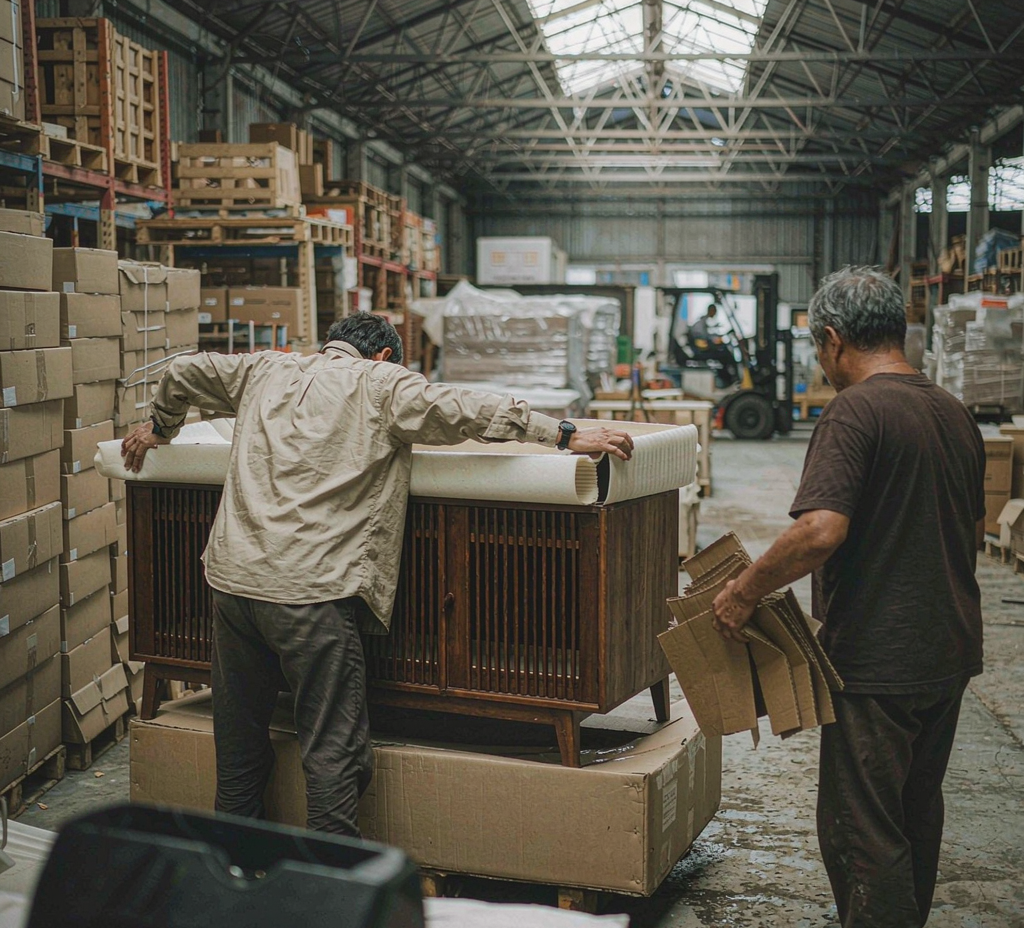
Furniture packaging needs to protect products from scratches, impact, moisture, and handling damage during transportation. The packaging method should be selected according to the product’s size, structure, weight, and fragility.
- Use appropriate corner protection and internal cushioning.
- Protect glass, mirrors, and delicate surfaces separately.
- Check carton strength and stacking suitability.
- Include clear product labels and assembly instructions where needed.
- Confirm carton dimensions and loading plans before shipment.
Do Not Overlook Shipping Volume
For many furniture products, shipping volume can be just as important as product weight. Reviewing flat-pack options, carton dimensions, and container loading arrangements early can help buyers make more informed logistics decisions.
Choose the Right Sourcing Partner and Start with a Manageable Order
Working directly with manufacturers can be suitable for buyers who already have established supplier networks and sufficient internal resources. However, sourcing furniture and home decor from multiple factories can require considerable time and coordination.
A professional sourcing partner may help buyers identify manufacturers, compare quotations, coordinate samples, monitor production, arrange inspections, and manage communication across different suppliers.
What to Look for in a Sourcing Partner
- Relevant product experience: Familiarity with furniture, home decor, materials, and manufacturing processes.
- Supplier network: Access to suitable manufacturers rather than relying on a single factory.
- Transparent pricing: Clear service fees, supplier quotations, and any commissions or other commercial arrangements.
- Quality coordination: The ability to communicate specifications, coordinate inspections, and follow up on corrective actions.
- Communication: Timely updates, clear documentation, and practical problem-solving.
Start with a Manageable Trial Order
If you are working with a new supplier or sourcing partner, a manageable initial order can help evaluate the purchasing process before you commit to a larger volume.
Use the first order to assess product quality, communication, production consistency, packaging, delivery performance, and the supplier’s ability to respond to issues. Once the process is proven, you can make better-informed decisions about expanding order quantities or developing additional products.
Build your sourcing process around verified product requirements, documented supplier responsibilities, approved samples, and clear quality standards. A manageable first order can provide valuable information for future purchasing decisions.
Build a More Reliable Furniture Sourcing Process
Sourcing furniture and home decor from China offers international buyers access to diverse manufacturing capabilities and a broad range of product options. However, successful purchasing depends on much more than finding a competitive factory price.
Buyers need to define product requirements, understand manufacturing regions, evaluate suppliers, compare materials, approve samples, calculate landed costs, establish quality standards, and confirm market compliance before production and shipment.
By following a structured process and working with suppliers who understand your requirements, you can reduce avoidable purchasing risks and build a more consistent supply base for your furniture and home decor business.
Frequently Asked Questions
Here are some common questions international buyers ask when sourcing furniture and home decor from China.
1. Is China a good place to source furniture and home decor?
China offers a broad manufacturing base, multiple specialized production regions, and a wide range of materials and product options. Whether it is suitable for your business depends on your product requirements, target market, order volume, quality expectations, and total landed cost.
2. Which city is best for furniture sourcing in China?
There is no single best city for every furniture category. Foshan and Dongguan in Guangdong are important furniture manufacturing locations, while Anji in Zhejiang is well known for seating production. Buyers should select regions based on the specific product and supplier capabilities they need.
3. How can I find reliable furniture manufacturers in China?
Start by identifying suppliers that specialize in your product category. Review their business information, manufacturing capabilities, previous work, quality management, communication, and export experience. Where appropriate, arrange a factory visit or independent verification before placing an order.
4. What information should I prepare before requesting a furniture quotation?
Prepare product images or drawings, dimensions, material requirements, finishes, target quantities, packaging details, destination market, and any relevant testing or compliance requirements. More complete information helps suppliers provide more comparable quotations.
5. Can I customize furniture products with Chinese manufacturers?
Many manufacturers offer customization options, including dimensions, materials, colors, finishes, hardware, packaging, and branding. The available options depend on the factory’s capabilities, order quantity, development requirements, and production feasibility.
6. Why is a product sample important before mass production?
A sample allows buyers to evaluate appearance, materials, dimensions, workmanship, and functionality before committing to bulk production. It also provides a reference for communicating and checking the agreed product requirements.
7. What quality problems should I look for when inspecting furniture?
Common inspection points include surface scratches, color differences, unstable structures, poor joints, incorrect dimensions, hardware problems, damaged finishes, missing accessories, and inadequate packaging. Inspection criteria should be adapted to the specific product.
8. What compliance requirements apply to furniture imported into the US or EU?
Requirements depend on the product category, materials, intended use, and destination market. Relevant areas may include furniture safety, flammability, chemical restrictions, formaldehyde emissions, labeling, and certification. Buyers should confirm applicable rules and testing requirements before production.
9. How can I reduce furniture shipping costs from China?
Review packaging dimensions, flat-pack possibilities, container loading efficiency, shipment consolidation, and suitable transportation methods. Compare quotations using the same shipping scope and confirm which origin and destination charges are included.
10. Should I work with a sourcing company or contact factories directly?
Direct sourcing may suit buyers with established supplier networks and internal procurement resources. A sourcing company may be useful when you need help identifying manufacturers, comparing quotations, coordinating samples, monitoring production, or managing multiple suppliers. Compare service scope, fees, transparency, and relevant experience before making a decision.
Looking for Furniture and Home Decor Suppliers in China?
Whether you are developing a new product collection or managing an existing purchasing program, JACKHOO SOURCING can help coordinate supplier research, product sourcing, quotations, samples, and quality control.
Contact JACKHOO SOURCING