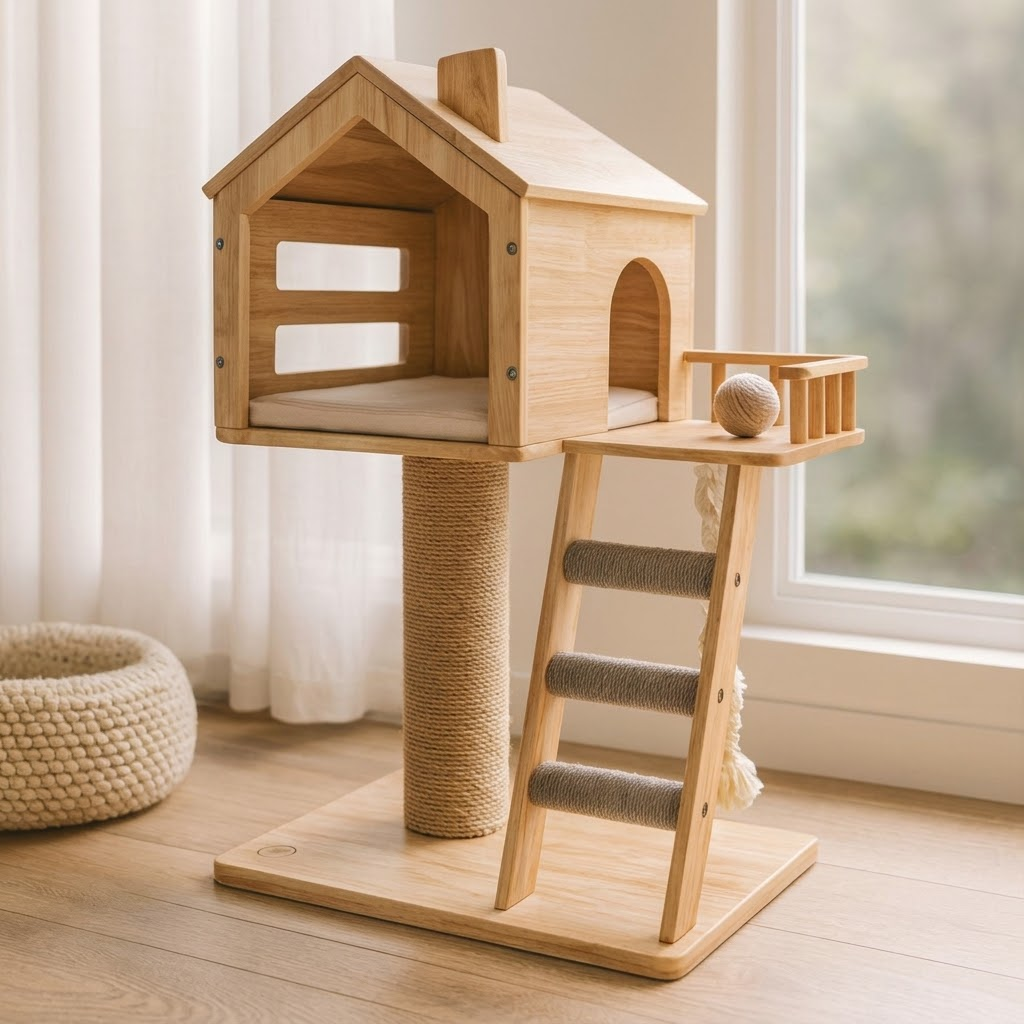
You approved the sample. The wood color looked right, the structure was stable, and every screw and connector fitted perfectly. But when the bulk order arrived, some panels looked darker, dimensions were inconsistent, and several components did not fit as expected.
For overseas pet brands, these differences can lead to customer complaints, product returns, and unexpected costs.
The problem is not always poor workmanship. Natural wood variation, moisture changes, machining tolerances, and inconsistent production procedures can all affect the final product.
When sourcing wooden pet furniture from China, approving a sample is only the first step. The real challenge is making sure the factory can reproduce the same standards throughout bulk production.
The Golden Sample Is Not a Guarantee
A golden sample is the approved reference for mass production. It confirms the expected appearance, materials, dimensions, finish, and functionality.
However, a sample is usually one finished product. Bulk production involves different material batches, operators, equipment settings, and manufacturing conditions.
This is particularly important for wooden pet furniture, such as cat trees, wooden pet beds, climbing shelves, and cat houses.
Wood is a natural material. Different boards can vary in grain, color, density, and moisture content. Even when the same stain is applied, the finished color may differ because individual pieces absorb coatings differently.
Buyers should distinguish between acceptable natural variation and production defects. Instead of simply asking the factory to make every product look identical, define acceptable variation before manufacturing. It is also worth checking whether the approved sample was made from the same wood species, finish system, and hardware planned for the bulk order. If the sample uses specially selected boards while mass production uses mixed-grade materials, the visual result may be difficult to reproduce. Ask the supplier to confirm the production material source and grade before signing off.

Two Hidden Reasons Behind Bulk Production Differences
Moisture Content and Color Variation
Wood naturally absorbs and releases moisture depending on its environment. If moisture content is not properly controlled, boards may shrink, expand, or warp.
These changes can affect product dimensions, assembly, and long-term stability. Moisture differences may also influence stain absorption, creating visible color variation between components or production batches.
Before production, specify suitable moisture requirements for the selected wood species and product conditions. Ask the supplier how materials are stored, prepared, and checked before processing. The checking method matters too: moisture readings should be taken at several points and on representative boards, rather than relying on a single reading from one piece. Buyers can also ask the supplier to record incoming material checks and keep the records available for review. This creates a clearer basis for investigating warping or finish differences later.
For visible surfaces, agree on a color reference and an acceptable variation range. Where appropriate, use a color measurement method such as ΔE rather than relying entirely on visual judgment.
Hardware Tolerance and Assembly Problems
Pet furniture often combines wooden panels, metal brackets, screws, connectors, and other components.
Small dimensional differences can accumulate during assembly. For example, slightly misplaced drilling holes or inconsistent connector sizes may cause screws to sit unevenly or panels to become misaligned.
Buyers should identify critical connection points and specify the required dimensions and tolerances. A useful approach is to mark critical-to-fit dimensions on the technical drawing, including hole positions, panel thickness, and connector spacing. Ask the factory to measure these points during the first production run and after any tooling or process adjustment. A simple trial assembly can reveal problems that are not obvious when parts are inspected individually.
Also confirm the hardware material, model, size, and finish. A supplier should not replace approved screws or connectors without obtaining the buyer’s agreement.
Engineering Standards Buyers Should Specify
Three specification groups cover most of the risk. All three should appear in the product documentation and be shared with the factory before the bulk order begins.
| Standard | What to specify | Why it matters |
|---|---|---|
| Color consistency | An approved color reference for visible surfaces, the agreed measurement method and the acceptable variation range. A target such as ΔE ≤ 2.0 may be considered for selected finishes. | Removes the “it looks different to me” argument; the actual limit should depend on the material and application. |
| CNC machining tolerances | Dimensions that directly affect assembly — drilling holes, connector positions and panel interfaces. Different parts may require different tolerances. | One universal tolerance across the whole product is meaningless; tolerance must be tied to the critical-to-fit feature. |
| Hardware specifications | Required screw types, bracket dimensions, connector materials and finishes, with written approval required for any substitution. | Prevents unapproved substitutions from quietly changing performance and lead time. |
It is equally important to define how measurements will be taken: the measuring tool, reference surface, sampling frequency and acceptance criteria. If the buyer and supplier use different measurement methods, they may reach different conclusions about whether a part is acceptable. Clear records reduce avoidable disputes and make corrective action faster.
How to Keep Bulk Production Consistent
Golden Sample Retention
Keep approved reference samples for the buyer, the factory and the quality inspection team where practical. Record the agreed materials, dimensions, finish, hardware and assembly requirements. For natural wood, document acceptable grain and color variation instead of expecting every piece to look identical.
Batch-to-Sample Comparison
Before shipment, compare production goods against the approved golden sample. Check color, dimensions, surface finish, hardware and assembly using the agreed inspection criteria — side by side, under the same light.
Material and Hardware Control
Require suppliers to obtain approval before changing wood species, coatings, screws, brackets or other key components. This prevents unapproved substitutions from affecting the finished product.
In-Process Inspection
Do not wait until the entire order is finished to discover a problem. Check incoming materials, monitor critical production stages, and inspect finished goods against the approved specifications.
When defects appear, the supplier should identify the cause and agree on corrective action before continuing affected production. For a new product, consider arranging a pilot run or first-off inspection before the full quantity is released. Review a small group of assembled units for appearance, fit, stability and packaging. If adjustments are needed, update the drawings or specifications and obtain approval before the factory continues. This is generally less disruptive than sorting or reworking a completed shipment.
- Lock the referenceKeep the golden sample and record the material, finish and hardware list it represents.
- Write the specificationTurn the sample into written tolerances for color, dimensions and hardware — with the measurement method attached.
- Release a pilot batchInspect a small run of assembled units for appearance, fit, stability and packaging.
- Inspect during productionCheck incoming material, monitor critical stages, and compare finished goods against the golden sample before shipment.
- Close the loop with recordsKeep material check records, measurement results and approved change notes so any dispute can be resolved with evidence.

Why Technical Follow-Up Matters More Than a Promise
For overseas buyers, visiting a factory during every production stage is not always practical. Yet a sample approval alone cannot ensure that the factory will follow the same standards throughout mass production.
A capable sourcing partner should communicate product requirements clearly, coordinate supplier follow-up, and check whether production matches the agreed specifications.
JackHoo Sourcing connects overseas brands with suitable Chinese suppliers and coordinates product sourcing, development, production follow-up, quality control arrangements, and shipping. With more than 15 years of China sourcing experience, JackHoo works to keep buyer requirements and supplier production expectations aligned.
For pet furniture projects, this can include communicating material and hardware specifications, following up on sample approval, coordinating production checks, and addressing differences between approved samples and bulk orders.
Frequently Asked Questions
Why does my bulk pet furniture order not match the approved sample?
The most common causes are natural variation in wood species and moisture content, differences in coating absorption between boards, machining tolerance drift on drilling and connector positions, and hardware substitutions. Many of these are controllable with written specifications and in-process inspection.
Can a factory guarantee every bulk unit is identical to the sample?
Not completely. Wood is a natural material, so some grain and color variation is unavoidable. The realistic goal is to define acceptable variation ranges in advance, control the process, and detect defects before shipment rather than expecting identical appearance.
What moisture content should I specify for wooden pet furniture?
The target depends on the wood species, the product structure and the destination climate. Specify a range rather than a single number, require readings taken at several points on representative boards, and keep the incoming material checks on record.
Is ΔE the right standard for color consistency?
ΔE is one objective method for defining visible color difference. A target such as ΔE ≤ 2.0 can be used for selected finishes, but the correct limit depends on the material and application, and the measurement method must be agreed in advance.
How do I stop the factory from changing screws and connectors?
List every approved screw type, bracket dimension, connector material and finish in the product documentation, and state that any substitution requires written buyer approval before production.
Should I run a pilot batch before the full order?
For a new product it is generally less disruptive and less costly to release a small pilot run or first-off inspection, review a few assembled units for appearance, fit, stability and packaging, and update the drawings before the remaining quantity is produced.