How Much Does Injection Moulding Cost in China? A Practical Cost Breakdown for Buyers
From mould investment to unit production costs, understand the key factors that affect injection moulding prices and how to calculate your project budget before placing an order.
China is a major manufacturing base for plastic injection moulding. Buyers can find manufacturers offering a wide range of capabilities, from simple plastic components to complex, precision-moulded parts.
However, the total cost of an injection moulding project involves more than the price per piece. Mould development, material selection, production quantity, secondary processing, and packaging can all affect your final budget.
This guide explains the main cost components, provides practical budget estimates, and shows how buyers can calculate the real cost of an injection moulding project in China.
1. How Much Does Injection Moulding Cost in China?
Injection moulding costs generally include two main parts: the initial mould investment and the unit production cost.
For many projects, mould development is the largest upfront expense. The actual price depends on the product’s structure, dimensions, precision requirements, mould material, and expected production volume.
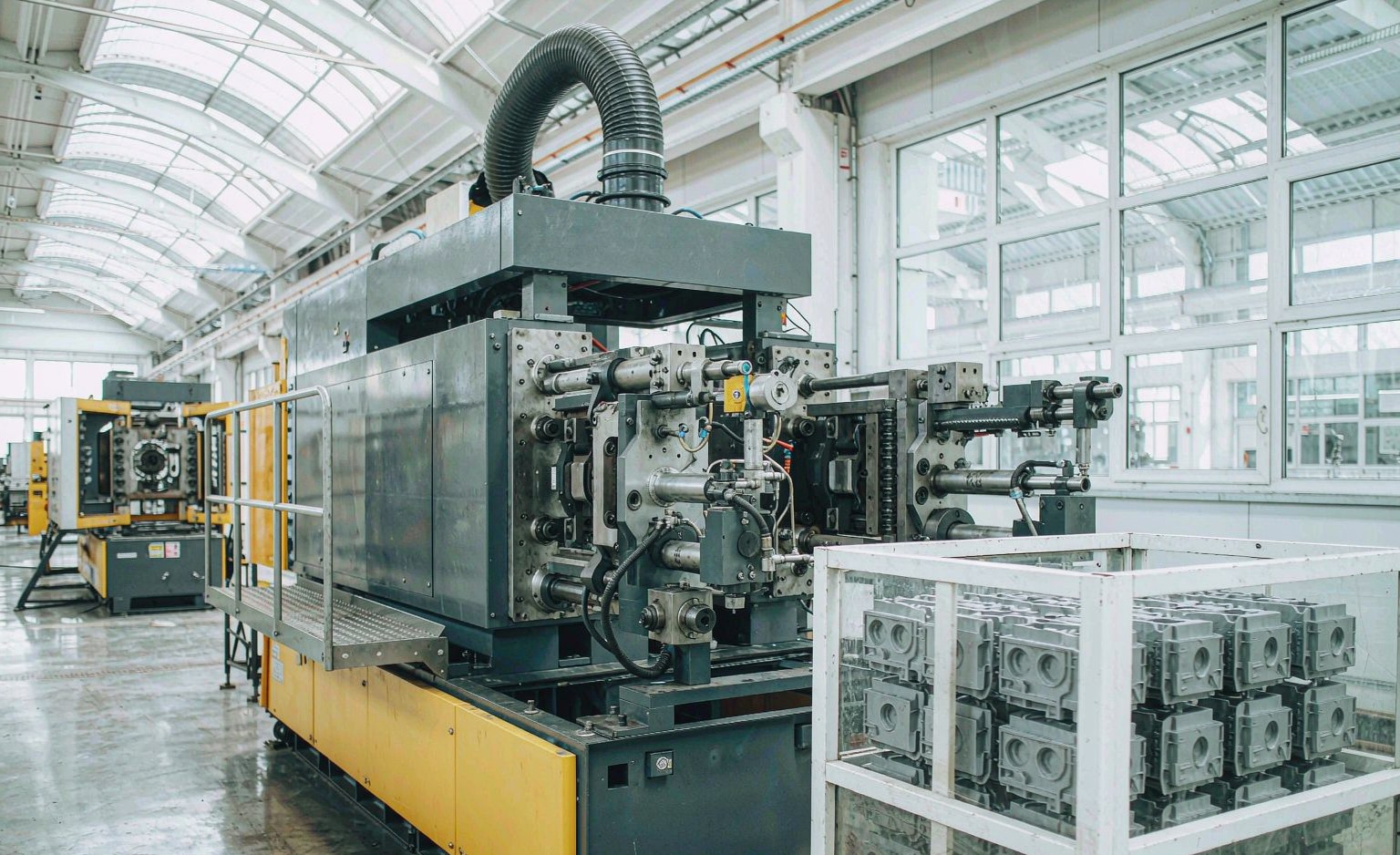
Typical Injection Mould Cost Estimates
Besides the mould investment, buyers should also consider material costs, injection processing, secondary operations, packaging, and other project expenses.
2. What Determines Injection Moulding Costs?
1. Mould Design and Complexity
Product structure is one of the most important factors affecting mould costs. Simple shapes are generally easier and less expensive to manufacture, while complex designs may require additional mould components and machining processes.
Features such as undercuts, side actions, thin walls, and high-precision dimensions can increase design and manufacturing costs.
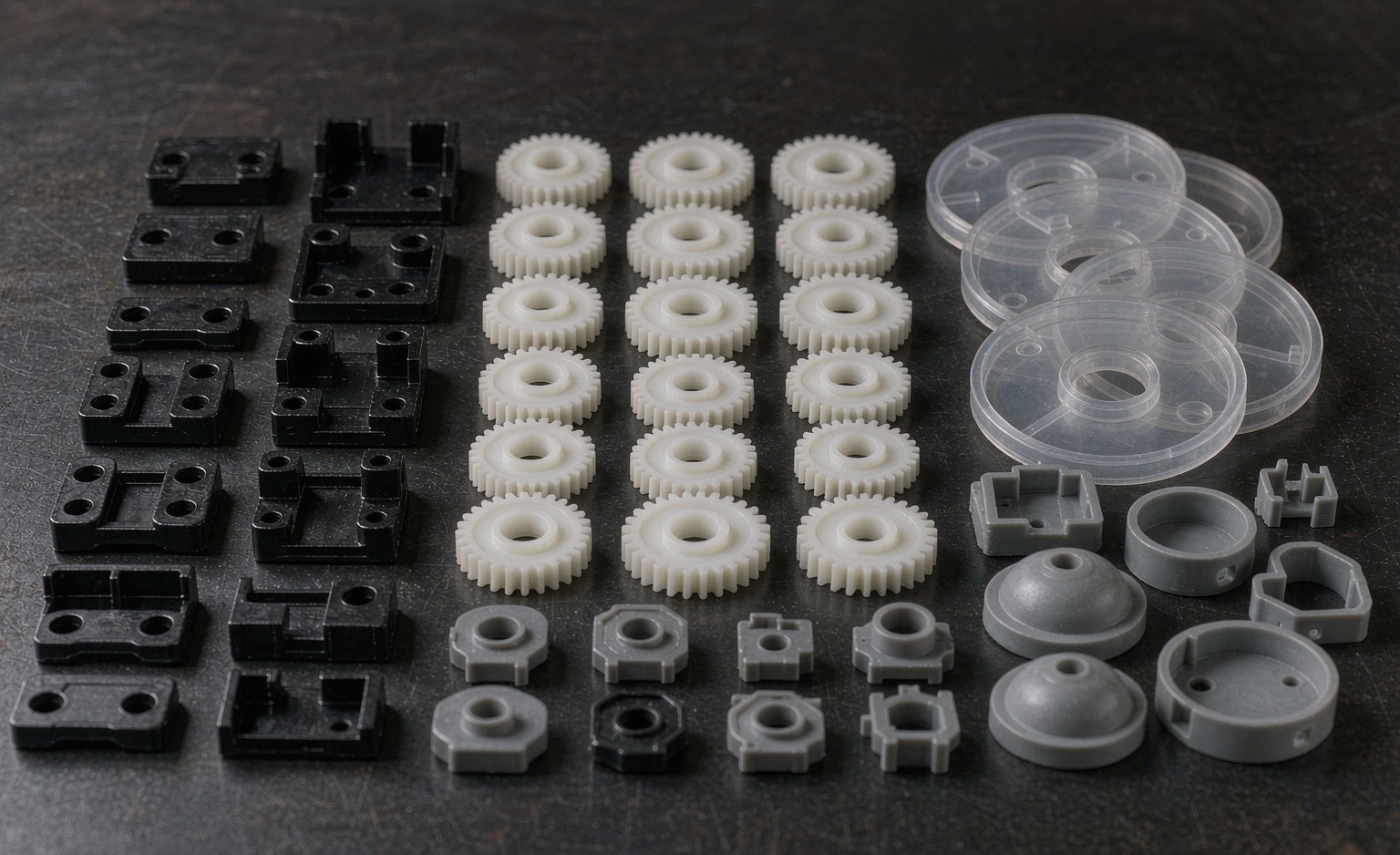
2. Plastic Material
Different plastic materials have different prices and processing requirements. Common materials include:
- PP: Commonly used for lightweight and cost-effective products.
- ABS: Offers good impact resistance and surface finish.
- PC: Known for transparency and impact strength.
- PA (Nylon): Often selected for strength and wear resistance.
- POM: Suitable for components requiring dimensional stability and low friction.
Material selection should match the product’s actual performance requirements rather than focusing only on the lowest material price.
3. Product Size and Weight
Larger and heavier parts generally require more plastic material and may need larger injection moulding machines. This can increase both material consumption and processing costs.
4. Number of Mould Cavities
A single-cavity mould produces one part per injection cycle, while a multi-cavity mould can produce several parts at once.
Multi-cavity moulds may reduce the production cost per piece for larger orders, but they usually require a higher initial investment and more complex mould design.
5. Secondary Processing
Some products require additional operations after moulding, such as:
- Surface polishing or texturing
- Printing, coating, or painting
- Ultrasonic welding or assembly
- Drilling, trimming, or other finishing work
These processes should be included when comparing supplier quotations, as they can significantly affect the final unit price.
3. How to Calculate the Unit Cost of Injection Moulded Parts
To understand the real cost of an injection moulding project, buyers should separate the production cost from the initial mould investment.
Example: Estimated Production Cost Per Piece
| Cost Component | Cost Per Piece |
|---|---|
| Plastic Material | $0.18 |
| Injection Processing | $0.12 |
| Secondary Processing | $0.05 |
| Packaging | $0.03 |
| Production Cost | $0.38 |
Adding the Mould Investment
Assume the mould costs $6,000 and the first production order is 20,000 pieces.
Mould Cost Per Piece
$6,000 ÷ 20,000 = $0.30
First-Batch Cost Per Piece
$0.38 + $0.30 = $0.68
Production: 20,000 × $0.38 = $7,600
Mould investment: $6,000
Total project cost: $13,600
The first batch therefore costs approximately $0.68 per piece when the full mould investment is allocated to that batch.
This example excludes international freight, import duties, taxes, and other logistics expenses. It also assumes the full mould investment is allocated to the first production batch. If the mould is used for multiple orders, the investment can be spread across a larger total production volume.
4. How Does Order Quantity Affect Injection Moulding Costs?
Order quantity has a direct impact on the mould cost allocated to each piece. A larger production volume spreads the initial mould investment across more units.
Using the same $6,000 mould investment, the estimated mould cost per piece would be:
| Order Quantity | Mould Cost Per Piece |
|---|---|
| 5,000 pieces | $1.20 |
| 10,000 pieces | $0.60 |
| 20,000 pieces | $0.30 |
| 50,000 pieces | $0.12 |
| 100,000 pieces | $0.06 |
This is why buyers should evaluate both the initial investment and expected lifetime demand before choosing a mould solution.
5. How Long Does Injection Moulding Take in China?
Project timelines vary according to mould complexity, sampling requirements, production capacity, and factory scheduling.
| Production Stage | Estimated Time |
|---|---|
| Mould Development | 20–35 working days |
| Mass Production | 15–25 working days |
| Typical Total | 35–60 working days |
For a standard project, the overall timeline is approximately 35–60 working days from design approval to goods ready for shipment. International shipping is not included.
Complex mould structures, design revisions, additional sampling rounds, and production scheduling may extend the timeline.
6. How to Reduce Injection Moulding Costs
Reducing costs does not always mean choosing the cheapest mould or the lowest-priced manufacturer. Better design and production planning can often create greater savings.
1. Simplify Product Design
Review unnecessary structural details, complicated features, and overly tight tolerances. A simpler design may reduce mould complexity and machining time.
2. Choose Materials Based on Actual Requirements
Compare material options based on strength, durability, appearance, and application. Avoid paying for performance features that your product does not need.
3. Plan Production Volume Carefully
Estimate realistic demand before deciding on mould specifications and cavity numbers. A suitable production plan can balance mould investment and unit cost.
4. Reduce Unnecessary Secondary Processing
Where possible, consider mould texture, material colour, and integrated design features that can reduce additional finishing operations.
5. Compare Complete Quotations
Ask suppliers to separate mould costs, material costs, processing fees, finishing, and packaging. This makes it easier to identify cost differences and avoid unexpected charges.
7. What Should Buyers Confirm Before Paying for a Mould?
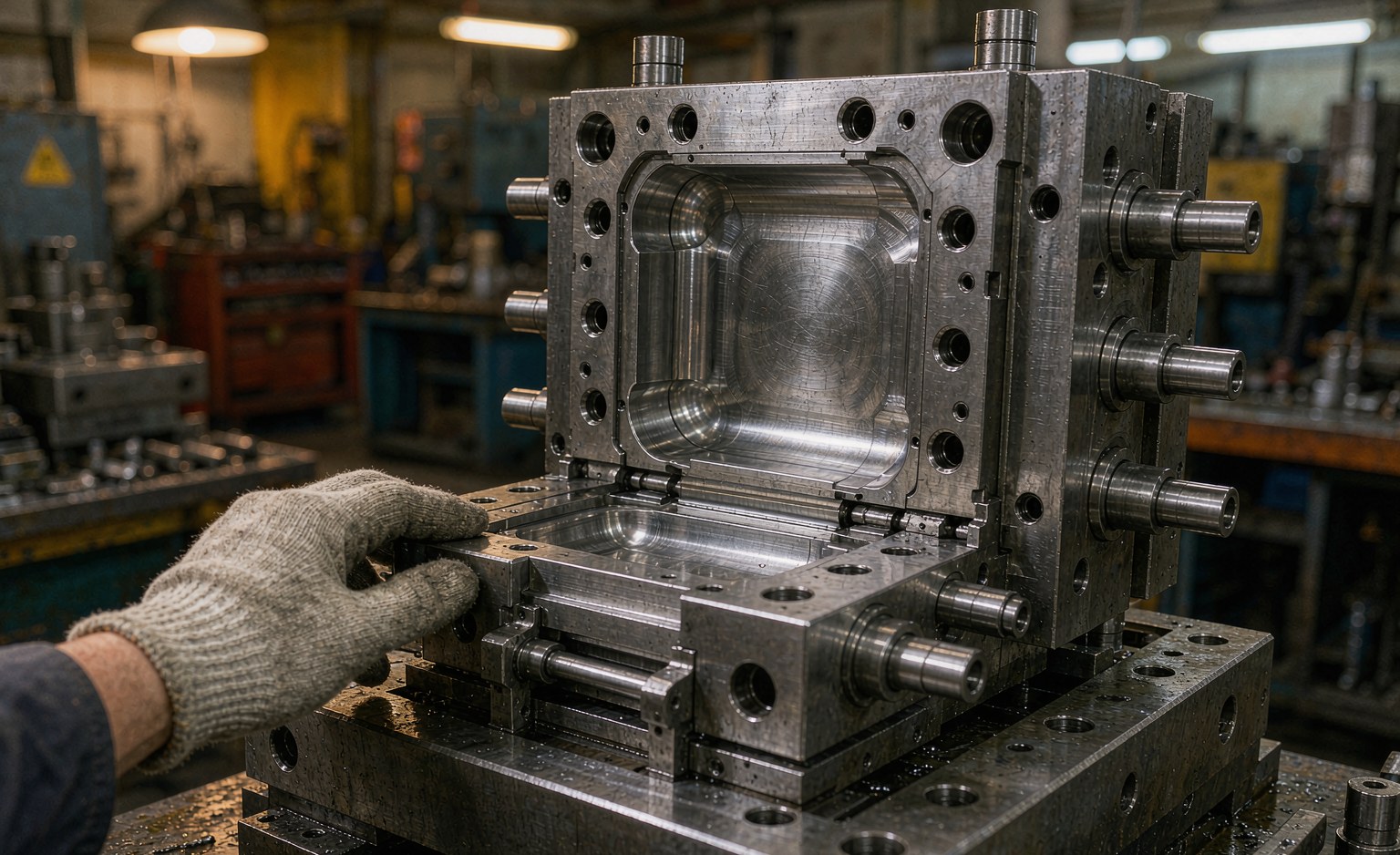
Before making a mould investment, buyers should clarify the technical and commercial terms in writing.
- Mould ownership: Who owns the mould after payment?
- Mould steel: Which steel grade will be used, such as P20, 718H, or S136?
- Cavity count: Is it a single-cavity or multi-cavity mould?
- Expected mould life: What is the estimated number of production cycles?
- Sample approval: How many sampling rounds are included?
- Modification costs: Who pays for changes after sample evaluation?
- Storage and maintenance: Who is responsible for mould storage and upkeep?
- Transfer rights: Can the mould be transferred to another manufacturer if necessary?
8. Finding the Right Injection Moulding Manufacturer in China
Choosing a suitable manufacturer requires more than comparing the lowest quotation. Buyers should evaluate mould-making capabilities, material control, sampling quality, production capacity, and communication efficiency.
It is also important to confirm whether the manufacturer can handle the complete project, including mould development, sample testing, mass production, and quality inspection.
For overseas buyers, working with a sourcing partner can make supplier comparison and project coordination more manageable. JACKHOO SOURCING supports international businesses with manufacturer sourcing, quotation evaluation, sample coordination, and production follow-up in China.
9. Frequently Asked Questions
How much does a plastic injection mould cost in China?
Indicative mould costs can range from around $1,500 for simple prototype moulds to over $60,000 for large or complex projects. The actual quotation depends on product design, mould material, cavity count, precision, and expected production volume.
What is the minimum order quantity for injection moulding?
There is no universal minimum order quantity. It depends on the manufacturer, product design, material, and production setup. Some suppliers may accept small trial orders, while others require larger volumes to make production commercially viable.
Is injection moulding cheaper for large orders?
Generally, yes. Larger orders spread the initial mould investment across more pieces and may reduce the unit production cost. However, buyers should also consider inventory, storage, and cash-flow requirements.
How long does it take to make an injection mould in China?
A standard mould development project may take approximately 20–35 working days. Complex moulds, design changes, and additional sampling can extend this timeline.
Can I own the injection mould after paying for it?
Ownership depends on the agreement with the manufacturer. Buyers should confirm ownership, storage responsibilities, maintenance terms, and transfer rights in a written agreement before paying for the mould.
What information is needed to get an injection moulding quotation?
Suppliers typically need 3D drawings or product samples, material specifications, product dimensions, expected order quantity, surface finish requirements, and any special quality standards. More complete information generally leads to more accurate quotations.
10. Final Thoughts
The cost of injection moulding in China depends on several connected factors, including mould investment, material selection, product design, production quantity, and additional processing.
Before starting a project, buyers should calculate the total investment rather than focusing only on the quoted unit price. Comparing complete quotations and confirming mould ownership, specifications, and production terms can help avoid unexpected costs.
With proper supplier evaluation and production planning, buyers can make better decisions and build a more cost-effective injection moulding project.
Need Help with Your Injection Moulding Project?
Looking for reliable injection moulding manufacturers in China? JACKHOO SOURCING can help you compare suppliers, evaluate quotations, coordinate samples, and manage production.
CONTACT JACKHOO SOURCING →