Why decorative lighting is worth watching
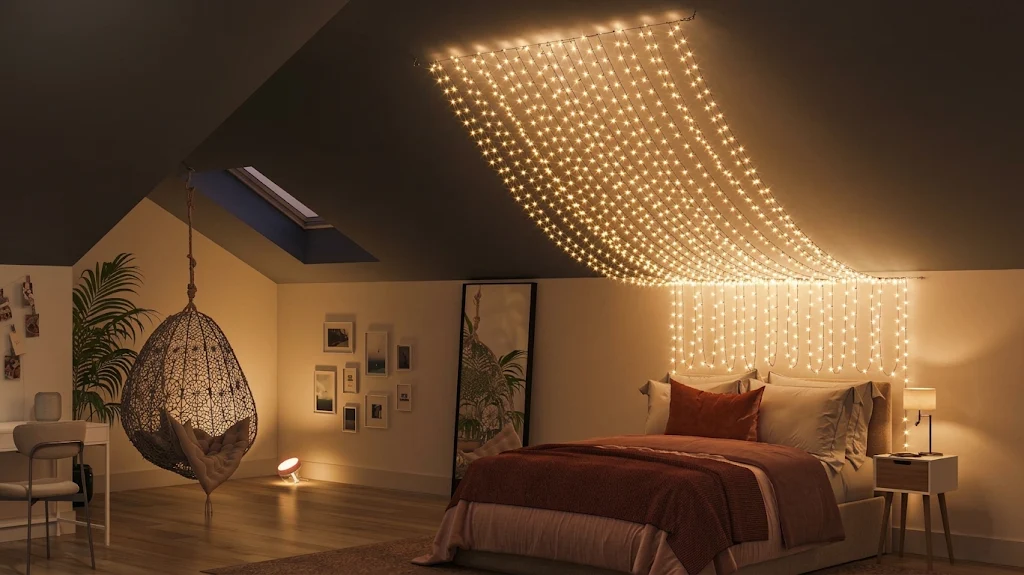
Decorative lighting is no longer just a finishing touch. LED string lights, fairy lights, ambient lamps, decorative table lamps, and sculptural lighting are now core tools for creating personalized living spaces, seasonal displays, and memorable interiors.
The market signal is hard to ignore. According to Ozon Select’s sales data, decorative lighting sales increased fourfold between January and September 2026 compared with the same period in 2025. That reflects rising consumer demand for products that make a space feel personal and visually distinctive.
For brands, the opportunity is usually not to out-build the largest lighting manufacturers. It is to build a focused collection around a lifestyle, a design language, or a specific use case — a warm bedroom ambient range, or decorative LED string lights for patios and gardens.
The categories buyers ask us about most
LED string & fairy lights — bedrooms, patios, gardens, weddings, seasonal décor. Often searched as “LED string lights wholesale” and “outdoor decorative string lights.”
Ambient lighting — soft, adjustable, color-temperature-driven mood lighting.
Decorative table lamps — functional light that also decorates a room.
Novelty & shaped lights — distinctive forms for specific audiences.
Outdoor decorative lighting — garden string lights, solar lights, weather-resistant fixtures.

The first sourcing question is not the design
When buyers search for decorative lighting suppliers in China, it is natural to start with photos, prices, and minimum order quantities. But lighting has a technical dimension that ordinary home décor does not.
A decorative lamp may look simple, yet its electrical components, power supply, wiring, plug, battery, and operating environment all determine whether it is legal to sell in your market. A product that works in one country may be unsellable in another without changes.
Before requesting quotations, lock down these basics:
| Specify first | Why it decides your order |
|---|---|
| Destination market | US, UK, EU, and AU each have different electrical and compliance rules. |
| Power supply | Mains, USB, low-voltage adapter, or battery changes the entire compliance route. |
| Voltage & frequency | The adapter and components must match the local supply. |
| Plug type | US / UK / EU / AU plugs are not interchangeable. |
| Indoor or outdoor | Outdoor use needs ingress protection and extra testing. |
| Product configuration | Remote, Bluetooth/Wi-Fi, rechargeable battery, or separate adapter. |
LED lighting compliance: what buyers should check
Electrical safety is one of the most important considerations when sourcing decorative lighting from China. But there is no single certificate that makes every lighting product legal everywhere. The right requirements depend on the product, its electrical design, intended use, and local law.
So do not accept a supplier’s general claim that “our products are certified.” Ask for the exact model, the exact standard, and the exact documentation.
United States — check the relevant UL standard
For the US, buyers often meet UL requirements from retailers, marketplaces, or partners. UL 588 applies to seasonal and holiday decorative lighting. The US CPSC flags hazards in seasonal decorative lighting such as insufficient wire size, weak strain relief, and missing overcurrent protection. Amazon also specifies applicable standards for certain string and rope lights and requires compliance documents.
European Union — understand CE and the applicable rules
For the EU, CE marking may apply depending on the product and the legislation covering it. Relevant requirements can include the Low Voltage Directive (LVD), Electromagnetic Compatibility (EMC), RoHS, General Product Safety, and WEEE. CE is a conformity marking backed by technical documentation — not a quality certificate a supplier “gives” you. Request the EU Declaration of Conformity and test reports for the exact configuration.

United Kingdom — check UKCA and CE recognition
For Great Britain, understand the relationship between UKCA and CE. The UK currently recognizes CE marking for many categories alongside UKCA, but the specifics must be checked per product. Confirm the correct conformity marking, that the Declaration of Conformity is prepared for the right market, that manufacturer and importer details are correct, and that technical documentation can be supplied on request.
Lithium battery shipping: the detail that delays orders
Some decorative lighting uses replaceable batteries, built-in rechargeable lithium cells, or separate battery packs. That changes how the goods must be shipped from China.
A battery-powered light is not handled like a non-battery product. Battery chemistry, capacity, configuration, packaging, and transport mode all matter. Air freight follows ICAO/IATA Dangerous Goods rules; sea freight follows the IMDG Code. The classification and documents depend on the exact setup.
Why Zhongshan Guzhen matters when sourcing decorative lighting
When sourcing decorative lighting from China, Zhongshan in Guangdong is the location to know. Guzhen Town is widely known for its lighting industry — a concentrated network of manufacturers, component suppliers, showrooms, and related businesses.

The advantage of an industrial cluster is not just the number of suppliers. It is the ability to compare production capabilities, product structures, materials, and customization options within a single sourcing region.
What about MOQ for decorative lighting?
Minimum order quantity is not fixed across Guzhen. A standard product using existing components usually has a lower MOQ than a customized design needing new molds, special materials, or a new electrical configuration. Some suppliers discuss trial orders around 100–300 pieces — treat that as a possible starting point for selected products, not an industry-wide promise.
How to evaluate a decorative lighting supplier before ordering
Attractive photos and low prices do not tell you whether a supplier is right for your brand. A structured evaluation should cover five areas.
Specifications
Full spec sheet: voltage, frequency, wattage, LED specs, color temperature, dimming, adapter, plug, battery, indoor/outdoor, IP rating, dimensions, materials. Approved sample must match mass production.
Compliance
Documents for the exact model and market. Test reports and declarations must cover the adapter, controller, and battery when they are part of the product — not just a generic claim.
Testing
Before mass production: electrical safety, insulation, temperature rise, plug/adapter performance, brightness consistency, dimming, battery, and claimed weather resistance.
Packaging & shipping
Fragile parts, long wiring, and glass need protection. Confirm carton size, gross weight, and shipping dimensions for your channel and freight method.
Consistency
Ask how the factory controls components, assembly, testing, and material changes across repeat orders. A sample is one example — consistency is what protects your brand long term.
Market fit
Confirm real experience with your destination market and the ability to support OEM, ODM, or private label arrangements when needed.
A practical checklist before sourcing decorative lights from China
| Area | Questions to confirm |
|---|---|
| Target market | Which country will the product be sold in? |
| Power supply | Mains, USB, adapter, or battery? |
| Electrical spec | Is voltage and frequency suitable? |
| Plug | Does it match the destination market? |
| Compliance | Which product-specific standards and regulations apply? |
| Documentation | Are reports and declarations available for the exact model? |
| Battery | Is UN 38.3 documentation available where required? |
| Shipping | Can the forwarder accept the product configuration? |
| MOQ | Is MOQ confirmed for the selected SKU and customization? |
| Quality | Are sample specs and mass-production controls aligned? |
| Packaging | Are carton size, weight, and protection right for the sales channel? |
Completing these checks early reduces the risk of choosing a product that looks promising but becomes difficult or expensive to import and sell — and helps you compare suppliers on more than price.
The right sourcing strategy starts before the first quotation
Decorative lighting can be an attractive addition to a home décor, lifestyle, or seasonal collection. But successful sourcing is not just finding a manufacturer with the right design at the right price. It requires understanding how product design, electrical specs, compliance documents, supplier capability, packaging, and shipping all connect.
A product may look perfect in a supplier’s catalogue — but if its electrical configuration is wrong for your market, or its battery documents are incomplete, the decision is not ready.