How to Source Small Furniture from China
A Smarter Approach to Furniture Sourcing
Sourcing small furniture involves more than finding a factory with an attractive quotation. International buyers need to consider material selection, structural stability, packaging durability, and the total landed cost.
China has a well-established furniture manufacturing industry, offering international buyers access to a wide range of small furniture products, from side tables and stools to bedside cabinets, shelving units, and compact storage furniture.
For overseas furniture brands, retailers, wholesalers, and e-commerce sellers, sourcing from China provides opportunities to develop new collections, customize designs, and manage manufacturing costs.
In particular, poor packaging and inconsistent product quality can create unexpected expenses after products leave the factory.
This guide explains the key factors international buyers should consider when sourcing small furniture from China.
Identify the Right Small Furniture Products
Before contacting suppliers, buyers should define the product categories they want to source.
Small furniture covers a broad range of products, including:
- Living Room Furniture: Side tables, coffee tables, nesting tables, and accent stools.
- Bedroom Furniture: Nightstands, bedside cabinets, and compact storage units.
- Entryway Furniture: Small benches, shoe racks, and console tables.
- Home Office Furniture: Compact desks, small shelving units, and storage cabinets.
- Decorative Furniture: Accent tables, display stands, and small occasional furniture.
Different product categories require different manufacturing capabilities. For example, a metal side table involves different production processes from a solid wood bedside cabinet.
Buyers should also consider their target customers, retail positioning, available storage space, and existing product collections before selecting products.
A clearly defined product range makes supplier evaluation and quotation comparisons much easier.
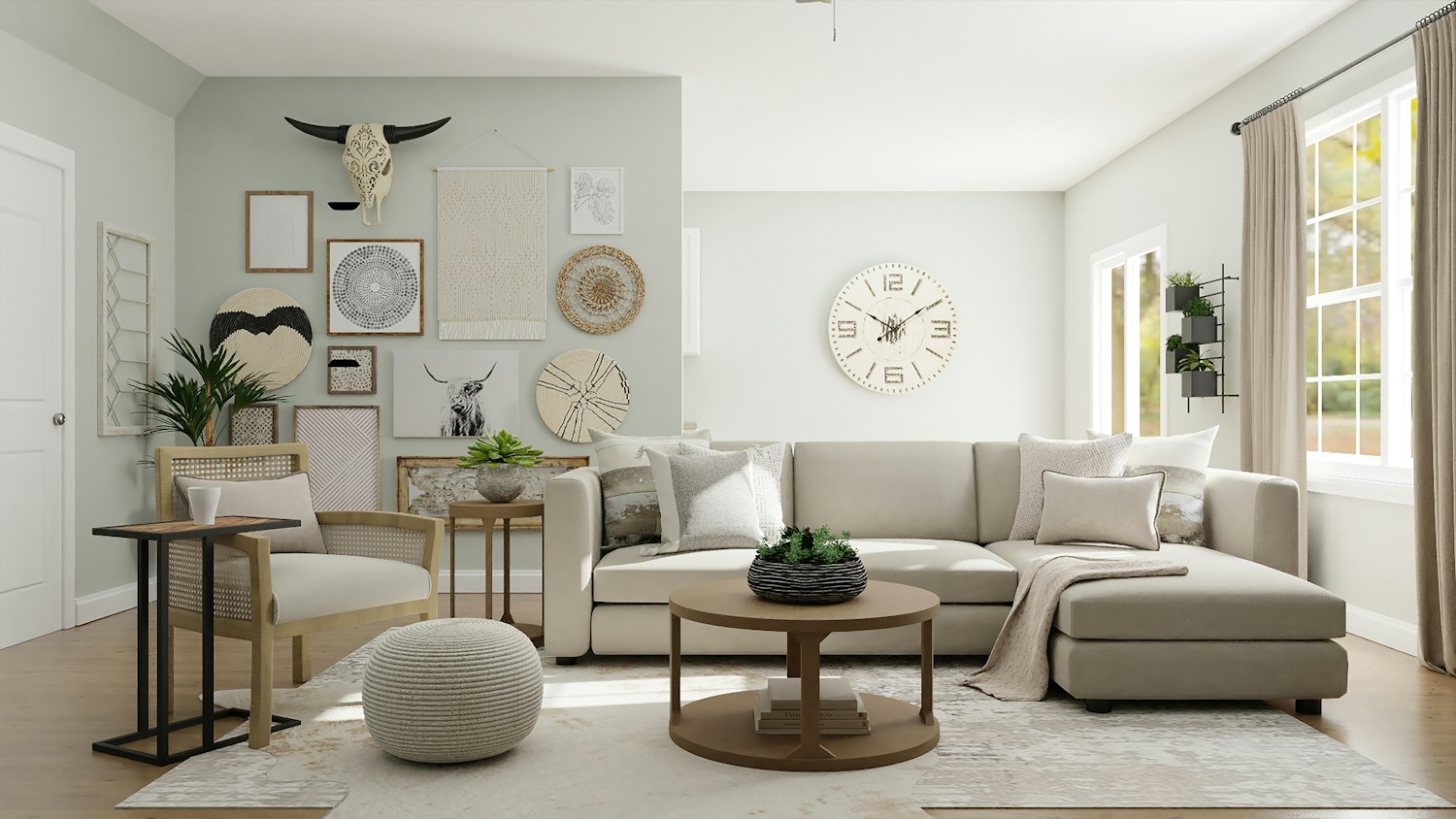
 LIVING ROOM / SIDE TABLES & ACCENT PIECES
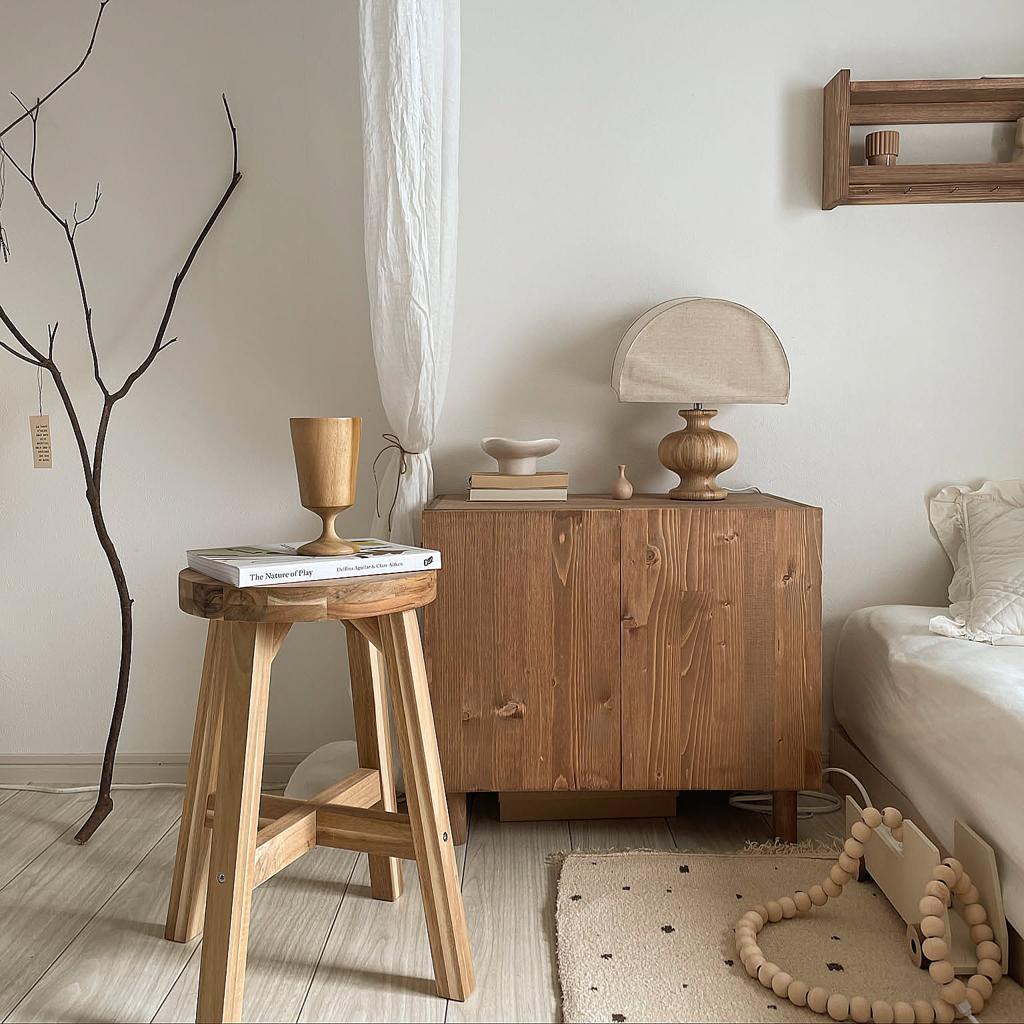
 BEDROOM / NIGHTSTANDS & COMPACT STORAGE
Choose the Right Materials and Construction
Material selection directly affects product appearance, durability, manufacturing costs, and retail positioning.
Small furniture manufacturers in China commonly work with several material categories:
| Material | Common Applications | Key Considerations |
|---|---|---|
| Solid Wood | Side tables, stools, cabinets | Wood stability, moisture control, and surface finishing |
| MDF / Particleboard | Storage cabinets, desks, shelves | Edge sealing, surface finishing, and load capacity |
| Metal | Table frames, shelving, stools | Welding quality, coating, and rust resistance |
| Bamboo / Rattan | Accent furniture, decorative pieces | Material consistency and structural stability |
| Glass | Tabletops, display furniture | Glass thickness, edge treatment, and protective packaging |
The lowest-cost material is not always the most suitable option.
For example, MDF may be a practical choice for a cost-conscious storage cabinet, while solid wood may better suit a premium furniture collection.
Buyers should evaluate not only the material itself but also how different components are assembled.
Important construction details include:
- Joint strength and connection methods.
- Screw, connector, and fitting quality.
- Weight-bearing capacity.
- Surface treatment and finishing consistency.
- Stability when the product is fully assembled.
A product may look attractive in photographs but still have weak joints or unstable structures. Reviewing physical samples and construction details before mass production helps identify potential problems early.
 SOLID WOOD / GRAIN, FINISHING & CONSTRUCTION DETAILS
Evaluate Customization Capabilities
Customization is particularly important for furniture brands looking to differentiate their collections.
Chinese furniture suppliers may offer different levels of customization depending on their equipment, production processes, and existing product designs.
Common customization options include:
- Dimensions: Adjusting product height, width, or depth to suit different markets.
- Materials: Changing wood types, metal components, or tabletop materials.
- Colors and Finishes: Developing specific colors, textures, and surface treatments.
- Structural Designs: Modifying legs, frames, storage compartments, or assembly methods.
- Branding and Packaging: Adding logos, labels, and customized retail packaging.
However, not every supplier can accommodate every customization request.
Some factories specialize in standardized products and may have limited flexibility for structural changes. Others have stronger product development capabilities but may require higher MOQs or longer development times.
Before moving forward, buyers should confirm which modifications are technically feasible, whether additional tooling is required, and how customization will affect the final quotation.
It is also important to confirm that all agreed specifications are documented before production begins.
Compare Suppliers Beyond Their Quoted Prices
Finding a competitive quotation is important, but price should not be the only factor in supplier selection.
Two suppliers may offer similar-looking furniture at significantly different prices because of differences in materials, construction, production processes, and finishing standards.
When comparing Chinese furniture suppliers, buyers should evaluate:
Manufacturing Experience
Check whether the supplier has experience producing the specific furniture category you need.
Production Capabilities
Understand whether key processes, such as cutting, welding, assembly, painting, and finishing, are handled in-house or outsourced.
Sample Quality
Evaluate the actual sample against the specifications, drawings, and reference images.
Production Capacity
Confirm whether the supplier can handle your expected order volume and delivery schedule.
Communication and Coordination
Clear communication is essential when discussing dimensions, materials, packaging, and product modifications.
It is also worth distinguishing between manufacturers and trading companies. Both may be suitable sourcing partners, but buyers should understand their production arrangements and responsibilities before placing an order.
Understand MOQ and Customization Costs
MOQ is an important consideration when sourcing small furniture from China, especially for new brands and businesses testing new product categories.
There is no universal MOQ for Chinese furniture products.
Order requirements vary depending on:
- Product complexity and size.
- Material availability.
- Existing production molds and tooling.
- Customization requirements.
- Factory production arrangements.
Standard products may have more flexible order quantities, while customized furniture can require higher MOQs.
Buyers should also look beyond the unit price and understand the full cost structure.
A furniture quotation may include:
- Product manufacturing costs.
- Customization or tooling fees.
- Surface finishing costs.
- Hardware and accessories.
- Individual product packaging.
- Carton and pallet requirements.
For customized orders, ask suppliers to separate one-time development costs from recurring production costs. This makes it easier to evaluate future order profitability.
Packaging and Shipping: Protecting Products and Profit Margins
Packaging is one of the most important considerations when importing small furniture from China.
Even compact furniture can be vulnerable to damage during international transportation, particularly products containing glass, wooden panels, painted surfaces, or detachable components.
A damaged product can lead to replacement costs, customer complaints, returns, and negative reviews. For e-commerce sellers, these issues can directly affect product profitability.
Flat-Pack vs. Fully Assembled Packaging
Buyers should determine whether products are shipped fully assembled or flat-packed (RTA – Ready to Assemble).
Flat-pack packaging offers several advantages:
- Reduces packaging volume.
- Improves container utilization.
- Makes warehouse storage easier.
- Can reduce international transportation costs.
However, flat-pack furniture requires careful planning. Components must be properly protected, hardware must be organized, and assembly instructions must be easy to understand.
Fully assembled furniture may be more convenient for end customers, but it can require larger cartons and more protective packaging.
The right option depends on product structure, transportation costs, and the expectations of the target market.
Preventing Damage During Transportation
Buyers should pay particular attention to vulnerable areas, including:
- Table corners and exposed edges.
- Glass panels and fragile components.
- Painted or laminated surfaces.
- Wooden panels that may be scratched or dented.
- Metal frames that may bend under pressure.
Protective foam, corner guards, internal dividers, reinforced cartons, and suitable cushioning materials can help reduce transportation risks.
Packaging should also be evaluated under realistic transportation conditions. Depending on the product and shipping requirements, drop testing can help identify weaknesses in carton structure and internal protection.
Don’t Overlook Assembly Instructions
For flat-pack furniture, packaging quality is only part of the equation.
Poorly designed assembly instructions can cause installation mistakes, missing-component complaints, and unnecessary customer support requests.
Before mass production, buyers should check:
- Whether instructions clearly explain each assembly step.
- Whether diagrams match the actual product structure.
- Whether screws and fittings are correctly labeled.
- Whether all required tools and accessories are included.
- Whether the instructions are available in the appropriate market language.
How JACKHOO Helps
JACKHOO supports packaging coordination with factories, helping buyers review carton dimensions, protective materials, and packaging arrangements. This helps balance transportation efficiency with product protection when sourcing furniture from China.
Establish Quality Control Standards Before Production
Furniture quality problems are often related to details that may not be obvious from product photographs.
A small side table may look attractive but still have uneven legs, unstable joints, scratches, inconsistent paint finishes, or incorrect dimensions.
To reduce these risks, buyers should establish clear quality standards before mass production.
An effective quality control process includes three stages:
Pre-Production
Confirm product specifications, approved samples, materials, colors, hardware, and packaging requirements.
DUPRO
Monitor material preparation, product dimensions, assembly accuracy, finishing, and production progress.
PSI
Check appearance, dimensions, structural stability, accessories, assembly functionality, and packaging.
Pre-Production Inspection
Before mass production begins:
- Confirm product specifications and approved samples.
- Check materials, colors, and hardware.
- Review construction drawings and dimensions.
- Confirm packaging requirements.
An approved golden sample is particularly important. It serves as the physical reference for evaluating mass-produced products and helps prevent misunderstandings about appearance, materials, and workmanship.
During Production Inspection (DUPRO)
During manufacturing, buyers can arrange inspections to check:
- Material preparation and consistency.
- Product dimensions and structural components.
- Assembly accuracy.
- Surface finishing and visible defects.
- Production progress against agreed specifications.
Identifying problems during production gives factories an opportunity to correct them before the entire order is completed.
Pre-Shipment Inspection (PSI)
Before shipment, the finished products should be checked against the approved specifications.
Important inspection points include:
- Product appearance and surface quality.
- Dimensional accuracy.
- Structural stability.
- Hardware and accessory completeness.
- Assembly functionality.
- Packaging condition and carton markings.
For furniture products, stability and load-bearing checks may also be necessary depending on the product design and intended use.
Buyers should additionally identify relevant product safety and regulatory requirements in their destination markets. Furniture intended for children’s use, for example, may be subject to additional safety requirements.
Calculate the Total Landed Cost
A competitive factory price does not necessarily mean a competitive final product cost.
International buyers should calculate the total landed cost before confirming an order.
| Cost Category | What to Consider |
|---|---|
| Product Cost | Factory quotation and customization fees |
| Packaging | Protective materials and carton requirements |
| Domestic Logistics | Transportation from factory to warehouse or port |
| International Freight | Sea, air, or other shipping methods |
| Import Duties | Applicable tariffs and customs charges |
| Destination Costs | Customs clearance, handling, and final delivery |
For small furniture, packaging volume can have a significant impact on transportation costs.
A product with a relatively low manufacturing price may become less profitable if it requires oversized packaging or extensive protective materials.
Buyers should compare different packaging solutions and shipping arrangements before finalizing their purchasing decisions.
When sourcing multiple furniture categories from different factories, shipment consolidation may also help simplify logistics and improve transportation efficiency.
 LANDED COST / CALCULATING THE TRUE BOTTOM LINE
Build a More Reliable Furniture Supply Chain
Sourcing small furniture from China gives international buyers access to diverse manufacturing capabilities, flexible product options, and opportunities to develop differentiated collections.
However, successful sourcing requires more than finding a supplier with a low quotation.
From material selection and structural stability to packaging optimization, quality inspections, and total landed cost calculations, every detail can influence the final purchasing result.
For buyers managing multiple suppliers or developing customized furniture collections, reliable local coordination can make the sourcing process more manageable.
JACKHOO supports international buyers with supplier coordination, sample follow-up, production monitoring, and quality inspection arrangements in China.
 EVERY PIECE, WELL SOURCED / FROM FACTORY TO LIVING ROOM
Looking to Source Small Furniture from China?
Contact JACKHOO to discuss your product requirements and sourcing project.
CONTACT JACKHOO SOURCING →