Overseas small brands get ignored: emails unanswered, MOQs too high, customization refused. Factories chase volume; you need flexibility. Direct factory buying isn’t always cheaper—hidden costs add up. A sourcing partner can help.
The Myth: “Just Go Direct to the Factory”
Open almost any “how to start a brand” video and you’ll hear the same advice: cut out the middleman. Go straight to the factory. Keep the margin.
It’s a great line. It’s also the reason a lot of small brands stall on their very first order.
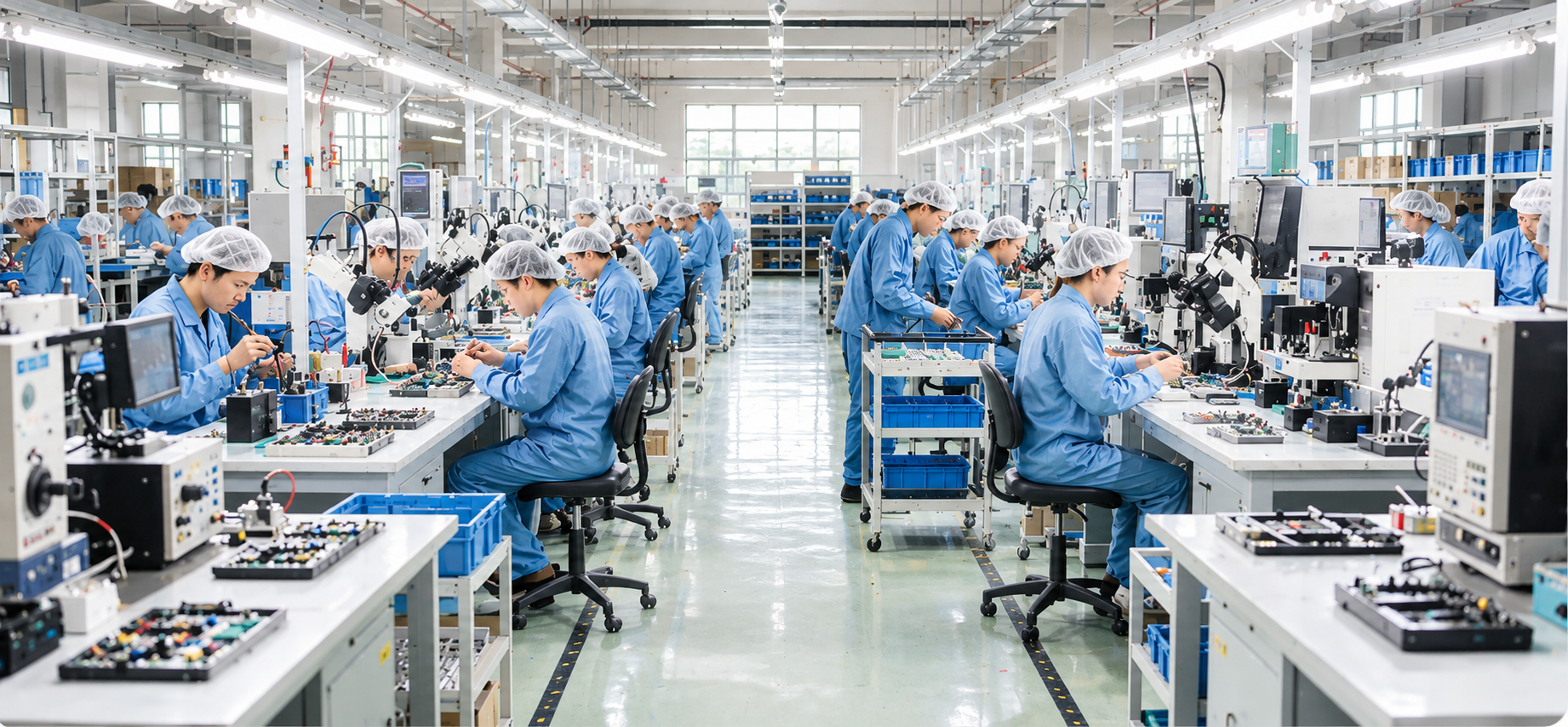
Here’s the part the advice leaves out: a factory is not a shop. It doesn’t exist to serve whoever walks in the door. It exists to run production at a certain scale — and it is organized, staffed, and paid around that scale.
When you go “direct,” you don’t remove the middleman. You become the middleman. You are now your own sourcing agent, quality inspector, logistics coordinator, and translator — usually while also trying to run a brand.
That isn’t a knock on factories. It’s arithmetic. And once you see the arithmetic, the rest of the myth falls apart.
Why Factories Really Ignore Small Brands
It’s rarely personal. It’s a scheduling and risk calculation — and it plays out the same way in almost every factory town.
Every order carries a fixed cost before the first good unit exists: machine setup, mold changes, material runs, trial samples, and line downtime. On a 50,000-unit order, that cost disappears into the price. On a 500-unit order, it sits on top of every single unit.
Sales teams are measured on volume. A buyer asking for ten containers gets a reply in an hour. A founder asking for 500 pieces lands in a folder called “later.”
Small orders also carry more risk per dollar: more questions, more spec changes, more chances to get it wrong — often from a new customer with no payment history.
| What the factory sees | What you experience |
|---|---|
| A 500-unit inquiry next to a 50,000-unit order | Slow replies — or none at all |
| Extra setup time for a short run | A unit price higher than the one quoted online |
| A new brand still changing its spec | “Our minimum order is 5,000 units” |
| Higher payment risk from an unknown buyer | A full deposit demanded up front |
None of this means factories dislike small brands. It means small brands are, by default, low priority. That’s a very different problem — and it needs a very different fix.

What “Direct” Actually Costs You
The quote looks simple: unit price × quantity. The real cost is bigger, and most of it never appears on the invoice.
- Time. Sourcing, follow-ups, sample rounds, and timeline slips — all on your calendar.
- Quality. With no one owning the spec, “close enough” is what ships.
- Drift. Batch two quietly stops matching batch one.
- Logistics. You’re now arranging freight, customs, and insurance too.
- Risk. Deposits to strangers, currency swings, and little recourse if something goes wrong.
Add those up and the “cheaper” direct order often costs more than a well-run one through a partner. You just pay in a different currency: your time.

“Direct” sounds like control. Most of the time, it’s just isolation with a purchase order.
The Hidden Math Behind Your Quote
Let’s make it concrete with a simplified example. Round numbers, for clarity.
Suppose setting up a production run costs $2,000 — molds, fixtures, trial samples, and line time. That cost barely changes whether you make 500 units or 50,000.
| Cost line | 500-unit run | 50,000-unit run |
|---|---|---|
| One-time setup (molds, trial run, line time) | $2,000 | $2,000 |
| Setup cost per unit | $4.00 | $0.04 |
| Material + labor per unit | $3.00 | $3.00 |
| Your cost per unit | $7.00 | $3.04 |
Same factory. Same product. Same quality. The small brand pays more than double — not because it’s being cheated, but because it’s carrying the full setup on a short run.
This is the trap behind “direct.” The factory isn’t punishing you. The math is.
There are only three ways out: order more (rarely possible at the start), share the setup with others, or work with someone who already aggregates volume. The first is a wish. The second and third are a strategy.
A Better Way: Borrow Leverage, Not a Factory
The opposite of “going direct” isn’t “paying a middleman forever.” It’s borrowing leverage you don’t have yet.
In manufacturing, leverage is simple — and it comes in four parts:
- Volume. Combined orders spread setup costs and earn better pricing.
- Relationships. A known partner gets replies, priority slots, and honest answers.
- Language. Someone who can say “this tolerance is wrong” in the factory’s language — before it ships.
- Process. A repeatable spec → sample → inspect → ship loop that catches problems early.
A good sourcing partner brings all four. Your 500 units ride alongside larger runs, so you get the setup math of a bigger buyer without inventing demand you don’t have.
And you keep what matters: the brand, the design direction, the customer relationship, and the final say.

How to Get Taken Seriously (Even at 500 Units)
Small doesn’t have to mean ignored. These habits change how factories treat you — starting with your next email.
- Lead with a spec, not a wish. Drawings, materials, dimensions, tolerances, packaging, and a target price. “Do you make X?” gets a catalog. A spec gets a quote.
- Show the future. Factories invest in customers with repeat potential. Tell them what year two looks like.
- Respect the setup. Ask what tooling and setup cost, and pay for it openly. It signals you’re serious.
- Ask about capacity windows, not just price. “When can you run 500?” is a different — and better — conversation.
- Put everything in writing. Spec sheet, golden sample, QC checklist, payment terms.
- Pay on time. In this industry, reputation travels faster than any email.
Quick self-check before you hit send
Can you answer all four? If not, you’re not ready to ask for a quote yet — and the factory can tell.
- Do I have a written spec (materials, dimensions, tolerances, packaging)?
- Do I know my realistic annual volume, not just my first order?
- Have I budgeted for setup and tooling as a separate line item?
- Do I know who inspects the goods before they ship — and against what checklist?
Where a Sourcing Partner Fits In
At JackHoo Sourcing (JH Resourcing), we’re the team on the ground in China — the one that turns a small brand’s order into something a factory takes seriously. You keep the brand decisions. We handle the factory side:
- Supplier research and vetting — real manufacturers, verified capability
- Sampling management — from first prototype to locked golden sample
- Price negotiation — in the local language, with local market knowledge
- Production follow-up and QC inspections — measured against your spec, before anything ships
- Shipping and customs — delivered, not just produced
You run the brand. We run the factory side. And your order gets the leverage of everything else we’re already producing.
The result: small brands stop being ignored — not because they got bigger overnight, but because they stopped going direct alone.
Your Next Step
Small doesn’t have to mean ignored. To get taken seriously, you need three things:
- A factory-ready spec
- A partner with real leverage
- A repeatable development process
Planning your next product? Start by reading how we turn the Canton Fair into your product strategy meeting — or visit jhresourcing.com and tell us what you want to make.
Get a Factory-Ready Quote →