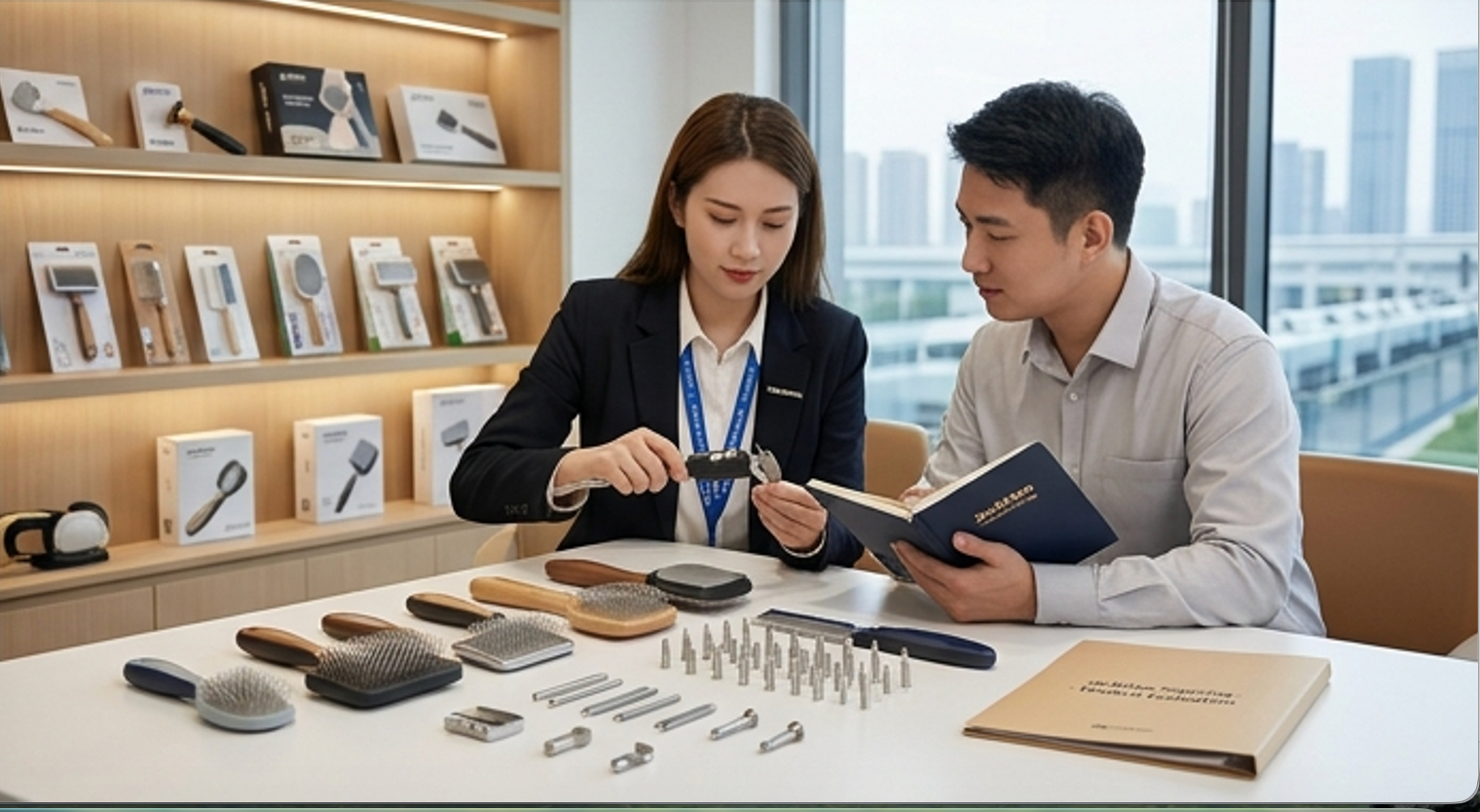
The pet grooming tools looks simple from the outside.
There are brushes, combs, deshedding tools, nail clippers, grooming scissors and more. A quick search for pet grooming tools can bring up hundreds of products from different suppliers.
But when you are building a pet brand, the difficult part is not finding a product.
The difficult part is deciding which pet grooming tools are worth sourcing, improving or developing for your brand.
We see this quite often when working with growing pet brands. A product may sell well on Amazon, yet that does not automatically mean it is a good product to copy.
The better question is:
Where is there still room to improve the product?
That is where sourcing becomes more than simply asking a factory for a price.
Why Dog Grooming Tools Are Becoming Harder to Differentiate?
The number of pet grooming products on the market keeps increasing.
A basic slicker brush, for example, may look almost identical across several brands. The same happens with dog nail clippers, grooming combs and deshedding tools.
When products look the same, the discussion quickly becomes about price.
And this is becoming even more important as consumers have more access to ultra-low-price shopping channels.
For pet brands, competing only on price is usually difficult to sustain.
A better approach is to look at the product itself:
- Is the handle comfortable enough for repeated use?
- Is the brush effective on different coat types?
- Are the materials strong enough for long-term use?
- Is the product easy to clean?
- Does the packaging protect the product without adding unnecessary cost?
- Can the product be made visually different from competing products?
When we source pet grooming tools, these are the questions we look at before discussing the final factory price.
A lower unit price is useful.
But a better product can create a much stronger position.
Which Pet Grooming Tools Should a Pet Brand Source First?
Not every grooming product needs to become a completely new invention.
Some of the best opportunities come from familiar products that customers already understand but still have room for improvement.
The main categories we usually look at include pet grooming brushes, slicker brushes, deshedding tools, pet nail clippers and pet grooming scissors.
Pet Grooming Brush
A pet grooming brush is one of the easiest products for customers to understand, but there is still plenty of room for differentiation.
For example, brands can look at:
- Different bristle configurations
- Handle ergonomics
- One-click cleaning mechanisms
- Brush size for small and large dogs
- Long-hair versus short-hair use
- Gentle brushing for sensitive skin
- Combination brush designs
The important thing is not simply adding another feature.
The feature needs to solve a real problem.
A grooming brush that looks innovative but does not make grooming easier will not create much value.
Slicker Brush
The slicker brush is another product worth paying attention to.
For brands entering the grooming category, the question is not only “Can we find a slicker brush?”
Of course you can.
The better question is:
What kind of slicker brush fits our target customer?
A professional groomer may care about speed, durability and efficient hair removal.
A home grooming customer may care more about comfort, easy cleaning and whether the brush is gentle enough for regular use.
These are different product positions.
That means one factory sample may not be the right answer for every brand.
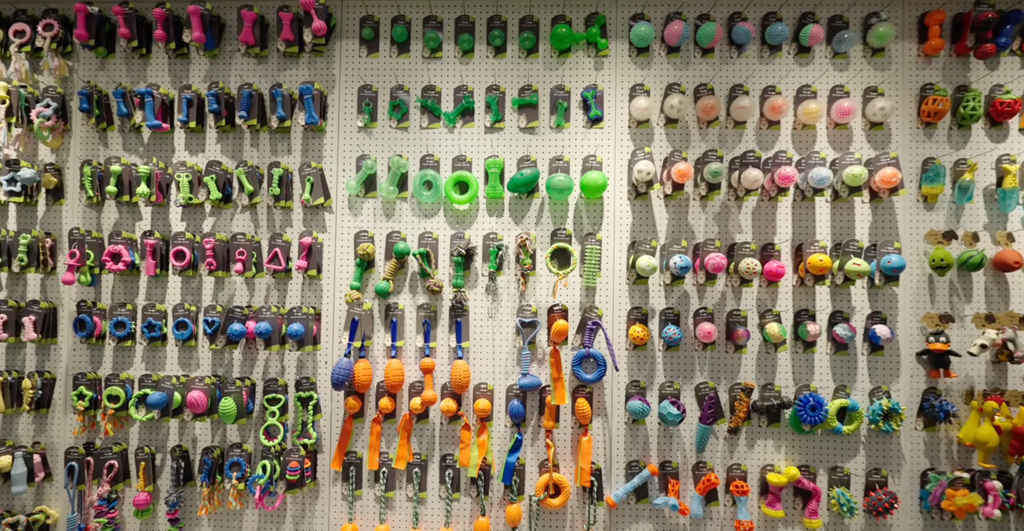
How to Choose a Pet Grooming Brush That Is Worth Developing?
When a customer asks us to source a pet grooming brush, we normally start from the target market rather than the factory catalog.
For example:
What type of dog is the product designed for?
What kind of coat?
Who will use it?
How frequently?
At home or in a professional grooming environment?
What price range should the product sit in?
These questions help narrow down the product structure.
Then we compare samples.
We look at the brush head, pin density, material, handle, assembly, finishing and packaging.
This is where sourcing experience becomes important.
A factory may tell you that two products are basically the same.
From a sourcing point of view, they may not be the same at all.
A small change in materials, assembly or packaging can affect the customer’s experience, product durability and final cost.
When Does a Deshedding Tool Make Sense for a Pet Brand?
The deshedding tool is another strong grooming category because it solves a very clear problem: loose hair.
But this category also shows why copying the market is not enough.
A product can remove hair effectively but still have problems with:
- Handle comfort
- Blade durability
- Skin contact
- Cleaning
- Product weight
- Storage
- Packaging
- User instructions
When we evaluate a deshedding tool, we look beyond the sample itself.
We also think about how the product will be used, packaged, shipped and sold.
For example, if a tool has an unnecessarily complicated structure, it may increase manufacturing costs without adding enough customer value.
Sometimes a simpler product is actually the better product.
That is one reason we often look at product structure and cost together, rather than discussing them separately.
Pet Nail Clippers: A Small Product With Many Details
Pet nail clippers may look simple, but this is exactly the kind of product where small details matter.
Current search-demand data shows that dog nail clippers are a substantial search category in the U.S., with related searches including products for black nails, guards and other specific features.
For pet brands, this creates opportunities for more specific positioning.
For example:
- Pet nail clippers for small dogs
- Pet nail clippers for large dogs
- Pet nail clippers with safety features
- Pet nail clippers with better grip
- Pet nail clippers for easier handling
The key is not to add features randomly.
Start with the main problem.
Then decide whether the product structure can solve it without making the product unnecessarily expensive.
Pet Grooming Scissors and Professional Grooming Tools
Another category worth watching is dog grooming scissors and professional grooming tools.
Here, precision and durability become much more important.
For professional users, details such as balance, grip, blade finishing and cutting performance can make a real difference.
For a consumer brand, packaging and positioning may also matter.
That means the same basic tool can be developed differently for different markets.
A professional grooming product does not always need to look like a consumer product.
This is why we prefer to understand the customer’s sales channel before selecting a factory.
A product designed for a professional groomer, an independent pet brand and an Amazon-focused brand can have very different requirements.
Private Label Pet Grooming Tools: Start With the Product, Not the Logo
Many brands start private label sourcing by asking:
“Can you put our logo on this?”
Of course, that is possible for many products.
But private label pet grooming tools can go much further than logo printing.
A stronger private label product can include:
- Your own handle design
- Your own colors and finishes
- Your own packaging structure
- Your own accessory combination
- Your own product positioning
- Your own product improvements
This is where new product development becomes more interesting.
You can start with an existing market product, identify the weak points, improve the structure and then develop a version that better fits your brand.
That is often more practical than trying to invent something completely new from zero.
How We Evaluate Pet Grooming Tools Before Production?
At JackHoo Sourcing, we do not look at pet grooming tools only from a catalog perspective.
We look at the complete supply chain.
First, we identify suitable suppliers based on the product structure and manufacturing requirements.
Then we compare samples.
We check quality, materials, finishing and usability.
After that, we look at the product cost, packaging, MOQ and production capability together.
This matters because the cheapest supplier is not always the lowest-cost solution.
A supplier with a slightly higher unit price may offer better quality, lower defect rates, better packaging efficiency or a more suitable production process.
The real goal is not simply:
“How can we buy this product cheaper?”
It is:
“How can we make the total product proposition more competitive?”
For growing brands, that difference matters.
Build a Pet Grooming Product Line, Not Just One SKU
One of the interesting things about the grooming category is that products naturally connect.
A brand may start with one pet grooming brush.
Then it can develop a deshedding tool.
Then a grooming comb.
Then dog nail clippers.
Then grooming scissors.
Instead of treating every product as a separate project, the brand can gradually build a complete pet grooming products range.
This can also create opportunities to share packaging concepts, color systems, product positioning and even supply chain resources.
From our experience, this is where a long-term sourcing relationship becomes much more useful than a simple one-time factory order.
The objective is not to keep adding random SKUs.
It is to build a product line that makes sense for the same customer.
What Makes a Good Pet Grooming Tool for a Growing Brand?
A good pet grooming tool does not necessarily need to be the most expensive.
It does not need to have the most complicated design either.
It needs to solve a clear problem, have a reasonable manufacturing structure and give the brand enough room to create a meaningful position in the market.
Before placing an order, we recommend looking at five things together:
Product: Does it solve a real grooming problem?
Quality: Can the materials and structure support the expected use?
Cost: Is the product competitive after packaging and logistics?
Positioning: Is there a reason customers would choose this brand?
Supply chain: Can the supplier support the brand as demand grows?
When these five parts work together, sourcing becomes much more than buying a product.
It becomes part of product strategy.
All in all, the best grooming product is not always the cheapest one.
We all know, “You get what you pay for.” But when it comes to real decisions, many factors make it difficult to follow.
The pet grooming tools market is crowded, but that doesn’t mean there’s no opportunity beyond competing on price.
It means the opportunity is increasingly in the details.
A better handle.
A simpler structure.
A more practical brush head.
A smarter packaging solution.
A better combination of products.
A more efficient supply chain.
For growing pet brands, these improvements can create a product that is easier to sell and harder to compare purely by price.
At JackHoo Sourcing, we help brands source pet grooming tools, improve existing products and develop new products from China.
From supplier sourcing and samples to customization, inspection, packaging and shipping, the goal is simple:
Build a better product before you build more inventory.
Have a grooming product idea or an existing product you want to improve?
Bring us the product. Let’s see what we can improve together.
📞 Contact Jack Sourcing:
✉️ Email: Jack@jhresourcing.com
🌐 Website: https://www.jhresourcing.com
📱 WhatsApp/WeChat: +86 18057942197