Have you ever looked at a pet product and wondered:
How did this product go from an idea to something sitting in your home?
Behind a simple pet toy, grooming brush, feeding bowl, leash, or smart pet device, there can be a surprisingly long journey.
And China plays an important role in many parts of this journey.
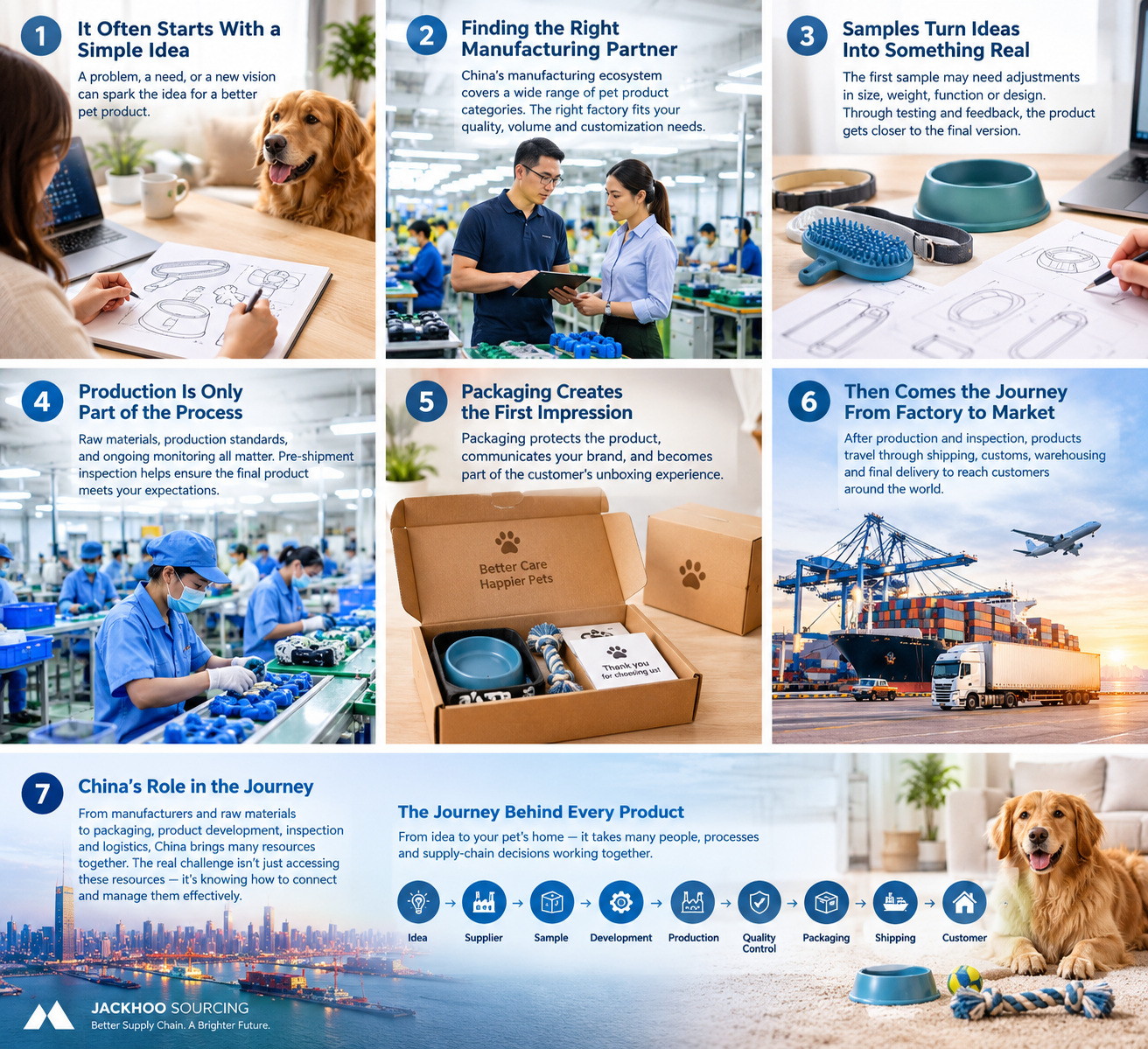
1. It Often Starts With a Simple Idea
A new pet product may start with a simple problem.
A pet owner wants an easier way to clean their dog.
A brand wants to make feeding more convenient.
A designer wants to create a safer toy.
The idea may look simple, but turning it into a real product requires materials, engineering, manufacturing, and testing.
2. Finding the Right Manufacturing Partner
Once an idea is defined, the next step is finding a suitable manufacturer.
China has a large manufacturing ecosystem covering many different pet product categories.
However, the right factory isn’t necessarily the biggest or cheapest one.
The manufacturer needs to match the product’s requirements, production volume, quality expectations, and customization needs.
3. Samples Turn Ideas Into Something Real
Before mass production, a product usually needs to become a physical sample.
This is where many ideas begin to change.
The first sample may be too large, too heavy, difficult to use, or simply not feel right.
After testing and feedback, materials, dimensions, functions, and design details can be adjusted.
This process can happen several times before the final product is ready.
4. Production Is Only Part of the Process
Once the sample is approved, production can begin.
But manufacturing is not simply about making thousands of identical products.
Raw materials need to meet specifications, production needs to follow the approved sample, and potential quality issues need to be identified during the process.
For international brands, production monitoring and pre-shipment inspection can be especially important because the factory may be thousands of miles away from the final market.
5. Packaging Creates the First Impression
Before a pet product reaches a customer’s home, it also needs packaging.
Packaging protects the product during transportation, but it can also communicate a brand’s identity.
For products sold online, packaging can become part of the customer’s unboxing experience.
That is why product development and packaging development often need to be considered together.
6. Then Comes the Journey From Factory to Market
After production and inspection, products still need to travel from the factory to their destination.
Shipping arrangements, documentation, customs procedures, warehousing, and final delivery all become part of the supply chain.
A successful product therefore depends on much more than manufacturing alone.
7. China’s Role in the Journey
China’s manufacturing ecosystem brings many of these resources together.
Manufacturers, raw-material suppliers, packaging companies, product-development resources, inspection services, and logistics providers can all form part of the same supply chain.
This ecosystem gives global pet brands opportunities to develop, customize, and scale products in different ways.
But the real challenge is not simply accessing these resources.
It is knowing how to connect and manage them effectively.
The Journey Behind Every Product
The next time you see a pet product on a store shelf or in an online shopping cart, remember that the product may have gone through a long journey:
Idea → Supplier → Sample → Development → Production → Quality Control → Packaging → Shipping → Customer
What looks like a simple product is often the result of many people, processes, and supply-chain decisions working together.
For pet brands looking to create the next product, understanding this journey is the first step toward building a stronger and more efficient supply chain.