When you build a private label brand, you choose the packaging, the logo, and the promise. But the moment a customer buys your product, you are the one they hold responsible. The factory is thousands of miles away. You are the name on the box.
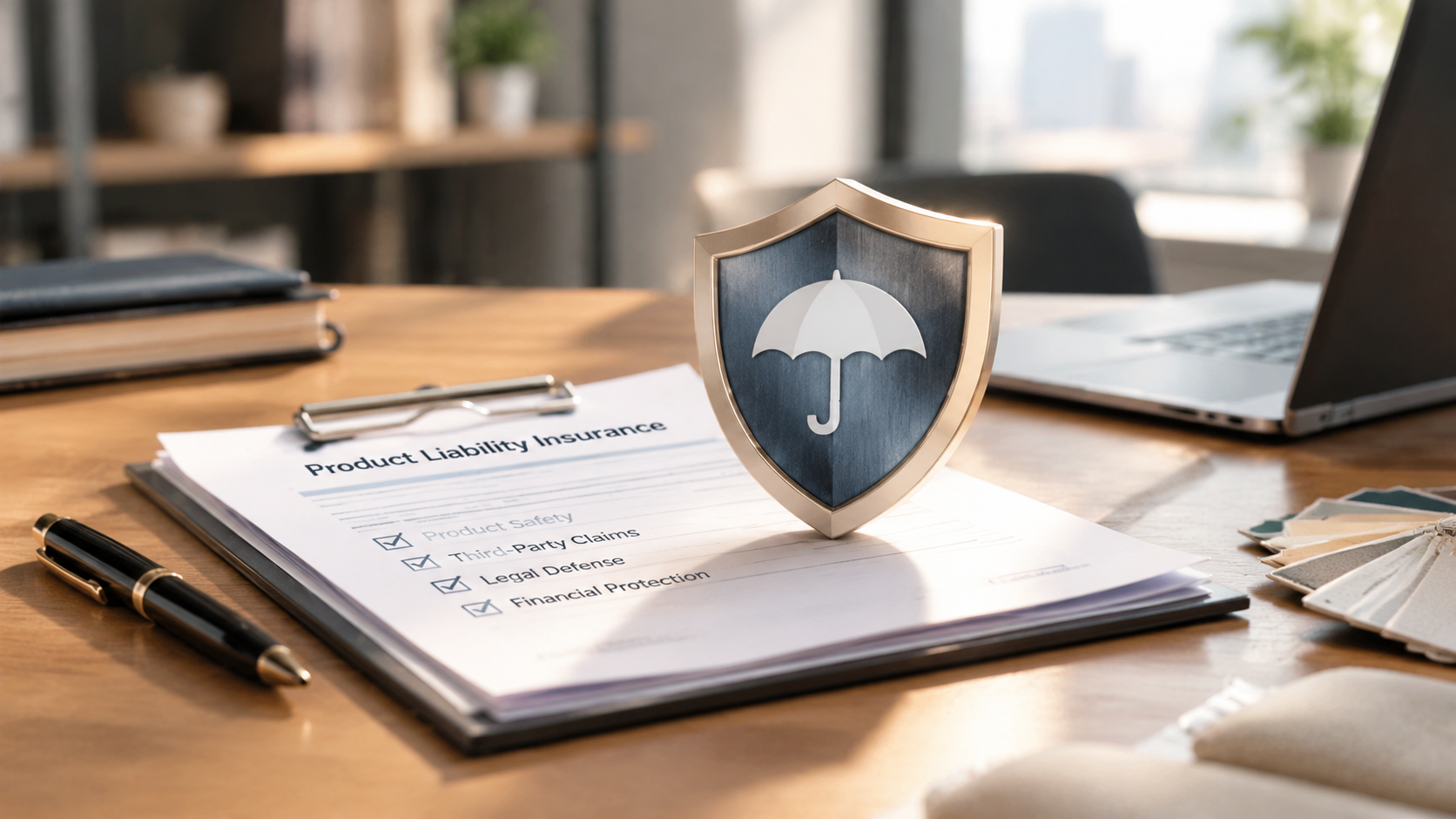
That is why product liability insurance is not a “nice to have” for private label brands. It is the line between a difficult month and a closed business.
- Why product liability keeps private label brands awake at night
- The 3 parties in the chain — and who covers what
- What your factory’s insurance usually covers (and what it doesn’t)
- The gaps your own policy must fill
- Three real moments the bill lands on your desk
- 5 questions to ask before you sign a sourcing contract
- How a sourcing partner closes the gap
Why product liability keeps private label brands awake at night
In the US, a single product liability claim can reach six or seven figures. In the EU, strict liability means the brand — not the factory — is the first name on the claim.
A child is hurt by a toy. A supplement causes a reaction. A kitchen tool breaks and cuts someone. The paperwork names the brand printed on the box.
Industry estimates suggest roughly 1 in 3 small consumer brands faces a product-related claim within its first three years.
The 3 parties in the chain — and who covers what
Most private label products pass through three hands before they reach a customer. Each one carries a different slice of the risk. Knowing where your slice starts is the whole game.
| Who | What they usually cover | What they do not cover for you |
|---|---|---|
| Factory / Manufacturer | Defects from their own production process; their factory premises liability | Your brand, your marketing claims, finished-goods storage, overseas recall or defense costs |
| You (Brand Owner) | Third-party bodily injury & property damage from your product; legal defense; recall & reputational costs | The factory’s internal errors — unless you pass them back by contract |
| Retailer / Platform (Amazon, etc.) | Their own premises and operations | Almost never your product liability; most require you to show proof of insurance |
What your factory’s insurance usually covers (and what it doesn’t)
Most factories do carry product liability insurance — locally. But it is written for Chinese law and local limits. That is a different world from a US or EU claim.
- Covers: defects from their production line; their own factory premises.
- Does NOT cover: your brand, your marketing claims, finished-goods storage, overseas recall, or your legal defense.
The gaps your own policy must fill
Your factory’s policy was never built to protect you. Here are the three covers a private label brand should carry on its own.
Covers third-party injury or property damage caused by your product — the core cover every marketplace asks for.
Covers claims that appear after the product has been sold and left the factory — which is exactly when most claims show up.
Covers the cost of pulling a bad batch and protecting your name while you fix the problem.
Three real moments the bill lands on your desk
Here are three moments every private label founder meets eventually:
- The platform freeze. Amazon asks for your COI. You don’t have it. Your best-selling listing goes dark.
- The injury claim. A customer sues the brand on the box. Defense alone can cost tens of thousands before any settlement.
- The recall. A batch fails a safety test. You pay to ship it back, dispose of it, and replace it.
5 questions to ask before you sign a sourcing contract
You don’t need a law degree. You need these five answers in writing before you pay a deposit.
- Will you name our brand as an additional insured?
- Is your product liability cover worldwide — not China-only?
- What is your per-occurrence limit, in USD?
- Who pays if a batch is recalled?
- Can you provide a COI in English before the first shipment?
How a sourcing partner closes the gap
A good sourcing partner does more than find a factory. They check the factory’s certificate, negotiate the additional-insured clause, and keep a live file of COIs — so your Amazon proof is one email away instead of one crisis away.
Build the brand. We’ll help you protect it.