Table of Contents
What Does Made in China Represent Today?
If you think “Made in China” only means low cost, you might be missing the biggest strategic advantage in modern sourcing.
Over the last four decades—accelerated by its WTO entry in 2001.
China has transformed from a low-cost manufacturing hub into one of the world’s most complete manufacturing
According to UNIDO’s Industrial Statistics, China’s share of global manufacturing output surged from 2.8% in 1990 to roughly 32% in 2024.
But for global buyers, this scale isn’t just about big numbers.
The Real Value Proposition:
It is no longer about “China is cheap.”
It is about “China provides an unmatched depth of interconnected supply networks.”
When you source from China today, you aren’t just hiring a single factory—you are tapping into an integrated infrastructure that seamlessly connects:
⚙️ Raw Material Sources & Tooling Specialists
🧩 Component Sub-contractors & Assembly Lines
📦 Custom Packaging & Testing Labs
🚢 Logistics Hubs & Export Compliance
However, an ecosystem of this size presents a dual challenge: When hundreds of suppliers can make the same product, the sourcing process can quickly become overwhelming.
So why do global brands continue to choose Chinese suppliers?
It is the combination of manufacturing experience, product development capability, supply-chain depth, international trade experience and etc.
Manufacturing Experience
Many Chinese manufacturers have years of experience producing products for overseas markets.
They understand these and even more.
🏭 Product Specifications
🔩 Materials & Components
⚙️ Production Processes
✅ Quality Control
📦 Packaging Production
Product Development Capability
Modern buyers are looking beyond standard products. They may need:
🧩 OEM Products
🧩 ODM Products
🏷️ Private Label Products
📦 Custom Packaging
🔧 Product Improvements
💡 New Product Development
🔩 Different Materials or Components
A capable Chinese manufacturer can move from an existing product to a customized version—without making the buyer manage every part of development alone.
Why it matters: In competitive categories, the question is not just who can manufacture the product, but whether the supplier can support the product development the brand requires.
Supply Chain Efficiency
Another important advantage is the concentration of supporting industries.
Imagine you are developing a pet grooming product.
You may need the main factory, plastic components, metal parts, packaging, printing, accessories and logistics.
When these resources are relatively accessible within the same manufacturing ecosystem, product development and sourcing can become more efficient.
International trade experience
Over the past four decades, many Chinese manufacturers and trading companies have accumulated extensive experience in producing for and serving global markets.
They already understand The following four aspects from different markets,Even far, far more than that.
📦 International Packaging
📋 Export Documentation
🌍 Buyer Expectations
🚢 Logistics & Shipping
🔧 Problem-Solving
Why Chinese Suppliers Have Strong Advantages in Global Trade?
Chinese suppliers are accountable ,they deliver excellent service from start to finish. This is Part of the value.
From product to shipment, every stage affects the final product. That’s why coordination matters so much — and most Chinese suppliers are great at it, which frees up brands to focus more time on growing sales,developing new products and etc.
idea
sourcing
development
control
Quality is another part of the value
Quality should also be viewed from the perspective of the entire order.
A product that looks good in a sample but becomes inconsistent during mass production can create returns, customer complaints and additional costs.
For brands selling internationally, every avoidable problem consumes time.
Time Lost to Production Issues = Time Not Spent On:
- Next Product Development
- New Market Entry
- Brandv Growth
A reliable supply chain isn’t just about avoiding problems — it’s about giving brands back the time to grow.
How to Find Reliable Suppliers in China Step by Step?
Finding reliable suppliers in China should be treated as a process rather than a single search.
Step 1: Define Your Product Clearly
Before searching for a China supplier, clarify:(Tip: Check the box if you qualify)
The more specific the sourcing brief, the easier supplier comparison becomes.
Step 2: Search Through Multiple Channels
Do not depend on one supplier platform.
Common sources include:
Pay attention: Supplier discovery and supplier verification are two different steps.
Alibaba itself recommends checking supplier information and verification indicators rather than treating an online supplier profile as the final decision.
Global Sources also distinguishes verified suppliers and verified manufacturers through business-registration checks and other verification processes.
Step 3: Build a Shortlist
Do not communicate with 50 suppliers forever.
Start broad, then narrow the list. Compare:(Tip: Check the box if you qualify)
The goal is not to find the supplier with the most impressive profile.
It is to find several suppliers that could realistically fit your project.
How to Evaluate Chinese Suppliers Before Cooperation?
Once you have a shortlist, the next step is supplier verification.
This is where many inexperienced buyers make mistakes.
Check Product Experience
A supplier may manufacture hundreds of products, but that does not necessarily mean they are experienced in your exact category.
Product-specific experience can matter more than a long general company profile.
For example, in a competitive category such as pet grooming tools, simply finding a factory that already produces brushes, deshedding tools or nail clippers may not be enough. The supplier’s ability to understand the intended user, improve product details and maintain consistency during production can also affect the final result.
Check MOQ and Production Capacity
MOQ is particularly important for new brands.
A startup may need low MOQ China suppliers to test a product.
A growing brand may later need the same supplier to support larger orders.
The important question is therefore not only:
“What is your MOQ?”
It is also:
“Can you support us when our volume increases?”
Check Communication
Good supplier communication is one of the most underestimated parts of international trade.
Communication is not just about English.
It is about whether both sides can reach the same understanding before production begins.
Check Samples Before Mass Production
A quotation cannot tell you how the product actually feels.
For customized products, sample development is even more important.
The approved sample should become the reference point for later production.
Consider a Factory Audit
For larger projects, buyers may also consider a factory audit or third-party supplier assessment.
The level of verification should match the size and importance of the project.
Why Work With a China Sourcing Partner?
For experienced importers with an established purchasing team in China, working directly with a factory can be very practical.


But for many overseas brands, the challenge is not simply finding one supplier.
It is managing the entire process.
You may need to search suppliers, compare quotations, develop samples, negotiate specifications, coordinate packaging, follow production, arrange quality control and organize shipping.
This is where a China sourcing partner can become useful.
What Does a China Sourcing Partner Do?
The real value is coordination.
Instead of managing every stage of the China supply chain alone,an overseas buyer can work with one experienced partner to connect the dots.
Why This Matters for Growing Brands:
A brand that is developing one product today may need five products next year.
1 supplier. Simple process.
The sourcing process becomes more complex as the product line grows.
You may need different factories for different categories, new packaging suppliers, additional components and new logistics arrangements.
An experienced China sourcing company can help organize these moving parts.
The objective should not be to replace the buyer’s decision-making.
It should be to give the buyer better information, better supplier options and a more efficient process.
Example: Pet Product Sourcing in China
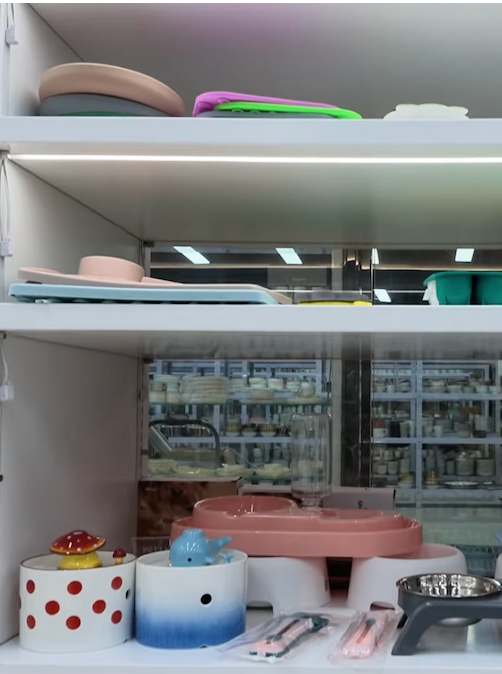
Pet brands are a good example of why supplier selection and product development often need to be considered together.
A brand may start with one pet grooming brush and later develop:
Each product may have different manufacturing requirements.
The right sourcing approach is therefore not simply to find “a pet factory.”
It is to find the right supplier for the specific product, target customer and business stage.
For example, two suppliers may both be able to manufacture a dog grooming brush, but their ability to improve the handle, brush head, cleaning mechanism, materials or packaging may be very different.
This is why product development should be considered alongside supplier selection, particularly in competitive categories where many products already look similar.
For a more detailed example of how product improvement can influence the sourcing and development process, see our guide on: Why Most Dog Grooming Tools Still Have Room for Improvement?
Final Thoughts: Building Long-Term Supplier Partnerships
Finding reliable suppliers in China is not simply about getting a low quotation.
A successful international sourcing process requires you to look at the entire picture:
cooperation
China’s manufacturing strength has developed over decades through economic opening, international trade, industrial clusters and integration into global production networks. Today, China remains a major manufacturing center, with UNIDO estimating its share of global manufacturing production at around 32% in 2024.
But the existence of a large manufacturing ecosystem does not mean every supplier is the right supplier.
That is where professional supplier sourcing, evaluation and long-term relationship management become important.
The best sourcing decision is rarely the one that saves the most money on the first order.
It is often the one that avoids unnecessary problems later.
A reliable supplier can help a brand maintain product consistency, develop new products, manage growing orders and improve the supply chain over time.
At JackHoo Sourcing, we help global businesses with:
We do not start with:
“Which supplier is the cheapest?”
We start with:
“What does this product need to become successful?”
Then we work backward to find the right China supplier, the right production method and the right sourcing solution.
Got an idea? We’d love to hear from you.