Growing a business is exciting.
More customers.
More orders.
More products.
More markets.
But growth can also expose problems that were not visible when the business was smaller.
One of the first areas to feel the pressure is often the supply chain.
A supplier that worked perfectly for 500 units may struggle when you need 5,000.
A simple packaging process may become difficult when you have dozens of SKUs.
A quality issue that was manageable with one product can become expensive when the same problem affects multiple products.
At some point, your supply chain needs to grow with your business.
What Works for a Small Business May Not Work at Scale
When an order volume is small, many procurement processes can be handled manually.
You communicate directly with a factory.
You check samples yourself.
You follow up on production through email or messaging apps.
You inspect the goods before shipment.
This may work perfectly at the beginning.
But as your business grows, the number of products, suppliers, shipments and production schedules increases.
The same process can quickly become difficult to manage.
More orders create more opportunities — but also more points where something can go wrong.
More SKUs Mean More Supply Chain Complexity
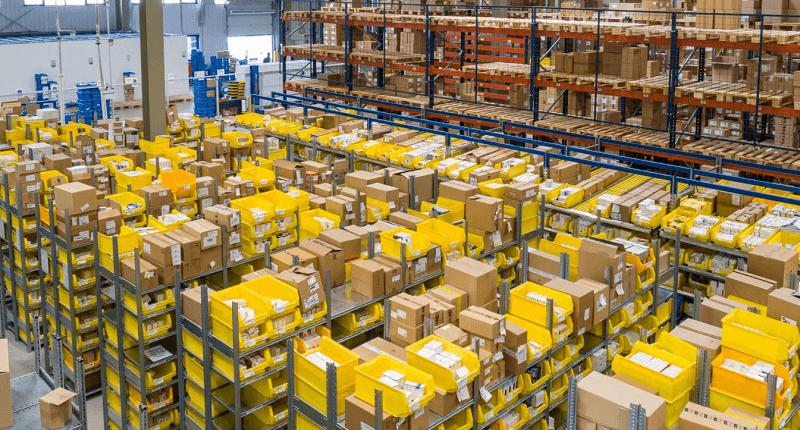
Product expansion is a common part of business growth.
A company may start with five products and eventually have fifty or even hundreds.
Each additional SKU can create additional requirements:
Different materials.
Different packaging.
Different specifications.
Different production schedules.
Different quality standards.
Different suppliers.
Without a structured supply chain, managing these details becomes increasingly difficult.
The challenge is no longer simply finding a supplier.
It is coordinating multiple parts of the business at the same time.
Quality Becomes More Important as You Scale
When you sell a small number of products, a quality problem may affect one shipment.
When your sales volume increases, the same problem can affect thousands of units.
A small specification error can turn into a large production issue.
A packaging mistake can affect an entire shipment.
A manufacturing defect discovered after shipment can be extremely expensive to correct.
This is why quality control should become more systematic as a business grows.
Pre-production checks, production monitoring, final inspection and packaging verification can all help identify problems before they become larger costs.
Supplier Dependence Can Become a Risk

Many growing businesses eventually discover that relying too heavily on one supplier creates risk.
If that supplier experiences:
Production delays
Capacity problems
Raw material shortages
Quality issues
Communication problems
your entire product line may be affected.
This does not mean every company needs dozens of suppliers.
It means critical products should have a realistic supply strategy.
For some products, that may mean developing a qualified backup supplier.
For others, it may mean working with a supplier that has enough production capacity to support future growth.
Your Supply Chain Should Support New Product Development
Growth is not only about selling more of the same products.
Many businesses grow by launching new products, testing new categories or entering new markets.
This requires flexibility.
Can your current suppliers develop new products?
Can they work with new materials?
Can they support custom molds?
Can they provide new packaging?
Can production scale if the product performs well?
A supply chain that can only support existing products may become a limitation when the business starts expanding.
Cost Optimization Changes as You Grow
When order volumes are small, the main focus may be the unit price.
As volumes increase, the cost structure becomes more complicated.
You may start looking at:
MOQ
Production efficiency
Packaging costs
Material sourcing
Freight
Warehousing
Defect rates
Supplier consolidation
A small reduction in cost per unit can become significant when multiplied across thousands or hundreds of thousands of units.
This is where supply chain optimization can have a direct impact on business margins.
Growth Requires Better Supply Chain Visibility
As your business becomes larger, you need a clearer view of what is happening across your supply chain.
Which suppliers are producing which products?
When will each order be completed?
Which products have quality issues?
Which suppliers are performing well?
Where are costs increasing?
Which products need backup sourcing?
Without this visibility, problems are often discovered only after they have already affected the business.
Build the Supply Chain Before You Need It
One of the biggest supply chain mistakes is waiting until there is a problem before looking for a solution.
A supplier shortage happens.
Then a backup supplier is needed immediately.
A quality problem appears.
Then a new inspection process is introduced.
Orders suddenly increase.
Then the business discovers that the existing factory cannot handle the volume.
A more proactive approach is to evaluate these risks before they become urgent.
Your supply chain should not simply react to business growth.
It should be prepared for it.
The Supply Chain Behind a Growing Business

A successful business is visible to customers.
The supply chain behind it usually isn’t.
Customers see the products.
They don’t see the supplier communication, production planning, quality inspections, packaging coordination, logistics and problem solving happening behind the scenes.
But as a business grows, those processes become increasingly important.
Your supply chain should not become a bottleneck for growth.
It should become one of the systems that makes growth possible.
The goal is not simply to buy more products.
It is to build a supply chain that can support more products, more orders, more markets and more opportunities — without allowing complexity to grow faster than the business itself.
More about Jackhoo sourcing: