JACKHOO SOURCING
SUPPLY CHAIN INSIGHTSSourcing Guide · Production Management
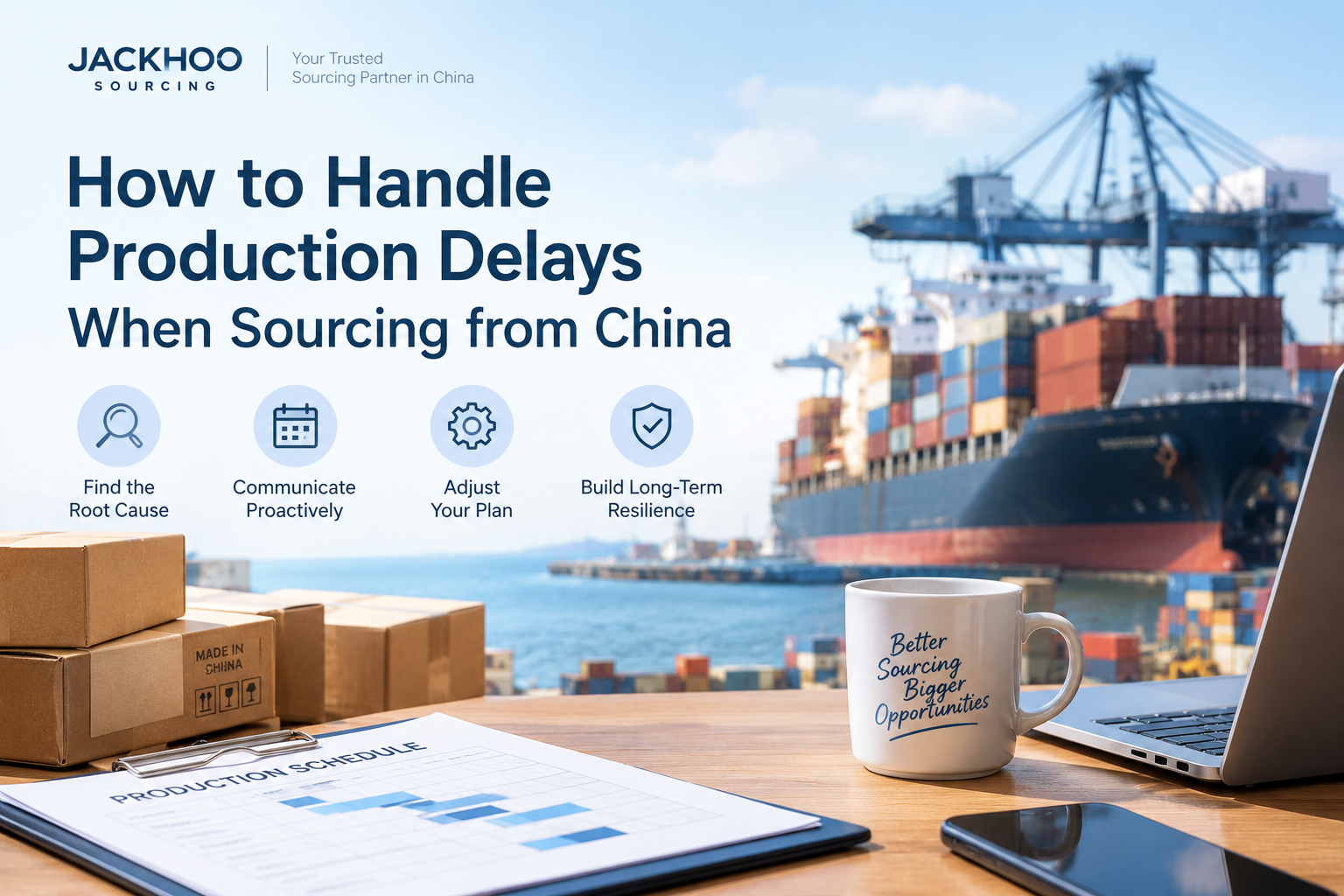
How to Handle Production Delays When Sourcing from China
Practical strategies to prevent delays, manage supplier performance, and keep your supply chain on schedule.
IN THIS ARTICLE
Introduction
Why Production Delays Matter
When sourcing products from China, production delays can affect much more than the manufacturing schedule. They can disrupt shipping arrangements, delay product launches, create inventory shortages, and cause businesses to miss important sales opportunities.
For eCommerce sellers, wholesalers, and growing brands, even a short delay can have a wider impact when inventory planning and marketing campaigns depend on a confirmed delivery date.
Although not every delay can be prevented, many problems can be reduced through better supplier selection, realistic production planning, regular communication, and early intervention.
The key principle
Do not wait until the expected shipping date to discover a problem. Build visibility and contingency plans into the production process from the beginning.
01 / Risk Identification
1. Understand the Common Causes of Production Delays
Before you can manage production delays, you need to understand why they happen. Identifying the most likely risks helps you prepare practical solutions before they affect your order.
Raw Material Shortages
A factory may be ready to manufacture your products but unable to start because key materials, components, or packaging supplies have not arrived. This is particularly important when your order requires customized materials or components from multiple suppliers.
Limited Factory Capacity
Some factories accept more orders than they can comfortably manage. Your order may then compete for production lines, labor, or machinery with orders from other customers.
Product Specification Changes
Changes to product dimensions, colors, materials, logos, packaging, or labeling after production has started can create rework and additional approval steps.
Quality Problems and Rework
Defects discovered late in production may require repairs, component replacement, or even partial remanufacturing. These problems can extend lead times and increase costs.
Seasonal Demand and Logistics Disruptions
Peak-season demand, public holidays, shipping congestion, and unexpected transportation disruptions can affect the overall delivery schedule, even when manufacturing is progressing normally.
Practical tip
Ask suppliers to identify potential bottlenecks before accepting your order, including material availability, production capacity, and any processes that rely on outside vendors.
02 / Supplier Evaluation
2. Choose Reliable Suppliers Before Placing an Order
Preventing delays starts before production begins. A supplier offering the lowest price is not necessarily the best choice if the factory lacks sufficient capacity, reliable planning, or effective communication.
Evaluate suppliers based on their ability to deliver consistently, not only on the quotation they provide.
- ✓Production capacity: Confirm that the factory has the equipment, workforce, and available production time required for your order.
- ✓Previous delivery performance: Ask about typical lead times and how the supplier manages unexpected production problems.
- ✓Material availability: Confirm whether materials are in stock or need to be ordered before production can begin.
- ✓Communication: Check whether the supplier responds clearly and provides realistic updates rather than making unsupported promises.
- ✓Quality management: Understand how the factory identifies defects and handles production issues before shipment.
For important orders, supplier verification and factory assessments can help you identify risks that may not be visible in a quotation or product sample.
03 / Production Planning
3. Set a Realistic Production Schedule
A production schedule should account for the entire order process, not just the number of days required for manufacturing.
Depending on the product, the full timeline may include sample approval, material purchasing, packaging preparation, production, quality inspection, corrective work, and shipment arrangements.
Break the Order into Milestones
Instead of relying on a single delivery date, agree on clear milestones with your supplier. For example:
- Product specifications and samples approved.
- Raw materials and packaging confirmed.
- Production started.
- Mid-production progress reviewed.
- Production completed and inspection arranged.
- Final inspection passed and shipment released.
Include a Reasonable Time Buffer
Avoid planning every stage with no room for unexpected issues. Allow additional time where material sourcing, customized packaging, product testing, or complicated manufacturing processes could introduce uncertainty.
The appropriate buffer depends on the product, supplier, order size, and shipping method. It is better to establish a realistic schedule with the factory than to rely on an optimistic estimate.
Planning reminder
Set the required arrival date first, then work backward through production, inspection, transportation, and preparation stages.
04 / Order Confirmation
4. Confirm Product Specifications Before Production
Unclear requirements are a common source of avoidable delays. If the buyer and factory have different expectations, production may need to stop while details are clarified or completed products are corrected.
Before mass production begins, confirm the details relevant to your order, including:
- ✓Product dimensions, materials, colors, and components.
- ✓Approved samples, drawings, or reference images.
- ✓Logo placement, printing methods, and artwork files.
- ✓Packaging specifications, labels, and barcode requirements.
- ✓Applicable testing, compliance, and quality requirements.
- ✓Quantity, production milestones, and agreed delivery dates.
Keep the final specifications and approvals documented in writing. If a change becomes necessary, confirm its effect on cost, quality, and delivery time before authorizing the factory to proceed.
This process helps prevent misunderstandings and reduces the risk of costly rework after manufacturing has started.
05 / Production Follow-Up
5. Monitor Production Progress Regularly
Once production starts, do not rely entirely on the original schedule or wait for the factory to contact you when something goes wrong.
Regular follow-up helps you compare actual progress with planned milestones and identify problems while there is still time to respond.
Establish a Reporting Schedule
Agree on how frequently the supplier should provide updates. Depending on the order’s complexity and risk, updates may be weekly or more frequent during critical stages.
Useful updates can include production status, completed quantities, outstanding materials, quality issues, and expected completion dates.
Verify Important Milestones
Where appropriate, request production photos, videos, inventory confirmation, or inspection records. For higher-risk orders, an independent on-site check may provide additional visibility.
The objective is not simply to ask whether everything is on track. It is to obtain enough specific information to determine whether the order is progressing according to plan.
Useful question to ask
“Based on the current production status, do you expect to meet the agreed completion date? If not, what is causing the gap, and what corrective action is planned?”
06 / Problem Solving
6. Respond Quickly When a Delay Occurs
Even with careful planning, delays can still happen. When a supplier reports a problem, focus first on understanding the situation and agreeing on a practical recovery plan.
Identify the Actual Cause
Ask the supplier to explain what has happened, which production milestones are affected, how much time may be lost, and whether other parts of the order can continue.
Request a Revised Schedule
Obtain an updated timeline with specific actions and dates. A general promise to speed up production is less useful than a clear plan showing how the supplier intends to recover lost time.
Evaluate Practical Recovery Options
Depending on the situation, possible options may include:
- Prioritizing critical components or urgent quantities.
- Arranging alternative materials, subject to approval.
- Adding production shifts where feasible.
- Splitting a shipment when partial delivery is commercially viable.
- Adjusting transportation arrangements if the cost is justified.
- Revising launch or inventory plans to reduce business disruption.
Evaluate the cost, feasibility, and quality implications of each option before making a decision. Rushing production without adequate quality controls may create additional problems later.
Important
Agree on recovery actions in writing, assign responsibility, and schedule the next progress update. Escalate unresolved problems before they affect the final delivery date.
07 / Seasonal Planning
7. Plan for Peak Seasons and Chinese Public Holidays
Production capacity and logistics availability can become more constrained during busy periods. Chinese public holidays, especially the Spring Festival period, may affect factory operations, material suppliers, staffing, and transportation schedules.
The exact impact varies by factory, industry, and region. Some suppliers close for an extended period, while others resume production gradually after the holiday.
Confirm Factory Operating Dates Early
Ask your supplier about planned shutdowns, last production dates, staff return dates, and expected production capacity after reopening. Do not assume every factory follows the same holiday schedule.
Place Orders with Sufficient Lead Time
If your products must arrive before a major sales season, work backward from the required arrival date and allow time for manufacturing, inspection, and shipping.
Prepare Materials and Packaging in Advance
Confirm critical components, printed packaging, and custom materials early enough to reduce the risk of delays caused by suppliers further up the chain.
A forward-looking production calendar makes it easier to coordinate orders, manage inventory, and avoid unnecessary last-minute costs.
08 / China-Side Coordination
8. Work with a China Sourcing Partner
Managing suppliers remotely can make it difficult to verify production progress, investigate factory-level issues, and coordinate corrective actions quickly.
A sourcing partner with an on-the-ground team in China can help bridge the communication and execution gap between overseas buyers and local suppliers.
Depending on the service scope, support may include:
- ✓Supplier coordination: Following up with factories and clarifying production requirements.
- ✓Production monitoring: Tracking milestones and flagging potential delays.
- ✓Quality control: Coordinating inspections and helping address identified issues.
- ✓Problem escalation: Communicating with suppliers and following up on corrective actions.
- ✓Shipment coordination: Helping align production completion, inspection, and shipping plans.
These services do not eliminate every risk, but they can give buyers better visibility and help problems reach the right people earlier.
When evaluating a sourcing partner, clarify responsibilities, reporting frequency, inspection scope, and how production issues will be communicated and resolved.
09 / Long-Term Strategy
9. Build a More Resilient Supply Chain
Handling one delayed order is important, but reducing repeated disruptions requires a longer-term approach.
Businesses that rely heavily on a single supplier, have limited inventory visibility, or begin production only when demand becomes urgent may be more exposed to unexpected problems.
Review Supplier Performance
Track delivery reliability, quality results, communication, and responsiveness over time. Use these records when deciding which suppliers should receive future orders.
Evaluate Backup Options
For strategically important products, consider whether a qualified alternative supplier or a backup source for critical components would reduce business risk. Alternative suppliers should be evaluated and approved before an emergency occurs.
Improve Inventory Planning
Use sales patterns, replenishment lead times, and demand forecasts to determine appropriate inventory levels. The right buffer depends on the product’s sales volatility, storage costs, and the impact of running out of stock.
Review Every Major Delay
After a disruption, document its cause, financial impact, response time, and corrective actions. Use these findings to improve future schedules and supplier management procedures.
Think beyond a single order
A resilient supply chain combines reliable suppliers, realistic planning, early quality checks, transparent communication, and contingency options.
Conclusion
Prevent Problems Early, Respond with a Clear Plan
Production delays are a common challenge when sourcing from China, but they do not have to become uncontrollable business disruptions. The key is to identify risks early, set realistic expectations, and maintain visibility throughout the order process.
By choosing reliable suppliers, confirming specifications, monitoring production milestones, and preparing recovery options, businesses can reduce avoidable delays and make better decisions when unexpected problems arise.
Effective sourcing is not just about finding the right product at the right price. It also requires managing the process between order placement and final delivery.
Need Better Visibility into Your China Supply Chain?
JACKHOO SOURCING supports businesses with supplier coordination, production follow-up, product quality control, and sourcing services in China. Contact our team to discuss your sourcing requirements.
Explore Our Sourcing Services →